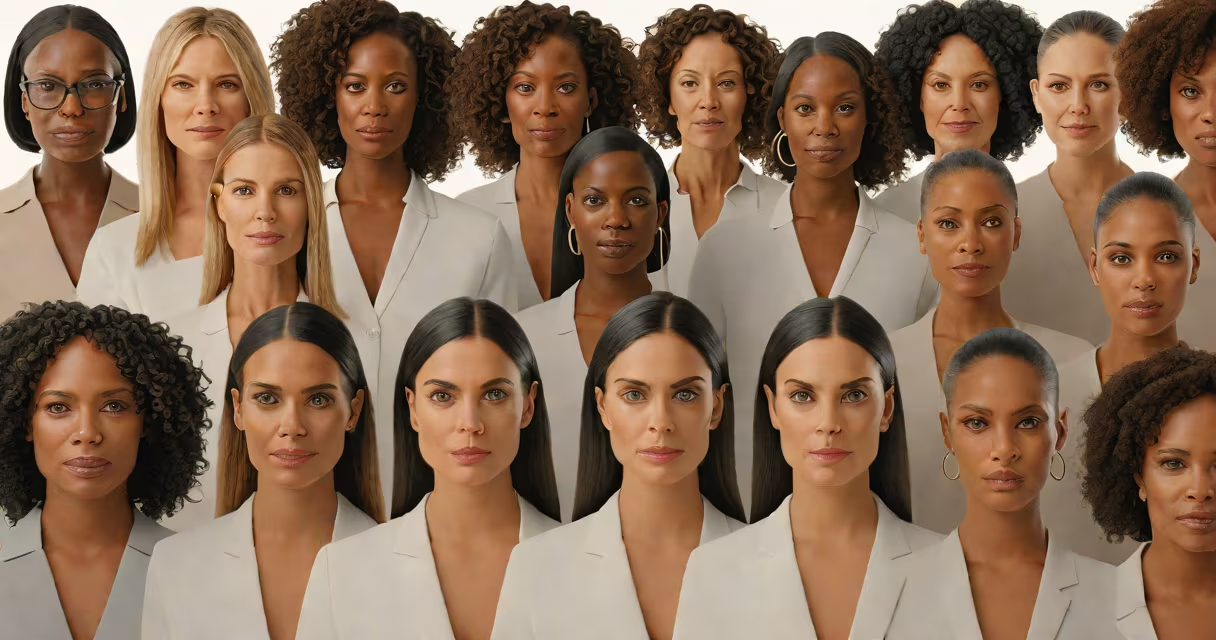
The term "woman" traditionally refers to a person who identifies as female, typically assigned female at birth and possessing female reproductive anatomy, though contemporary usage increasingly recognizes gender identity and social role as defining factors. This definition spans biology, identity, and societal function.
Historically, "woman" was defined primarily by sex characteristics: presence of ovaries, uterus, and external genitalia associated with female development. The American Psychological Association (APA) notes that sex is assigned at birth based on physical traits, including chromosomes (typically XX), gonads, and genitalia. However, this binary model fails to account for intersex people, whose bodies do not fit typical male or female categories.
Modern understanding incorporates gender identity-the internal sense of being a woman-into the definition. The World Health Organization (WHO) states that gender is distinct from sex and includes roles, behaviors, and identities shaped by culture and personal experience. For transgender women, identifying as a woman is central to their lived reality, regardless of biological sex at birth.
In legal and medical settings, "woman" often defaults to biological sex. Birth certificates list sex as male or female based on physical examination. Courts have upheld this standard in cases involving access to women's shelters, sports eligibility, and healthcare services. For example, in *R. v. Brown* (2018), Canadian courts ruled that sex designation on documents is based on biological sex unless a court grants a change through legal process.
In social and political discourse, "woman" expands to include identity. Feminist theory since the 1970s has emphasized that womanhood is not solely tied to biology. Simone de Beauvoir wrote in *The Second Sex* (1949): "One is not born, but rather becomes, a woman." This idea underpins modern inclusion efforts-such as allowing transgender women to participate in women-only spaces when they identify as women.
Workplace policies increasingly reflect this shift. The U.S. Equal Employment Opportunity Commission (EEOC) interprets Title VII of the Civil Rights Act to protect employees from discrimination based on gender identity. In 2020, the Supreme Court ruled in *Bostock v. Clayton County* that firing someone for being gay or transgender violates sex discrimination law, affirming that gender identity is protected under existing civil rights frameworks.
Different contexts apply different standards. The table below outlines common usage patterns:
| Context | Primary Basis for "Woman" | Examples |
|---|---|---|
| Biology/medicine | Sex assignment at birth | Obstetric care, hormone therapy eligibility |
| Identity/gender | Self-identification | Transgender women in support groups, pronoun use |
| Social policy | Legal recognition | Women's shelters, sports teams, voting rights |
| Cultural expression | Shared experience and community | Feminist movements, art, literature |
Some communities define "woman" through shared lived experience. Black feminist scholars like Audre Lorde argued that womanhood includes the intersection of race, class, and gender. Her work emphasizes that not all women experience oppression in the same way-definitions must account for diversity within the category.
A frequent error is equating "woman" with "female" as a fixed biological category. But this overlooks the existence of non-binary and genderqueer people who may live as women without fitting traditional sex criteria. The term "cis woman" specifically denotes someone whose gender identity aligns with their sex assigned at birth-a distinction that clarifies discussions around equity and inclusion.
Another misconception is that identity-based definitions undermine biological realities. In practice, both coexist. A cis woman may also be a mother, a worker, a citizen-roles that extend beyond biology. Conversely, a transgender woman may undergo medical transition but still face challenges related to fertility, hormonal health, or social acceptance.
One non-obvious point: the definition of "woman" is not static. Language evolves. In 2023, Merriam-Webster updated its dictionary entry to include "a person who identifies as a woman, especially a transgender woman," reflecting changes in public usage and legal precedent.
Consider Maya, a 32-year-old person assigned male at birth. She began hormone replacement therapy in 2020 and legally changed her name and gender marker on her driver's license in 2022. She lives openly as a woman, uses she/her pronouns, and participates in women's advocacy groups. Legally, she is recognized as a woman in most U.S. states. Medically, she receives care tailored to female physiology. Socially, she identifies as a woman and is affirmed by her community.
Her case illustrates how multiple dimensions converge: identity, legal status, medical care, and social recognition. The definition of "woman" applies differently across each domain-but all are valid and necessary for full inclusion.
When discussing the definition of the word woman, clarity depends on context. In clinical settings, biology matters. In personal narratives, identity matters. In policy debates, lived experience matters. These layers don't contradict-they inform.