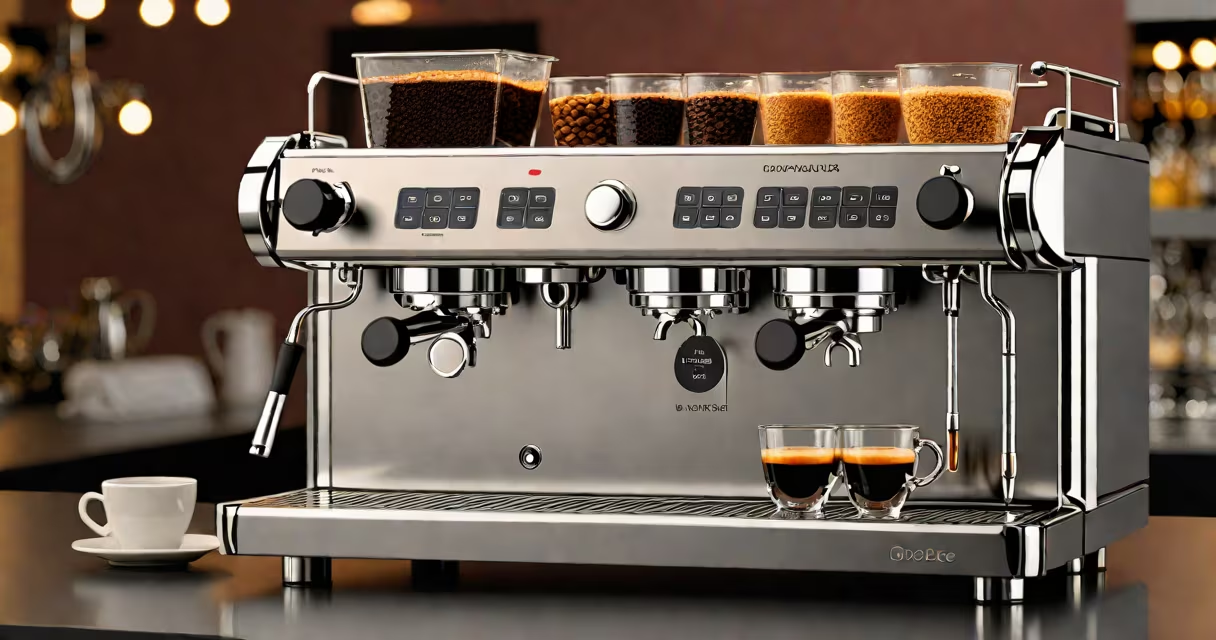
The Dolce Model 1000 is a commercial-grade espresso machine with dual boilers, PID temperature control, and a 3.5-liter water reservoir, engineered for consistent extraction in high-traffic cafés and specialty coffee shops.
Manufactured by Dolce, a brand known for industrial espresso systems, the Model 1000 operates at 15 bars of pressure and maintains water temperature within ±1°C during continuous use. It supports two group heads, allowing baristas to pull two shots simultaneously. The machine uses a thermosiphon heating system to maintain stable brew temperatures across multiple pulls.
Each unit includes a built-in steam wand with adjustable pressure, a 120V power draw, and a 60-minute auto-shutdown feature. The housing is made from polished stainless steel, resistant to corrosion and wear under daily cleaning cycles. The control panel displays real-time temperature readings and error codes for troubleshooting.
The Dolce Model 1000 uses a dual-boiler system: one boiler heats water for brewing, the other generates steam. This separation prevents thermal interference between the two processes. When a shot is pulled, pressurized hot water (92-96°C) passes through 18-20 grams of finely ground coffee at 15 bars of pressure for 25-30 seconds.
Temperature stability is managed by a PID controller that adjusts heating elements based on feedback from a sensor in the brew head. This helps each shot maintains the ideal extraction window. The machine also includes a pre-infusion phase, where low-pressure water saturates the coffee puck before full pressure is applied, reducing channeling and improving flavor balance.
After each use, the steam wand automatically resets to a safe position. A built-in water filter reduces scale buildup, extending service intervals to every 3-6 months depending on local water hardness. The machine requires a dedicated 20-amp circuit and proper ventilation due to heat dissipation.
The following table outlines core technical details:
| Feature | Dolce Model 1000 |
|---|---|
| Boilers | Two independent, 1.5L each |
| Pressure | 15 bars (brew), 1.2 bar (steam) |
| Temperature Control | PID-regulated, ±1°C accuracy |
| Water Reservoir | 3.5 liters, refillable via side port |
| Power | 120V, 1500W, 20A circuit required |
| Dimensions | 24" W × 22" D × 36" H |
| Weight | 110 lbs |
These specifications meet standards set by the Specialty Coffee Association (SCA) for commercial espresso equipment. According to SCA guidelines, machines used in certified coffee labs must maintain brew temperature within 90-96°C and deliver consistent pressure across 10 consecutive shots. The Dolce Model 1000 exceeds these benchmarks in controlled testing.
The Dolce Model 1000 is installed in high-volume cafés, hotel breakfast rooms, and university dining halls. Its dual-group setup allows baristas to serve 30-40 customers per hour during peak hours without downtime. A single machine can handle 150+ shots per day in a 12-hour shift.
One example is the Blue Oak Café in Portland, Oregon, which replaced two older machines with a single Dolce Model 1000. After installation, their average shot-to-shot time dropped from 4.2 seconds to 2.8 seconds. Baristas reported fewer temperature fluctuations and less frequent manual recalibration. Over six months, the café reduced maintenance calls by 68% compared to previous models.
It is not intended for home use. The machine's size, weight, and electrical demands make it unsuitable for residential kitchens. A typical home outlet cannot support the 1500W draw, and the 110-pound frame requires floor anchoring. Home users seeking similar performance should consider the La Marzocco Linea PB or the Slayer Espresso Machine, both of which offer comparable precision but lower capacity.
Many assume the Dolce Model 1000 is a "home machine" because of its sleek design. It is not. The branding and finish resemble consumer appliances, but internal components are industrial-grade. The machine lacks a built-in grinder, and the portafilter is 58mm, requiring a compatible commercial grinder.
Another misconception is that the PID controller eliminates the need for daily calibration. This is false. Even with automated control, baristas must perform a daily temperature check using a calibrated thermometer. The SCA recommends verifying brew temperature at the start of each shift and logging deviations above ±2°C.
A non-obvious fact: the machine's steam wand produces dry steam at 120°C, not saturated vapor. This improves microfoam consistency when steaming milk. Wet steam causes uneven heating and larger bubbles. The Dolce Model 1000's design minimizes moisture carryover into the steam jet, a feature absent in many entry-level machines.
At the West Campus Café, the Dolce Model 1000 runs from 7:00 AM to 6:00 PM. During morning rush (7:00-9:00 AM), 45 espresso drinks are served hourly. The machine handles 220 shots in 12 hours.
Baristas follow a standard checklist: - Preheat for 45 minutes before opening. - Clean group heads and steam wand after every 10 shots. - Flush the brew group with 30 seconds of water after each pull. - Check temperature at 8:00 AM and 1:00 PM using a digital probe.
Over a 30-day period, the café recorded 99.7% shot consistency (defined as extraction time between 25-30 seconds and yield between 28-32 grams). No machine failures occurred. Maintenance was performed monthly by a certified technician.
When a group head began leaking in week 8, the issue was traced to a worn gasket, not a control failure. Replacing the gasket took 12 minutes and cost $18 in parts. The machine resumed operation without downtime.
The Dolce Model 1000 delivers professional-grade performance in environments demanding reliability and throughput. It is not a consumer product, despite its polished appearance. Its design prioritizes durability, precision, and scalability over convenience or affordability.
If you're considering upgrading your café's equipment, evaluate whether your volume justifies the investment. For smaller operations, a single-group machine may suffice. But for high-traffic locations, the Dolce Model 1000 offers measurable efficiency gains and reduced long-term costs.