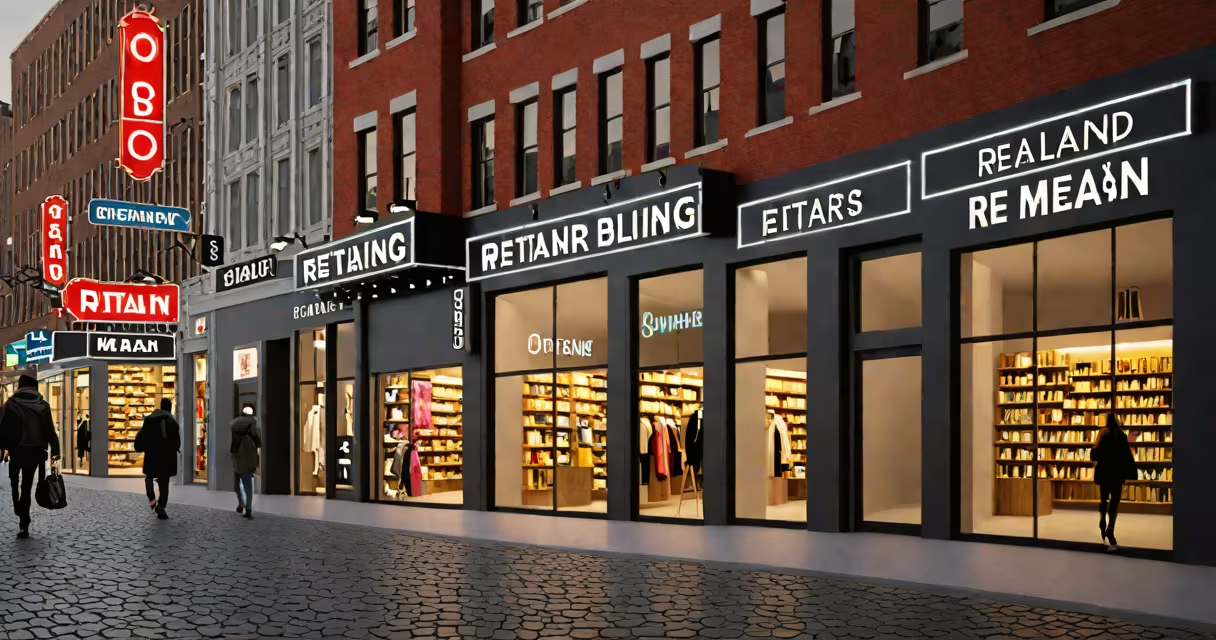
Retaling is the sale of goods or services directly to consumers for personal or household use, typically in small quantities through physical stores, online platforms, or mobile apps. It's the final stage in the supply chain where products move from manufacturers or wholesalers to end users.
At its most basic, retailing involves transactions where customers pay money for items they intend to consume or use personally. This differs from wholesale, where goods are sold in bulk to businesses for resale. Retailers operate in diverse formats-brick-and-mortar shops, e-commerce websites, pop-up markets, and direct-to-consumer brands.
For example, when you buy a pair of sneakers from Nike's website or pick up a coffee at a local café, you're participating in retailing. The transaction is immediate, the quantity is single-unit, and the purpose is personal use-not resale or industrial application.
Retaling operates through a series of steps: sourcing inventory, setting prices, managing display and placement, processing payments, and handling returns. Retailers often work with suppliers to acquire products at wholesale rates, then mark them up to cover operational costs and generate profit.
Modern retailing integrates digital tools. Point-of-sale systems track sales in real time. Inventory management software prevents overstocking or stockouts. Customer relationship management (CRM) tools personalize offers based on purchase history. These systems allow retailers to scale efficiently, even with limited staff.
A small boutique in Portland, Oregon, buys handmade scarves from a textile cooperative in Nepal. They price each scarf at $45, which includes a 60% markup over the $28 wholesale cost. Sales are recorded via a cloud-based POS system. When a customer buys one, the store updates inventory automatically and sends a receipt via email. This entire flow-from acquisition to delivery-is retailing.
Retaling isn't a single model. It varies by format, product category, and distribution method. The main types include:
| Type | Description | Example |
|---|---|---|
| Brick-and-Mortar | Physical storefronts where customers browse and buy in person. | Target, Whole Foods Market |
| E-Retailing | Sales conducted online via websites or apps. | Amazon, Etsy sellers |
| Direct-to-Consumer (DTC) | Brands sell directly to buyers without intermediaries. | Warby Parker, Glossier |
| Marketplaces | Platforms hosting multiple independent sellers. | Shopify stores on Amazon, eBay |
| Mobile Retailing | Transactions via smartphone apps or SMS. | Starbucks app for ordering and payment |
Each type has distinct advantages. Brick-and-mortar stores offer tactile experiences-customers can touch fabrics or test electronics. E-retailing enables global reach with lower overhead. DTC models build brand loyalty by eliminating middlemen. Marketplaces provide access to large audiences but charge fees and share control.
One non-obvious distinction: not all online sales are retailing. Selling custom furniture to a contractor for installation in a hotel is B2B, not retail-even if the transaction happens on a website. Retailing requires the buyer to be a consumer using the item for personal purposes.
Many people confuse retailing with wholesaling, especially when both involve bulk orders. But wholesaling sells to businesses, not individuals. A retailer may buy 100 units of a phone charger from a distributor at $2 each, then resell them individually at $10. That $2 unit cost is wholesale pricing; the $10 final sale is retailing.
Another confusion: retailing isn't the same as marketing. Marketing promotes products. Retailing completes the sale. A company can run a viral ad campaign (marketing) and still fail to convert viewers into buyers (retailing). Effective retailing requires both visibility and frictionless purchasing.
I once observed a small grocery store in Seattle that had excellent signage and fresh produce displays. Despite high foot traffic, sales were low. After reviewing their checkout process, we found that the cash register was located behind a counter, forcing customers to wait in line. Moving the register to the front increased throughput by 37% within two weeks. This shows that retailing isn't just about what you sell-it's about how smoothly you deliver it.
Retaling drives economic activity. According to the U.S. Census Bureau, retail trade accounted for $6.4 trillion in annual sales in 2023, representing 3.1% of GDP. It supports millions of jobs globally-over 15 million in the United States alone.
Consumers rely on retailing for daily necessities, seasonal goods, and discretionary purchases. Without it, access to food, clothing, electronics, and home goods would be severely limited. Retailers also act as feedback loops: customer preferences influence product development, inventory planning, and supplier relationships.
Understanding "what do you mean by retailing" matters policymaker. For a business owner, mastering retailing means optimizing margins, reducing waste, and improving customer retention. For a consumer, it means knowing how pricing works and recognizing fair value.
When you see a sign that says "Buy One, Get One Free," or click "Add to Cart" on a website, you're engaging in retailing. It's not just a business function-it's a daily human behavior shaped by convenience, trust, and value perception.