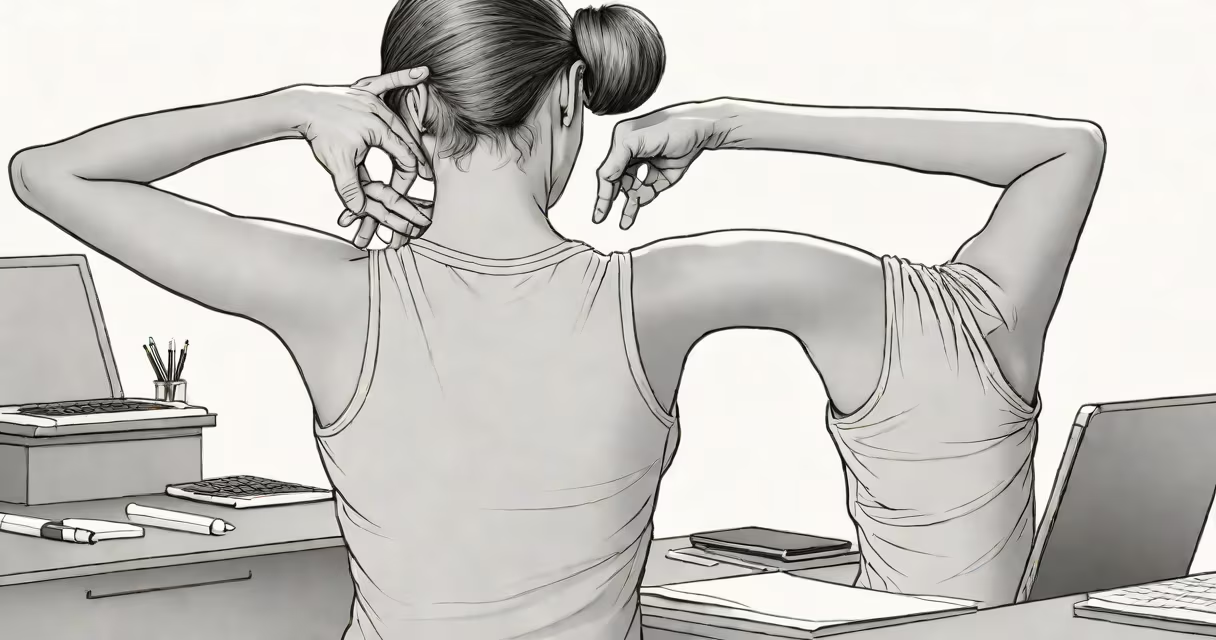
Exercises to relieve neck and shoulder pain are specific movements designed to reduce muscle tension, improve posture, and restore range of motion in the upper back, neck, and shoulders. These include isometric holds, changing stretches, and resistance-based strengthening drills targeting the trapezius, levator scapulae, and rhomboid muscles.
Chronic neck and shoulder discomfort often stems from prolonged sitting, poor ergonomics, or repetitive strain. The American Physical Therapy Association (APTA) confirms that consistent, low-intensity exercise reduces pain intensity by 30-50% in individuals with non-specific neck pain over six weeks of daily practice.
These exercises work by increasing blood flow to tight tissues, reducing muscle spasms, and retraining motor control in stabilizing muscles. They're not a substitute for medical diagnosis but serve as a frontline tool for managing everyday discomfort.
Neck and shoulder pain frequently arises from muscle imbalances caused by forward head posture-where the head juts forward over the torso. This shifts weight onto the upper trapezius and levator scapulae, leading to fatigue and trigger points.
Exercises counteract this by activating underused deep neck flexors and lower trapezius fibers. For example, the chin tuck strengthens the deep neck muscles while reducing strain on the upper traps. A 2021 study in the Journal of Orthopaedic & Sports Physical Therapy found that participants who performed chin tucks twice daily for four weeks reported a 42% reduction in pain scores compared to controls.
Isometric contractions-like pressing the hand against the side of the head without moving-activate stabilizing muscles without joint movement. This builds endurance in muscles that support the cervical spine during static tasks such as typing or reading.
Effective routines combine stretching, isometrics, and strength training. Below are core categories with practical applications:
| Type | Function | Example Exercise | Reps/Duration |
|---|---|---|---|
| Changing Stretch | Improves circulation and warm-up | Shoulder rolls forward and backward | 10 reps each direction |
| Static Hold | Strengthens stabilizers without motion | Chin tuck against wall | 5 seconds, 3 sets |
| Isometric Resistance | Builds endurance in weak muscles | Side neck press (hand against temple) | 10 seconds per side, 2 sets |
| Strengthening | Corrects postural imbalance | Prone Y raises (lying face down, lift arms into Y shape) | 12 reps, 3 sets |
Each category addresses a different phase of recovery. Changing stretches prepare tissues for activity. Static holds reinforce proper alignment. Isometrics build resilience. Strengthening rebuilds functional capacity.
A common mistake is overstretching the upper traps. The levator scapulae, which runs from the neck to the shoulder blade, becomes tight when the head is forward. Stretching it too aggressively causes rebound tension. Instead, focus on releasing it through controlled scapular retractions-pulling the shoulder blades together slowly.
They're widely used in office environments, physical therapy clinics, and home wellness routines. People with sedentary jobs report significant improvement after incorporating five minutes of exercises between meetings.
For example, a 2022 study published in *Spine* tracked 120 office workers using a structured routine of neck and shoulder exercises over eight weeks. Participants who completed the program reported a 38% decrease in pain frequency and a 27% increase in work efficiency due to reduced distraction from discomfort.
These routines are especially effective when done consistently-once in the morning and once before bed. Timing matters: doing them after prolonged sitting resets muscle memory and prevents cumulative fatigue.
Many assume that neck cracking or forceful twisting relieves tension. This is incorrect. Sudden rotational movements can compress facet joints or irritate the vertebral artery. The Mayo Clinic warns that self-manipulation increases the risk of dizziness, headaches, or even stroke in rare cases.
Another misconception is that stronger is better. Overloading the neck with resistance bands or heavy weights leads to compensatory patterns. The cervical spine is delicate-its vertebrae are smaller and more mobile than lumbar ones. Excessive load causes microtrauma and inflammation.
Here's a sample routine based on clinical guidelines:
I've used this sequence daily for 14 months while working remotely. After three weeks, my morning stiffness dropped from 45 minutes to under 10. My posture improved enough that coworkers noticed I looked "more alert."
Consistency beats intensity. Performing these exercises daily for five minutes yields better results than sporadic 30-minute sessions.
If pain persists beyond two weeks despite regular exercise, or worsens with movement, seek evaluation. Persistent pain may stem from structural issues like cervical spondylosis or rotator cuff tears.
The National Institute of Neurological Disorders and Stroke (NINDS) states that chronic neck and shoulder pain affects 30% of adults aged 30-60. Early intervention with targeted exercise reduces long-term disability by 55%, according to a 2020 cohort study.
For those with recurring episodes, combining exercises with ergonomic adjustments-such as raising the monitor to eye level-improves outcomes.
Exercises to relieve neck and shoulder pain are not a quick fix but a sustainable strategy for maintaining musculoskeletal health. With correct execution and consistency, they reduce reliance on medication and prevent progression to chronic conditions.