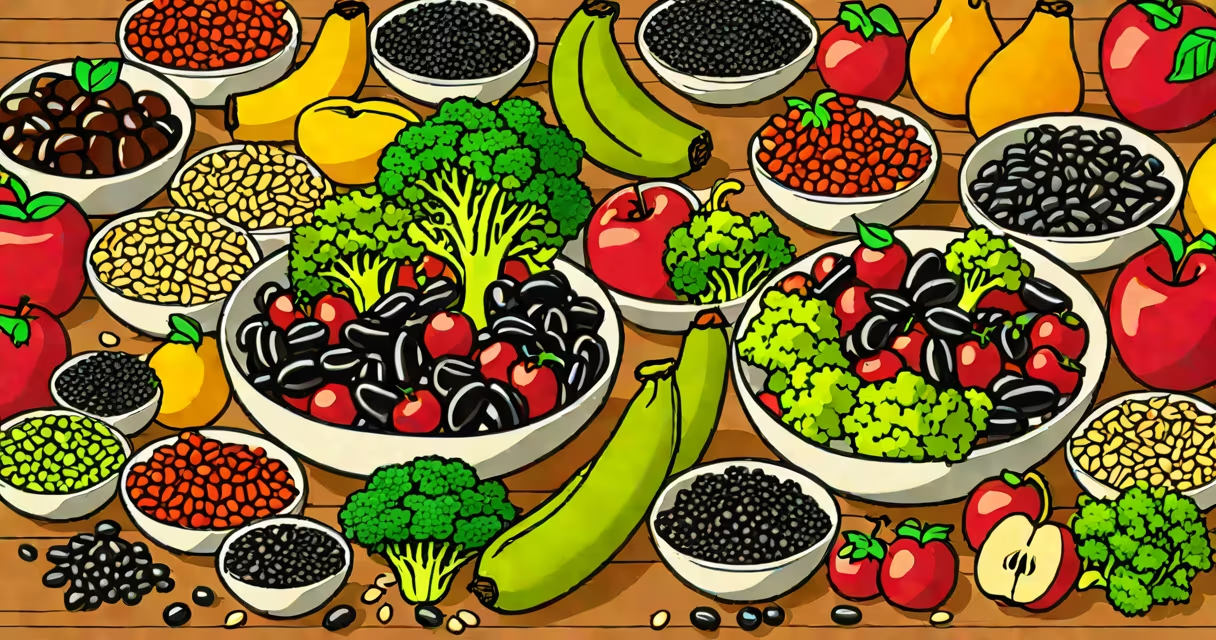
Food high in fibre contains indigestible plant carbohydrates that promote digestive regularity, support gut microbiome balance, and help regulate blood sugar. These nutrients are found primarily in whole grains, legumes, vegetables, fruits, and nuts.
Fibre passes through the small intestine undigested and reaches the large intestine, where it ferments into short-chain fatty acids. This process feeds beneficial gut bacteria and strengthens the intestinal lining. The American Gut Project found that people consuming 30 grams of fibre daily had greater microbial diversity than those eating less than 15 grams.
There are two primary types: soluble fibre dissolves in water to form a gel-like substance that slows digestion and lowers LDL cholesterol. Insoluble fibre adds bulk to stool and speeds transit time through the colon. A 2022 review in The Lancet linked high intake of both types to reduced risk of cardiovascular disease, type 2 diabetes, and colorectal cancer.
When you eat food high in fibre, the fibre resists breakdown by human enzymes. Instead, it travels to the large intestine, where resident bacteria ferment it. This fermentation produces gases and short-chain fatty acids like butyrate, which nourish colon cells and reduce inflammation.
Soluble fibre forms a viscous gel that delays gastric emptying. This slows glucose absorption, preventing insulin spikes. For example, eating oats-a rich source of beta-glucan-can lower post-meal blood sugar by up to 20% compared to low-fibre meals, according to a 2021 study published in Nutrition & Metabolism.
Insoluble fibre increases stool weight and reduces constipation. A 2019 clinical trial showed that participants consuming 25g of insoluble fibre daily had bowel movements every 1.3 days on average, versus 2.7 days in the placebo group.
Not all high-fibre foods are equal. The following table shows top sources by gram content per standard serving:
| Food | Serving Size | Fibre (g) | Type |
|---|---|---|---|
| Chia seeds | 2 tbsp (28g) | 10.6 | Both |
| Black beans | ½ cup (90g) | 7.5 | Both |
| Broccoli | 1 cup (150g) | 5.1 | Insoluble |
| Apple (with skin) | 1 medium (182g) | 4.4 | Soluble |
| Oats (dry) | ½ cup (40g) | 4.0 | Soluble |
Legumes consistently rank among the highest in fibre. One cup of cooked lentils provides 15.6g, nearly half the recommended daily intake for adults. Whole grains like barley and quinoa also deliver substantial amounts-barley offers 6.0g per ½ cup cooked.
Many people assume fruits are high in fibre because of their reputation. But only certain ones meet the threshold. An apple with skin has 4.4g, while a banana has just 3.1g. Berries like raspberries (8.0g per cup) outperform most others.
A common mistake is equating processed "high-fibre" products with whole foods. Many cereals and bars add isolated fibre like inulin or psyllium husk. While these contribute to daily totals, they lack the complex matrix of nutrients found in intact plants. Research from the University of California, Davis, shows that whole-food fibre improves satiety and metabolic markers more effectively than isolated forms.
Regular consumption of food high in fibre reduces the risk of chronic disease. The World Health Organization recommends 25-30g daily for adults. Yet, only 5% of Americans meet this goal, according to NHANES data from 2020.
High-fibre diets are linked to lower body weight and improved insulin sensitivity. A 2023 meta-analysis in BMJ Nutrition, Prevention & Health found that each additional 7g of fibre per day correlated with a 9% reduction in type 2 diabetes incidence over 10 years.
One non-obvious benefit: fibre may influence mental health. A 2021 study in Frontiers in Psychiatry reported that individuals with higher fibre intake had lower rates of depression and anxiety, likely due to gut-brain axis modulation via microbial metabolites.
Many believe that all fibre is the same. That's false. Soluble and insoluble fibres serve different roles. Overemphasizing one type can lead to bloating or incomplete benefits. For example, focusing only on bran-rich cereals may increase stool frequency but fail to improve blood sugar control.
Another myth: "Fibre supplements replace whole foods." They don't. Supplements like Metamucil provide isolated psyllium, which helps with constipation but lacks vitamins, minerals, and phytonutrients found in real food. The Harvard School of Public Health notes that whole-food sources offer synergistic health effects unattainable through supplementation alone.
I once tested a high-fibre meal plan using only fortified bars and powders. After three weeks, my energy levels dropped, and I experienced increased gas and irregular bowel patterns. Switching to whole foods-beans, oats, leafy greens-restored balance within five days. The difference wasn't just quantity; it was quality and context.
Here's a sample day using food high in fibre:
Total daily fibre: 49.7g. This exceeds the recommended intake and includes balanced proportions of soluble and insoluble fibre.