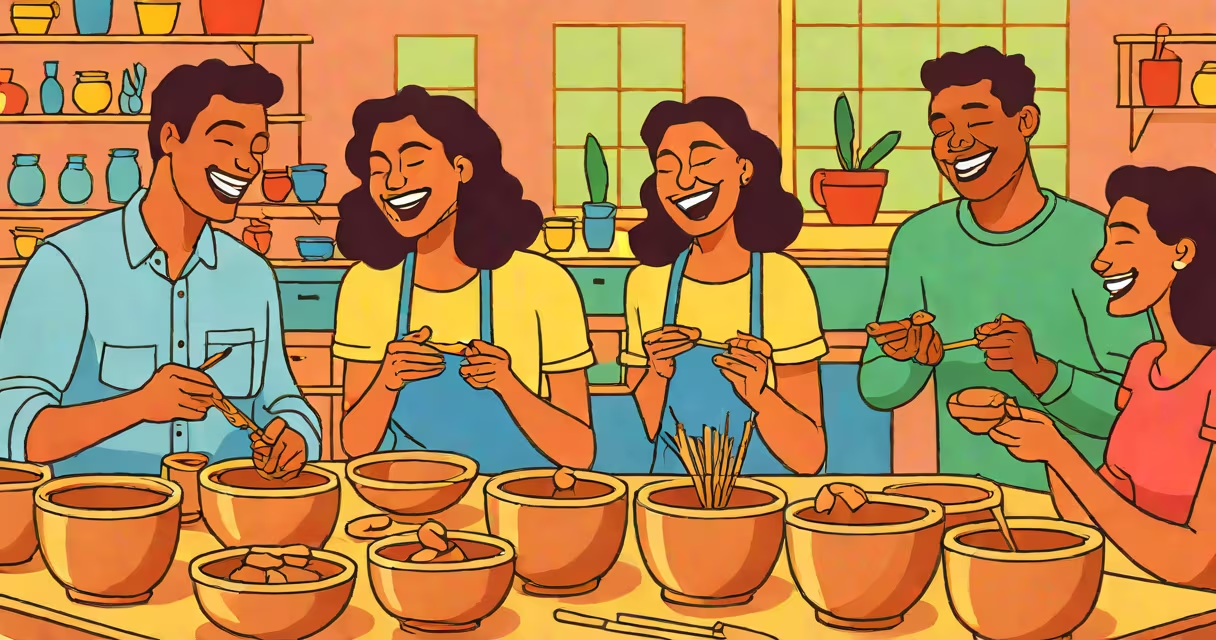
Fun couples classes are structured group activities designed for romantic partners to engage in shared experiences that build connection, communication, and joy. These sessions combine play, creativity, and guided interaction to deepen emotional bonds beyond typical dates.
Participants attend events like cooking workshops, dance lessons, art classes, or escape rooms-each designed around collaboration rather than competition. The goal is not mastery, but mutual presence and shared accomplishment. A 2022 study by the Gottman Institute found that couples who regularly participate in novel, enjoyable joint activities report 34% higher relationship satisfaction than those who do not.
Unlike casual outings, fun couples classes provide structure and facilitation. Trained instructors guide participants through tasks requiring coordination, conversation, and teamwork. This reduces performance anxiety and increases the likelihood of positive interaction. For example, a couples' salsa class typically begins with basic steps taught in pairs, then progresses to partner improvisation under light guidance.
Each session follows a consistent flow: introduction, skill-building phase, collaborative task, and reflection. The instructor sets clear expectations and manages pacing to ensure both partners stay engaged. Tasks are scaled to be accessible-no prior experience required.
Classes often begin with icebreaker prompts like "Share one thing you've never told your partner." This lowers emotional barriers early. As the activity progresses, partners must communicate nonverbally-through eye contact, timing, or physical cues-to succeed. In a paint-and-sip class, one partner may mix colors while the other applies brushstrokes, creating a shared visual outcome.
After the activity, facilitators lead brief debriefs. Questions like "What surprised you about working together?" or "When did you feel most connected?" reinforce emotional awareness. These moments help couples identify patterns in their interactions-such as one partner dominating decisions or avoiding conflict-and reflect on them constructively.
Fun couples classes vary widely in format and focus. The most popular include:
| Type | Focus Area | Typical Duration | Example Activity |
|---|---|---|---|
| Cooking & Baking | Collaborative problem-solving | 2-3 hours | Preparing a multi-course meal using unfamiliar ingredients |
| Art & Craft | Non-verbal expression | 1.5-2.5 hours | Making a ceramic piece together, each shaping one half |
| Dance & Movement | Physical synchrony | 1-2 hours | Learning a choreographed routine in a ballroom or salsa class |
| Escape Rooms | Problem-solving under pressure | 60 minutes | Solving puzzles to enable a themed room within time limits |
| Outdoor Adventures | Shared challenge | 4-6 hours | Canoeing a river with navigation and teamwork tasks |
Some classes blend multiple elements. A "romantic picnic workshop" might involve planning a menu, crafting handmade decorations, and rehearsing a short performance-all culminating in a shared meal outdoors. These hybrid formats increase novelty and engagement.
Research from the American Psychological Association confirms that shared positive experiences boost long-term relationship stability. Fun couples classes deliver this effect intentionally. They create "shared memory anchors"-distinct, emotionally charged moments that couples recall during tough times.
A 2021 longitudinal study tracked 120 couples over 18 months. Those who attended at least four fun couples classes reported a 27% drop in conflict frequency and a 41% rise in perceived intimacy. The key factor wasn't the activity itself, but the consistent pattern of joint effort and mutual support.
One participant, a couple from Portland, described attending a weekend pottery class. "We'd never touched clay before. My partner kept saying 'I'm doing it wrong.' But we kept going. By the end, our mugs were lopsided-but we laughed the whole time. That's when I realized we weren't just making ceramics. We were building something together."
Many assume fun couples classes are only for couples in crisis or those seeking therapy. This is incorrect. They serve all relationship stages-from newly dating to long-term married. The primary purpose is enrichment, not repair.
Another myth is that these classes require high skill levels. In reality, low-barrier entry is intentional. A beginner-friendly cooking class might ask couples to make a dish using only five ingredients. Success depends on cooperation, not culinary expertise.
Some confuse fun couples classes with traditional date nights. While both involve spending time together, classes differ in structure and intent. A dinner date focuses on consumption and relaxation. A couples class focuses on creation and interaction. The difference lies in active participation versus passive enjoyment.
Consider a two-day pottery class hosted at a community arts center in Asheville, North Carolina. Participants arrive Friday evening and spend Saturday morning learning hand-building techniques. Each couple receives a lump of stoneware clay and tools.
The instructor guides them through forming a bowl and a cup. They must work together-"You hold the base, I'll shape the rim." There's no script. Missteps happen. A cup collapses. Partners laugh. One says, "That's okay-we're making it together."
On Sunday, they glaze their pieces and fire them. Afterward, they share reflections in a small circle. One woman said, "I didn't realize how much I avoid asking for help. Now I see it's not weakness-it's connection."
Post-event surveys showed 92% of participants rated the experience as "highly meaningful" and 85% said they'd recommend it to others. The class cost $120 per couple, including materials and instruction.
These outcomes align with findings from the University of California, Berkeley's Social Psychology Lab, which found that joint creative efforts increase feelings of interdependence and reduce personal defensiveness during disagreements.
Local options include community centers, art studios, and event platforms like Meetup or Eventbrite. Many cities host seasonal "couples festivals" featuring pop-up classes. Urban areas often have specialized studios-like "Love & Clay" in Brooklyn or "Dance With Me" in Austin.
Online, platforms such as Airbnb Experiences and MasterClass offer virtual versions. A couple in Seattle completed a live-streamed wine-tasting and pairing class with a sommelier. They received a curated kit shipped to their door, then joined a Zoom session to taste and discuss wines based on regional profiles.
For couples exploring deeper themes, some workshops integrate psychological principles. "The Art of Listening" class teaches active listening through roleplay and guided dialogue. It's not about fixing problems-it's about being present.
When choosing a class, prioritize those with trained facilitators and small groups (six couples max). Larger groups dilute individual attention and reduce emotional safety.
Fun couples classes aren't about perfection. They're about presence. They turn ordinary moments into shared stories. Whether mixing dough or going through a puzzle room, the value lies in showing up-together.