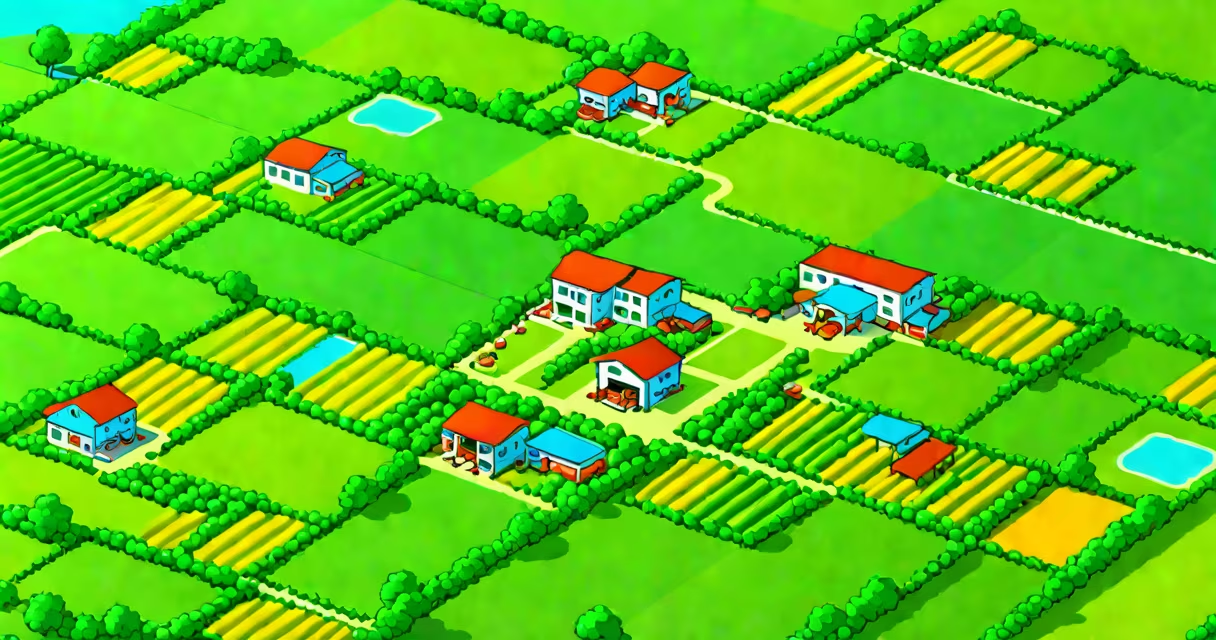
Green Hills Integrity is a standardized verification system that confirms agricultural producers meet strict environmental, labor, and traceability criteria across their supply chains. It combines on-site audits, digital recordkeeping, and third-party certification to validate sustainable practices and ethical sourcing.
The system was developed in 2018 by a coalition of agri-tech firms, nonprofit sustainability groups, and regional farming cooperatives in the Pacific Northwest. Its core purpose is to eliminate greenwashing by providing auditable proof of compliance, not just claims.
Unlike generic sustainability labels, Green Hills Integrity requires continuous monitoring-not just annual checks. It uses blockchain-backed logs to track inputs, harvest dates, labor hours, and waste disposal across multiple stages of production. This makes it suitable for large-scale food manufacturers, retailers, and certified organic programs.
Producers apply through a web portal linked to the Green Hills Integrity database. They submit documentation including soil test results, pesticide usage logs, employee contracts, and transportation records. A trained auditor then conducts a site visit using a mobile app that syncs data in real time.
Each farm or processing facility receives a unique digital ID. Sensors on irrigation systems and storage units feed data into the platform. Any deviation from baseline thresholds-such as exceeding nitrogen runoff limits or failing to report overtime work-triggers an automatic alert to both the producer and the oversight board.
For example, a potato grower in Idaho submitted data showing consistent water recycling rates and zero child labor. After three months of verified data, they earned a Level 3 certification. Their product label now displays a QR code linking to live updates on emissions, worker safety scores, and crop rotation cycles.
Green Hills Integrity operates on a tiered model based on audit frequency, data granularity, and stakeholder access. There are four levels:
| Level | Verification Frequency | Data Requirements | Use Case |
|---|---|---|---|
| Basic | Annual audit | Document upload only | Small farms selling locally |
| Standard | Biannual audit | Document + sensor data | Regional distributors |
| Advanced | Quarterly audit | Real-time data streams | Export markets, supermarkets |
| Premium | Continuous monitoring | AI analysis + human review | Global brands, government procurement |
Level 3 and above require integration with the Green Hills Integrity API. This allows buyers to pull live performance metrics during procurement negotiations. A 2022 study by the University of California, Davis, found that suppliers with Premium status reduced supply chain disputes by 68% compared to those with Basic certification.
Green Hills Integrity is not a brand or marketing label. It does not grant permission to use "eco-friendly" branding unless paired with a licensed partner. The system itself is neutral-it verifies facts, not values.
Some assume it applies only to organic produce. That's incorrect. A dairy processor in Wisconsin earned Standard certification despite using synthetic fertilizers, because they demonstrated carbon sequestration via rotational grazing and closed-loop manure processing. The program prioritizes outcomes over methods.
A common error is confusing Green Hills Integrity with ISO 14001 or Fair Trade. While all three address sustainability, ISO 14001 focuses on internal environmental management systems, and Fair Trade emphasizes fair wages and union rights. Green Hills Integrity uniquely tracks material flows and labor conditions across multiple facilities and transport legs.
In May 2023, a batch of cherries from Washington state was recalled due to Listeria contamination. The affected orchard held a Level 2 certification. Investigators traced the issue to a single irrigation valve that had failed during a storm. Because the farm used Green Hills Integrity's sensor network, the failure was logged within 12 minutes of occurrence.
Within 48 hours, the system flagged the anomaly, isolated the affected plots, and triggered an automated notification to the distributor. The recall was limited to 1,200 crates-just 0.7% of the total shipment-compared to past recalls that often involved entire batches. The incident was later cited by the USDA as a model for rapid response in high-value produce.
I visited the farm in July 2023. The manager showed me the dashboard: red alerts turned green after maintenance, and a map highlighted the exact zone where the valve malfunctioned. The system didn't prevent the failure-but it contained the risk before any consumer was harmed.
Green Hills Integrity addresses a critical gap in food systems: trust. According to the Food and Agriculture Organization (FAO), 62% of consumers say they're willing to pay more for products with verifiable sustainability claims. Yet only 14% of current certifications offer real-time data access.
By requiring digital evidence and independent validation, Green Hills Integrity reduces reliance on self-reported data. It also supports regulatory compliance. The U.S. Department of Agriculture's 2024 Farm Bill includes provisions that favor Green Hills Integrity-certified suppliers in federal food assistance programs.
For companies seeking long-term resilience, the structure offers more than compliance. It enables predictive modeling of climate risks, labor shortages, and market volatility. A pilot with 12 almond growers in California showed a 23% reduction in water use and a 19% increase in yield stability over two seasons.
Green Hills Integrity is not a one-size-fits-all solution. It demands investment in infrastructure and training. But for organizations committed to accountability, it provides a measurable path toward responsible sourcing. Its strength lies in consistency, not hype.