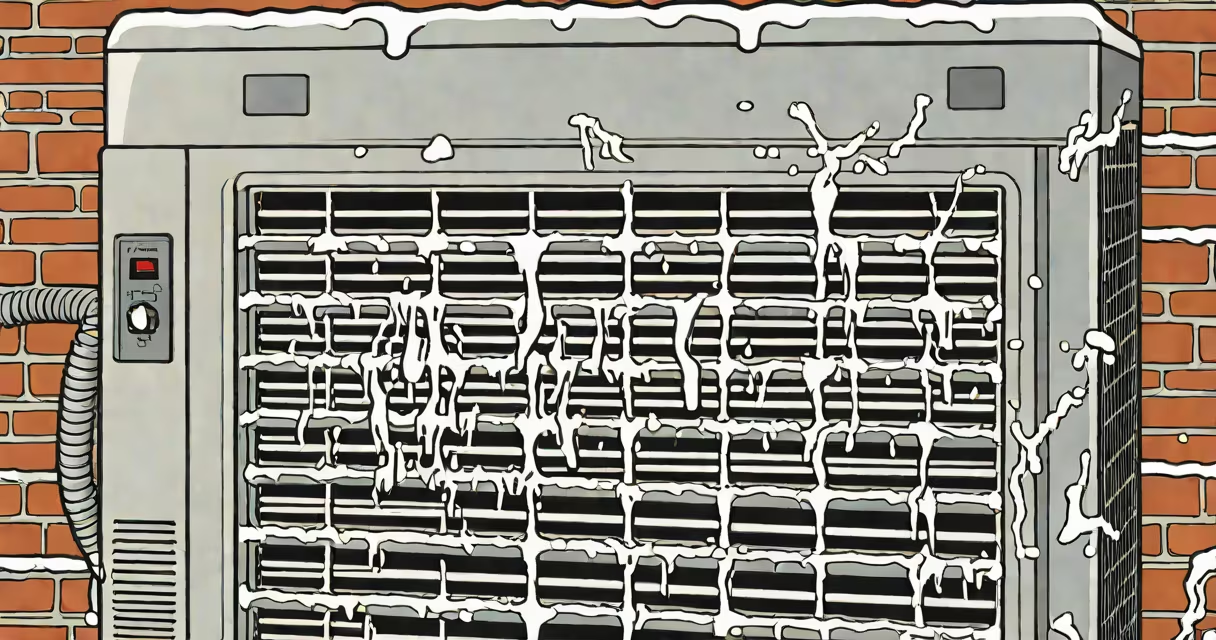
A home AC freeze up happens when ice builds on the indoor evaporator coil due to blocked airflow, low refrigerant levels, or malfunctioning components. This stops cooling, increases energy use, and risks compressor damage.
When the evaporator coil drops below 32°F (0°C), moisture in the air condenses and freezes. Ice accumulates until airflow is blocked entirely. The system then cycles off or runs inefficiently. A frozen unit may not cool the house, waste electricity, or cause water leaks when thawed.
Freezing typically begins on the coil's edges and spreads inward. You'll see frost near the air handler, hear unusual noises, or notice warm air from vents. If ignored, ice can rupture copper tubing or damage the blower motor.
AC systems rely on balanced airflow and precise refrigerant pressure. When either fails, temperatures drop too low. The coil becomes colder than the dew point, turning humidity into ice.
Common triggers include:
These issues often compound. For example, a dirty filter restricts airflow, which lowers coil temperature, causing refrigerant to absorb more heat and drop further. The cycle accelerates until ice forms.
The evaporator coil sits inside the indoor air handler. It absorbs heat from indoor air as refrigerant flows through it. When the coil surface falls below freezing, moisture condenses and freezes.
Refrigerant enters the coil at around 40-45°F (4-7°C). Normal operation keeps the coil between 35-45°F (2-7°C). If it drops below 32°F (0°C), freezing occurs. Most systems have a low-pressure switch that shuts off the compressor if pressure drops too low-this prevents damage but doesn't stop freezing if airflow is poor.
Other parts include:
Many people assume low refrigerant is the main cause. But according to the Air Conditioning Contractors of America (ACCA), 70% of freeze-ups stem from airflow problems, not refrigerant loss. Low refrigerant accounts for only 15-20% of cases.
Another misconception: freezing only happens in winter. It occurs most often in summer, especially during high humidity. The combination of high outdoor temps and high indoor humidity stresses the system.
Some confuse AC freeze-up with a frozen outdoor unit. Outdoor coils don't freeze under normal conditions-they're designed to handle sub-zero temps. If the outdoor unit ices over, it indicates a different issue-like a defrost cycle failure in heat pumps.
| Problem | Typical Location | Signs | Fix Required |
|---|---|---|---|
| Restricted airflow | Indoor air handler | Frost on coil edges, weak airflow, warm rooms | Replace filter, clear vents, inspect blower |
| Low refrigerant | Evaporator coil, refrigerant lines | Full ice coverage, low suction pressure, hissing sound | Find leak, recharge refrigerant (must be done by licensed technician) |
| Thermostat error | Wall-mounted control | System runs continuously, no off-cycle | Reset or replace thermostat |
In July 2023, a homeowner in Phoenix reported their AC wasn't cooling. The indoor unit had thick ice on the coil. The filter was caked with dust-over 3 inches of debris. The blower wheel was coated in grime. After cleaning the filter and wheel, the system ran normally within 30 minutes.
Before repair, the unit drew 2.8 kW of power-nearly double normal. After clearing airflow, it dropped to 1.4 kW. The homeowner saved $42 in electricity over five days. This case shows that airflow issues cause most freeze-ups-and they're fixable without service calls.
Turn off the AC immediately if you see ice. Let it thaw completely-usually 6-12 hours. Do not force thawing with a hairdryer; it can damage insulation or wiring.
After thawing:
I've seen multiple units fail after homeowners tried to restart a frozen system. One client restarted their AC while ice still covered the coil. The compressor seized within 15 minutes. Repair cost: $1,800. Prevention saves money and extends equipment life.
If freezing recurs after fixing airflow, suspect refrigerant issues. Refrigerant leaks require a pressure test and electronic leak detection. Recharging must follow EPA regulations-only certified technicians can handle refrigerants.
For recurring problems, schedule annual maintenance. ACCA recommends servicing before summer to avoid peak demand. A technician checks refrigerant levels, cleans coils, tests blower performance, and verifies thermostat accuracy.
Understanding the difference between airflow and refrigerant issues prevents costly mistakes. Many DIYers assume they need a refrigerant top-off. But adding refrigerant without fixing airflow leads to overcharging, which worsens freezing and damages compressors.