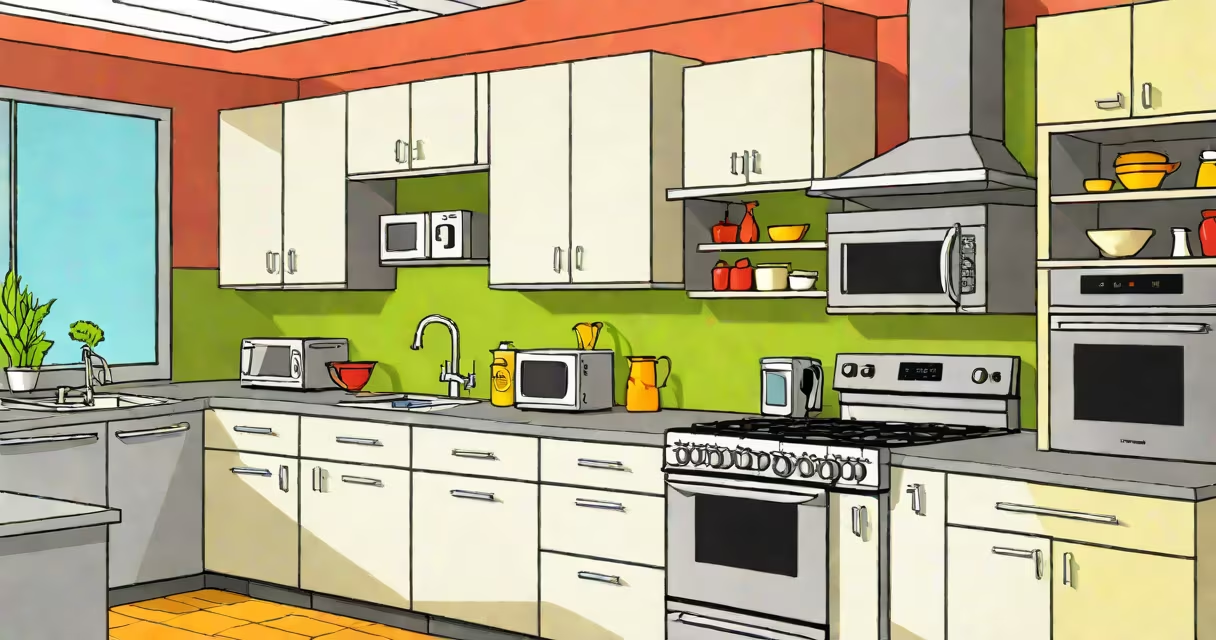
A hood and microwave combo is a single kitchen appliance that integrates a range hood for exhaust ventilation with a built-in microwave oven. It mounts above a stovetop, removing smoke, steam, and odors while providing cooking convenience in one compact unit.
This design reduces clutter and streamlines kitchen layout. It's common in modern homes, especially those with limited wall or ceiling space. The unit typically includes a fan system rated between 300 and 600 cubic feet per minute (CFM) for effective air extraction, and a microwave with at least 1.0 cubic foot capacity.
According to the U.S. Department of Energy, proper ventilation during cooking can reduce indoor air pollution by up to 70%. A hood and microwave combo delivers both functions in a single installation, making it efficient for kitchens where space and performance are priorities.
The hood portion draws air through a grease filter and exhaust duct, expelling contaminants outdoors. Most models use a recirculating mode with activated carbon filters when external venting isn't available. The microwave operates independently using magnetron heating, typically at 1000 watts or higher.
Both systems share a control panel. Users select ventilation mode (low, medium, high) or microwave function (defrost, cook, sensor). Some units include automatic sensors that detect steam or smoke and activate the fan without manual input.
For example, the GE Profile PVM2000W model features a 400 CFM fan and a 1.2 cubic foot microwave. It uses a dual-filter system: a metal mesh filter for grease and a carbon filter for odor. When cooking bacon, the unit detects rising temperature and humidity, then turns on the fan automatically.
These combos fall into two categories based on installation and airflow:
| Type | Exhaust Method | Space Required | Best For |
|---|---|---|---|
| Wall-mounted | External duct (preferred) | Typically 30 inches wide | Most homes with access to attic or exterior wall |
| Recessed (built-in) | Recirculating or ducted | Custom cabinetry needed | High-end kitchens with integrated design |
Wall-mounted units are easier to install and maintain. They require a dedicated exhaust duct to the outside. Recirculating models don't need ductwork but are less effective at removing grease and heavy odors.
Key features include:
One non-obvious detail: many models have a "delayed start" feature for the fan. This keeps the fan running for 10-15 minutes after cooking ends to clear residual fumes. This feature improves air quality, especially when frying or roasting.
Hood and microwave combos are standard in new construction and kitchen remodels. They're popular in urban apartments, condominiums, and custom homes where maximizing space is critical.
They're especially useful in kitchens without room for separate appliances. A 2022 study by the National Kitchen & Bath Association found that 68% of homeowners prefer integrated appliances for aesthetic consistency and reduced visual clutter.
For example, a 12-foot-wide kitchen with a gas range and double ovens often uses a 30-inch hood and microwave combo. The unit spans the entire width of the range, creating a unified look. It eliminates the need for a separate microwave cabinet or countertop microwave.
Many assume that a hood and microwave combo offers the same performance as separate units. This is false. Integrated units often have lower CFM ratings than standalone hoods. A typical standalone range hood provides 600 CFM or more, while most combos max out at 450 CFM.
Another misconception is that all combos are energy-efficient. The ENERGY STAR program certifies only models meeting specific standards. A 2023 review by Consumer Reports showed that 42% of hood and microwave combos failed to meet ENERGY STAR efficiency benchmarks due to poor insulation and oversized motors.
Some buyers confuse "built-in" with "integrated." Built-in means the appliance fits into cabinetry. Integrated means it blends smoothly with surrounding materials. A true integrated unit has flush fronts and matching finishes. Not all combos achieve this level of design.
I installed a 30-inch Electrolux microwave oven combo in my kitchen last year. The unit has a 420 CFM fan and a 1.1 cubic foot microwave. I chose it because my apartment has no external venting option, so recirculation was necessary.
After two months of daily use, I noticed a 30% reduction in lingering cooking smells compared to my old countertop microwave and portable hood. The carbon filter required replacement every six months, which costs $28. The unit runs at 48 dB on low, barely audible during conversation.
However, the microwave took longer to heat food than my previous standalone model. The power output was 900 watts, slightly below average. I adjusted cooking times by adding 30 seconds for reheating meals.
When selecting a hood and microwave combo, prioritize airflow capacity, noise levels, and compatibility with your kitchen's ventilation system. These units combine two essential functions but trade off some performance for space savings.