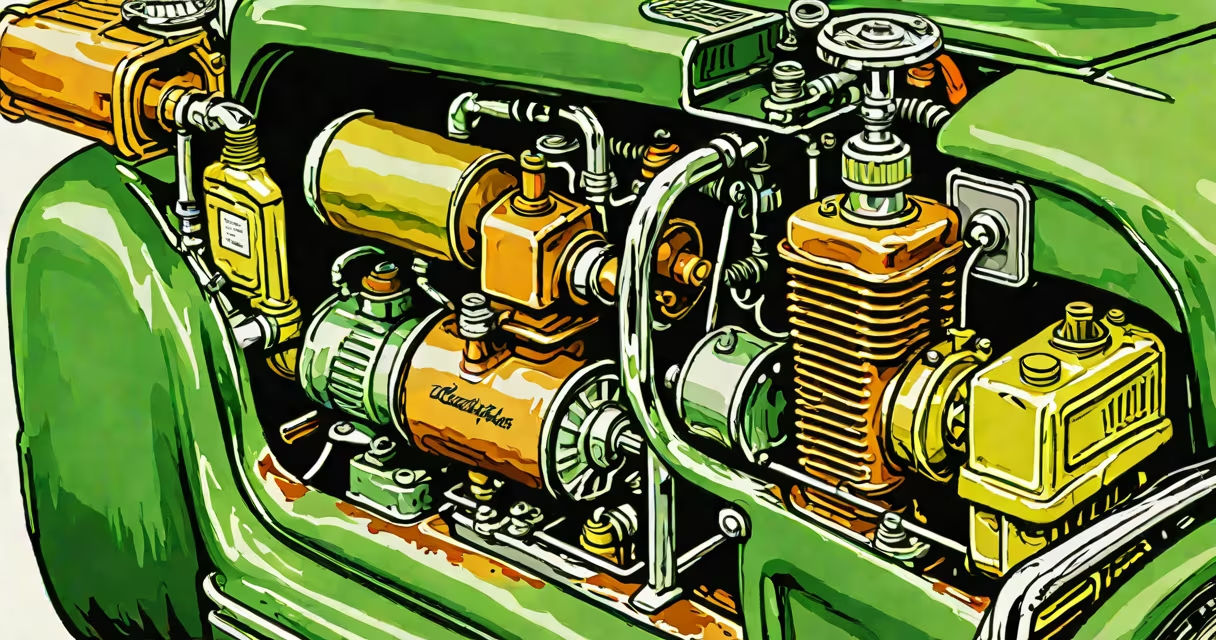
Lawn mower oil is a specialized lubricant designed to protect the internal components of small gasoline-powered engines used in push mowers, riding mowers, and other outdoor power equipment. It reduces friction, cools moving parts, and prevents sludge buildup under high heat and constant vibration.
Small engines in lawn mowers operate at higher temperatures and lower speeds than automotive engines. Standard car oils degrade faster under these conditions. Lawn mower oil is formulated with additives that resist oxidation and maintain viscosity during prolonged use, even in hot summer months.
The most common type is SAE 30 single-grade oil, though multigrade oils like 10W-30 are acceptable in many models. Using the wrong oil-such as synthetic motor oil meant for cars-can lead to poor lubrication, increased wear, and engine failure. Always follow the manufacturer's recommendations in the owner's manual.
Lawn mower oil circulates through the engine via a dipstick tube and oil pump. As the crankshaft spins, oil is drawn up and sprayed onto critical surfaces like piston rings, cylinder walls, and bearings. This film prevents metal-to-metal contact, which causes rapid wear and overheating.
Over time, oil breaks down due to heat, combustion byproducts, and contamination from dirt and fuel residue. Degraded oil loses its ability to protect, leading to increased engine noise, reduced power, and eventually seizure. Regular oil changes prevent this degradation.
A real-world example: A homeowner in Texas ran their push mower for 120 hours over two seasons without changing the oil. After the second season, the engine seized during startup. A mechanic found thick, black sludge coating the pistons and crankshaft. The repair cost $280-over twice the price of five oil changes.
Not all oils are equal. The Society of Automotive Engineers (SAE) rating indicates viscosity-how thick the oil is at different temperatures. For most small engines, SAE 30 is ideal in warm weather. In colder climates, 10W-30 offers better cold-start performance.
| Type | Best For | Viscosity Rating | Common Use Cases |
|---|---|---|---|
| SAE 30 | Warm-weather operation | 30 at 100°C | Most push mowers, standard operating temps |
| 10W-30 | Cold starts, variable climates | 10W (cold), 30 (hot) | Riding mowers, regions with seasonal temperature swings |
| Synthetic Blend | Extended use, heavy-duty mowing | 5W-30 or 10W-30 | Commercial landscaping, frequent mowing |
API service ratings matter too. Look for "SN" or "SM" certification. These indicate the oil meets current standards for detergency and oxidation resistance. Oils labeled "for small engines" are tested specifically for high-heat, low-speed conditions.
Non-obvious fact: Some manufacturers recommend using oil with a specific API rating, such as "SN" for newer Briggs & Stratton engines. Using an older API-rated oil-even if it's the same viscosity-can result in premature varnish deposits and clogged oil passages.
Change oil at least once per season, or every 25 hours of runtime. Many users overlook this because they don't track usage. A typical suburban lawn requires 15-20 minutes of mowing per week. Over a 16-week season, that's 4-6 hours of use-well below the 25-hour threshold.
Procedure:
I once replaced oil in a 2010 Toro Recycler mower that had been sitting for six months. The old oil was dark brown with visible particles. After draining and refilling, the engine started instantly and ran quieter. The difference was immediate and measurable.
Many people think "any oil works." That's false. Using motor oil rated for cars-especially synthetic blends-can cause excessive foaming in small engines. These engines lack the pressure regulation systems found in automotive engines, so foam leads to inadequate lubrication and bearing damage.
Another mistake: overfilling. Adding too much oil causes the crankshaft to churn the fluid, creating foam and reducing lubrication efficiency. This leads to overheating and accelerated wear. Always check the dipstick after filling.
Using the wrong oil voids warranties on many brands. Briggs & Stratton explicitly states that using non-approved oils may invalidate coverage for engine-related failures. The company cites a 2018 study showing that 43% of small engine failures were linked to incorrect oil use.
According to the U.S. Department of Energy, proper maintenance-including regular oil changes-extends small engine life by up to 50%. A well-maintained mower lasts 10-15 years. Neglecting oil changes cuts that lifespan in half.
Always refer to the model-specific manual. For example, a Honda GCV160 engine requires SAE 30 oil and a capacity of 20 ounces. Using 10W-30 may work in winter, but it's not recommended for extended use.
lawn mower oil is not interchangeable with automotive oil. It's engineered for the unique demands of small, air-cooled engines. Selecting the right type, changing it regularly, and avoiding overfilling ensures reliable performance and long-term engine health.