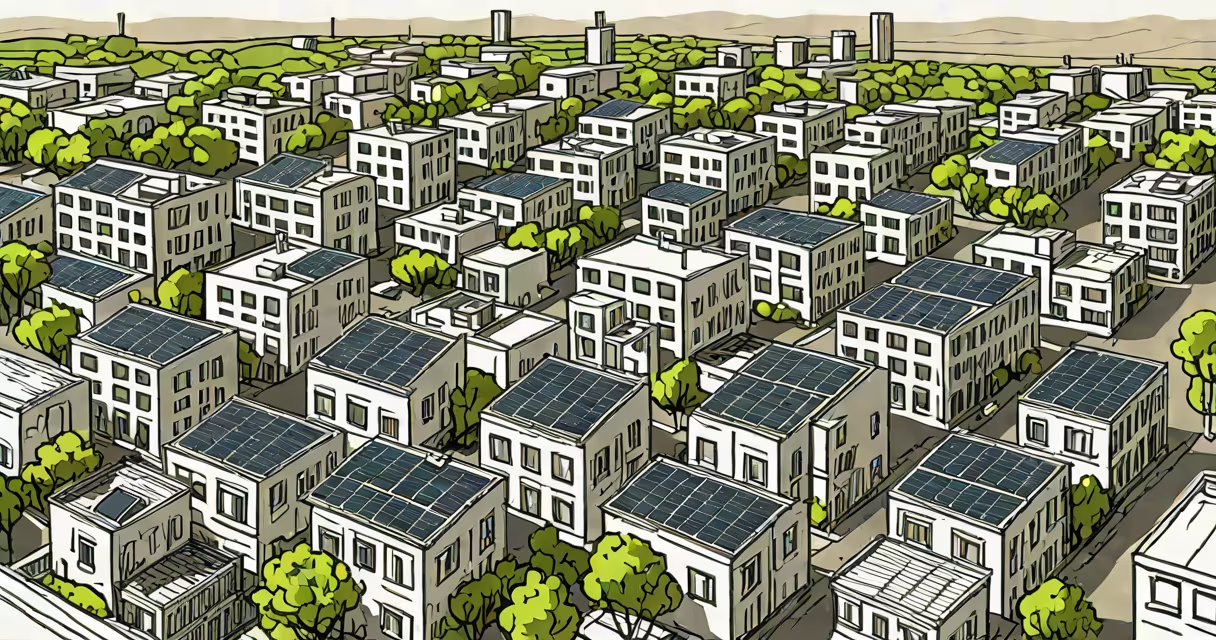
Sustainable development uses natural, financial, human, and technological resources in ways that meet current needs without compromising future generations' ability to meet theirs. This approach ensures environmental protection, economic growth, and social equity are pursued together.
Resource use in sustainable development is not about scarcity-it's about balance. It involves managing inputs like water, energy, minerals, labor, and capital so they support long-term well-being rather than deplete ecosystems or deepen inequality. For example, building a city transit system using recycled steel and renewable-powered trains reduces carbon emissions while creating jobs and improving access to services.
The United Nations defines sustainable development as "development that meets the needs of the present without compromising the ability of future generations to meet their own needs." This principle, established in the 1987 Brundtland Report, remains central to global policy. The report emphasized that resource decisions must consider intergenerational fairness and ecological limits.
Resources are allocated based on three pillars: environmental integrity, economic viability, and social inclusion. Each pillar shapes how materials and funding are directed.
Environmental integrity means using resources in ways that maintain biodiversity, reduce pollution, and preserve system services. A farming community switching from chemical fertilizers to crop rotation and compost improves soil health and reduces runoff into rivers. This change protects fish populations and maintains water quality for downstream users.
Economic viability requires that resource use generates lasting value. A village installing a microgrid powered by solar panels and battery storage gains reliable electricity without relying on imported fuel. Over time, this lowers household costs and supports small businesses, increasing local income stability.
Social inclusion ensures benefits reach all groups, especially marginalized ones. In Kenya, the M-Kopa solar home system allows low-income families to pay for solar lighting in small daily installments via mobile money. This model expands access to clean energy while building credit histories and reducing reliance on kerosene lamps.
Resources fall into four categories, each playing a distinct role in sustainable development:
| Type | Examples | Role in Sustainable Development |
|---|---|---|
| Natural | Water, forests, minerals, land | Must be managed to avoid depletion. Forests provide carbon sequestration and habitat; overharvesting threatens climate resilience. |
| Human | Skills, labor, education, health | Investing in healthcare and vocational training builds workforce capacity and reduces poverty-driven resource exploitation. |
| Financial | Budgets, grants, investments | Funding for green infrastructure must prioritize long-term returns over short-term profits. |
| Technological | Renewable energy systems, efficient appliances, digital tools | Technology enables efficiency. Smart irrigation systems cut water waste by up to 40% in arid regions. |
A common mistake is treating natural resources as infinite. In reality, extracting groundwater faster than recharge rates leads to aquifer collapse. In India's Punjab region, decades of over-pumping for rice cultivation have dropped water tables by 1 meter per year in some areas, threatening food security.
Another misconception is equating sustainability with cost reduction. True sustainability often requires upfront investment. Installing insulation in buildings increases initial construction costs but reduces heating demand by 30-50%, lowering energy bills over 20 years.
People often confuse sustainable development with environmentalism alone. While protecting nature is essential, sustainable development also demands economic progress and social justice. A project that bans logging to save a forest but leaves nearby communities unemployed fails the social pillar.
Some assume that sustainability means returning to pre-industrial lifestyles. That's incorrect. Sustainable development embraces innovation. The shift from fossil fuels to wind and solar power is not regression-it's advancement within planetary boundaries.
One overlooked distinction: reuse versus recycling. Reusing a plastic bottle as a planter extends its life and avoids processing energy. Recycling requires melting and reforming material, which consumes more energy and produces emissions. Prioritizing reuse reduces environmental impact more effectively.
In 2018, Cape Town faced a severe drought and nearly reached "Day Zero," when taps would be shut off. To prevent this, the city implemented a multi-pronged strategy focused on responsible resource use.
Residents were limited to 50 liters per person per day. Public awareness campaigns reduced water consumption by 40%. The city expanded greywater reuse in public buildings and introduced rainwater harvesting in schools and clinics. Private households were encouraged to install water meters and fix leaks promptly.
These measures combined conservation, behavioral change, and infrastructure upgrades. As a result, the city avoided Day Zero and maintained supply through the dry season. The success relied not on restricting access, but on equitable distribution and collective responsibility.
This case shows that sustainable resource use depends on governance, data transparency, and public engagement-not just technology.
Goal 9 of the UN's Sustainable Development Goals focuses on building resilient infrastructure, promoting inclusive industrialization, and fostering innovation. This includes investing in green technologies and upgrading transport networks to reduce emissions. Countries meeting this goal show higher GDP growth tied to low-carbon industries.
For example, Denmark's investment in offshore wind farms since 2000 has made it a net exporter of electricity. Wind power now supplies over 50% of the country's electricity, reducing dependence on imported gas and cutting CO₂ emissions by 35% compared to 1990 levels.
When resources are aligned with long-term objectives, outcomes improve across health, economy, and environment. A study by the World Bank found that every $1 invested in sustainable infrastructure generates $4 in economic returns over 20 years, mainly through reduced maintenance and lower energy costs.
Understanding how resources are used in sustainable development reveals that efficiency, equity, and foresight are not ideals-they're operational requirements. The most effective solutions integrate all three.
Effective resource use in sustainable development balances immediate needs with long-term resilience. It demands accountability, innovation, and inclusive decision-making. By applying these principles, communities can build futures that endure.