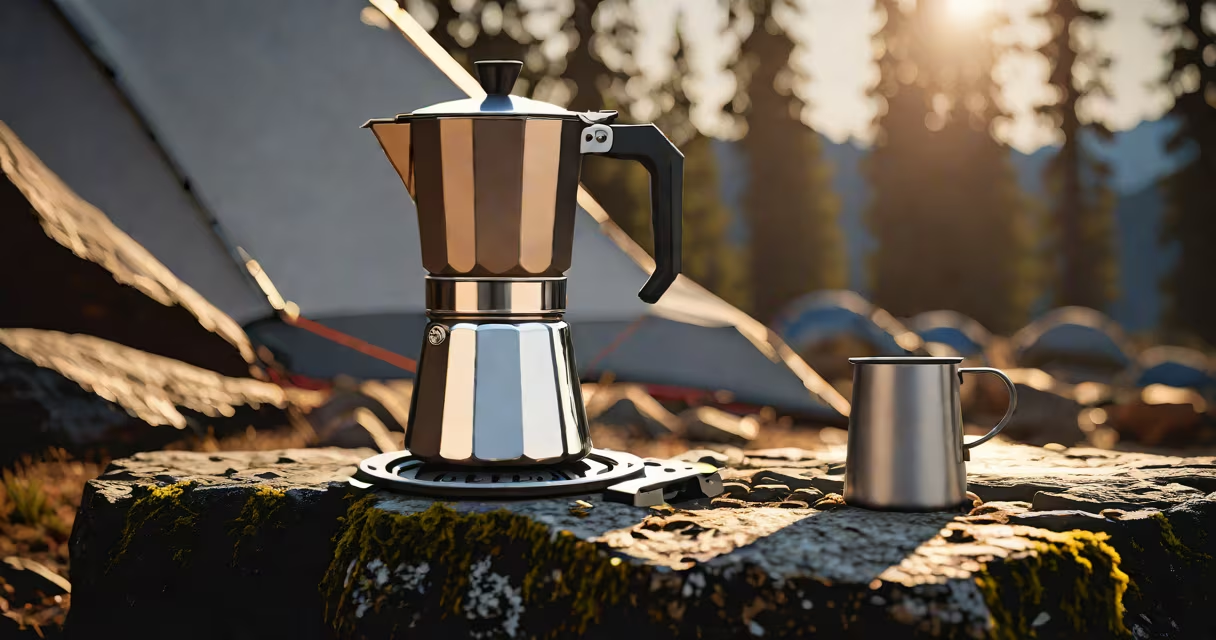
A camping coffee maker is a lightweight, portable device designed to brew fresh coffee in outdoor settings without access to electricity or kitchen appliances. These tools prioritize durability, minimal weight, and simplicity, often using heat from a campfire or portable stove.
Camping coffee makers operate through manual brewing methods such as pour-over, immersion, or pressurized extraction. They're typically made from aluminum, titanium, or stainless steel, materials chosen for heat conductivity and resistance to corrosion. Models range from single-serve units to multi-cup systems capable of making 4 cups or more.
For backpackers, car campers, and wilderness travelers, a camping coffee maker replaces the need for bulky electric brewers. It enables consistent, high-quality coffee in remote locations. The best models balance ease of use, cleanup, and portability-critical factors when space and weight matter.
Camping coffee makers rely on gravity, immersion, or pressure to extract flavor from ground coffee. Most common are pour-over and French press-style designs adapted for outdoor use.
Pour-over models require a filter and steady hand. You place grounds in a cone-shaped filter, pour hot water in stages, and collect the brewed coffee below. This method emphasizes clarity and brightness in flavor, ideal for light roasts.
Immersion devices like the Bruvi or titanium French press-style makers steep coffee grounds in hot water for 3-4 minutes. After steeping, you press a plunger to separate the grounds. This method produces fuller-bodied coffee with more body and less acidity.
Some advanced models use pressurized systems similar to espresso machines but powered by hand pumps. These are rare and heavier, used mostly by expedition teams or long-distance trekkers who value concentrated flavor.
Three primary types dominate the market: pour-over, immersion, and pressurized. Each suits different environments and preferences.
| Type | Best For | Weight (avg) | Water Capacity | Key Feature |
|---|---|---|---|---|
| Pour-over | Backpacking, solo trips | 60-100g | 1-2 cups | Lightweight, low waste |
| Immersion (French press style) | Car camping, group use | 150-300g | 3-4 cups | Full body, easy cleanup |
| Pressurized (hand-pump) | Long expeditions, cold climates | 400g+ | 2-3 cups | Espresso-like strength |
Titanium models offer the highest strength-to-weight ratio. A 4-cup titanium pour-over weighs under 120 grams-light enough to carry on a 10-day hike. Aluminum versions are cheaper but degrade faster when exposed to acidic brews. Stainless steel is durable but heavier, better suited for base camp use.
Camping coffee makers serve both recreational and survival purposes. They're standard gear for backpackers, climbers, and weekend campers seeking a morning ritual beyond instant coffee.
On a 5-day trek through the Sierra Nevada, I used a titanium pour-over model with a 2-cup capacity. I boiled water on a Jetboil stove, poured it slowly over medium-fine grounds, and collected the brew in a nested mug. The entire process took under 5 minutes. The coffee was clean, aromatic, and free of sediment-superior to instant or freeze-dried options.
Many users overlook the impact of water quality. In remote areas, untreated water can affect taste. Using a portable filter like the LifeStraw or Katadyn Pro removes sediment and chlorine, improving the final brew. This step is critical when using river or lake water.
People often mistake camping coffee makers for "instant" or "freeze-dried" coffee products. Instant coffee dissolves in hot water and requires no brewing equipment. It's convenient but lacks complexity and freshness. A camping coffee maker uses freshly ground beans and proper extraction-delivering a richer, more detailed flavor profile.
Another misconception is that all camping coffee makers are slow. While immersion methods take 3-4 minutes, pour-over systems can be completed in under 3 minutes with practice. Speed depends on technique, not the tool itself.
Some assume that titanium models are fragile. In reality, titanium resists dents and corrosion better than aluminum. It also conducts heat efficiently, reducing boil time. A 2022 study by the Outdoor Gear Lab confirmed that titanium camping coffee makers retained heat 22% longer than aluminum equivalents during field testing.
Finally, users sometimes believe they need special grind sizes. Most camping coffee makers work well with a medium-coarse grind-similar to sea salt. Grinding too fine leads to over-extraction and bitterness. A handheld burr grinder like the Hario Skerton ensures consistency.
A camping coffee maker is not a luxury-it's a practical upgrade for anyone who values fresh, flavorful coffee in nature. parked at a lakeside campsite, it delivers a ritual that enhances the outdoor experience. Choose based on group size, weight limits, and preferred brewing style. The right model turns a simple morning into a moment of calm.