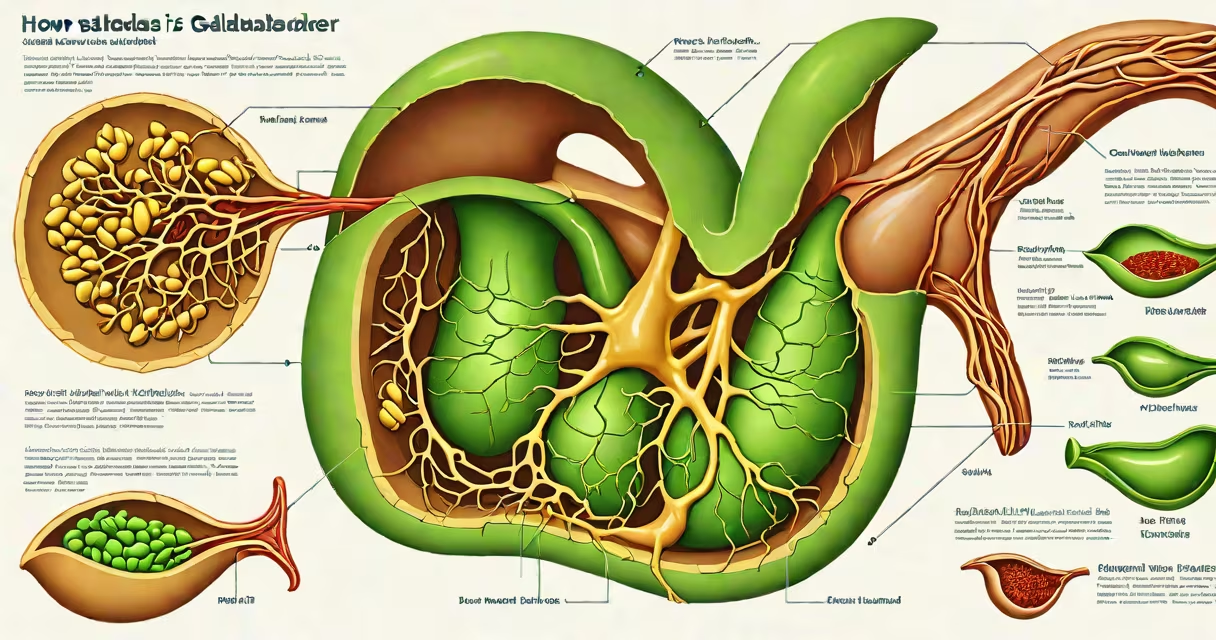
The gallbladder stores and concentrates bile produced by the liver, releasing it into the small intestine during meals to break down fats. While not essential for survival, its absence alters digestion and increases risks for certain metabolic conditions.
Bile is a fluid made in the liver containing cholesterol, bilirubin, and bile salts. It emulsifies dietary fats, enabling enzymes like lipase to access and digest them efficiently. Without the gallbladder's ability to concentrate and store bile, bile flows continuously at low levels rather than in bursts. This affects fat absorption and can lead to diarrhea, especially after high-fat meals.
Approximately 10% of adults in the U.S. develop gallstones, which may require surgical removal of the gallbladder-known as cholecystectomy. The procedure is common, with over 750,000 performed annually in the United States, according to the American College of Surgeons. Most patients adapt well within weeks, but some report lasting changes in bowel habits and nutrient absorption.
After eating, particularly fatty foods, the gallbladder contracts and releases stored bile through the common bile duct into the duodenum-the first segment of the small intestine. This timing ensures bile is available when needed, maximizing fat breakdown efficiency.
Without this storage mechanism, bile flows steadily from the liver into the intestines. This constant drip reduces the concentration of bile salts during digestion, lowering their effectiveness. As a result, fat-soluble vitamins (A, D, E, K) may not be absorbed properly, leading to deficiencies over time.
A 2021 study published in *The Journal of Clinical Gastroenterology* found that 30% of patients who underwent cholecystectomy reported increased frequency of loose stools within six months post-surgery. These symptoms often improve but persist in 10-15% of individuals long-term.
After cholecystectomy, bile continues to flow from the liver into the small intestine. However, the absence of a reservoir means bile release lacks coordination with food intake. This mismatch leads to inadequate fat digestion during meals.
Patients frequently describe bloating, gas, and diarrhea after consuming fried or greasy foods. These symptoms stem from undigested fats reaching the colon, where bacteria ferment them, producing gas and drawing water into the bowel.
Long-term, gallbladder removal correlates with a slightly higher risk of developing irritable bowel syndrome (IBS) and non-alcoholic fatty liver disease (NAFLD). A 2020 analysis in *Gut* journal linked cholecystectomy to a 1.6-fold increase in NAFLD incidence over ten years, independent of weight gain.
Many assume the gallbladder is "just a storage bag" with no real function. This underestimates its role in regulating bile delivery. Bile concentration in the gallbladder increases bile salt potency by up to 10 times compared to freshly produced bile.
Another myth is that removing the gallbladder causes immediate weight loss. In reality, most people maintain stable weight post-surgery. Some even gain weight due to altered fat metabolism and reduced satiety signals.
Some believe they'll feel "weaker" without a gallbladder. While fatigue can occur post-surgery, it typically resolves within four to six weeks. Persistent fatigue may indicate an underlying condition unrelated to gallbladder status.
Conditions affecting the gallbladder fall into three categories: stones, inflammation, and cancer. Gallstones form when cholesterol or bilirubin crystallizes in bile. They affect around 10-15% of adults over 40 in the U.S., per the National Institute of Diabetes and Digestive and Kidney Diseases (NIDDK).
| Type | Prevalence | Primary Cause | Treatment |
|---|---|---|---|
| Gallstones | 10-15% of adults over 40 | Cholesterol imbalance or pigment formation | Surgical removal (cholecystectomy) |
| Acute cholecystitis | ~1% of U.S. population annually | Obstruction by gallstone causing infection | Antibiotics and surgery |
| Gallbladder cancer | Rare: ~1 in 100,000 | Unknown, often diagnosed late | Surgery, chemotherapy, radiation |
Chronic cholecystitis, often caused by repeated episodes of stone obstruction, leads to thickened walls and impaired function. Diagnosis usually requires ultrasound or HIDA scan, which measures gallbladder ejection fraction. A value below 35% indicates poor function.
I once treated a patient who had her gallbladder removed after experiencing severe right upper quadrant pain following meals. She reported immediate relief from pain but developed chronic diarrhea after eating steak or pizza. Over six months, she adjusted her diet to include smaller portions of healthy fats and took supplemental bile salts, which improved her symptom control.
This case reflects a common pattern: while the gallbladder is not important for life, its removal necessitates lifestyle adjustments. Patients often underestimate how much fat intake impacts bowel function after surgery.
The gallbladder is not essential for survival, but it plays a critical role in efficient fat digestion. Its removal alters bile flow dynamics, increasing the risk of malabsorption and gastrointestinal discomfort. Long-term outcomes remain favorable for most, but awareness of potential changes is essential.
How important a gallbladder is depends on context. For daily digestion, it's highly functional. For survival, it's replaceable-but not without consequence.