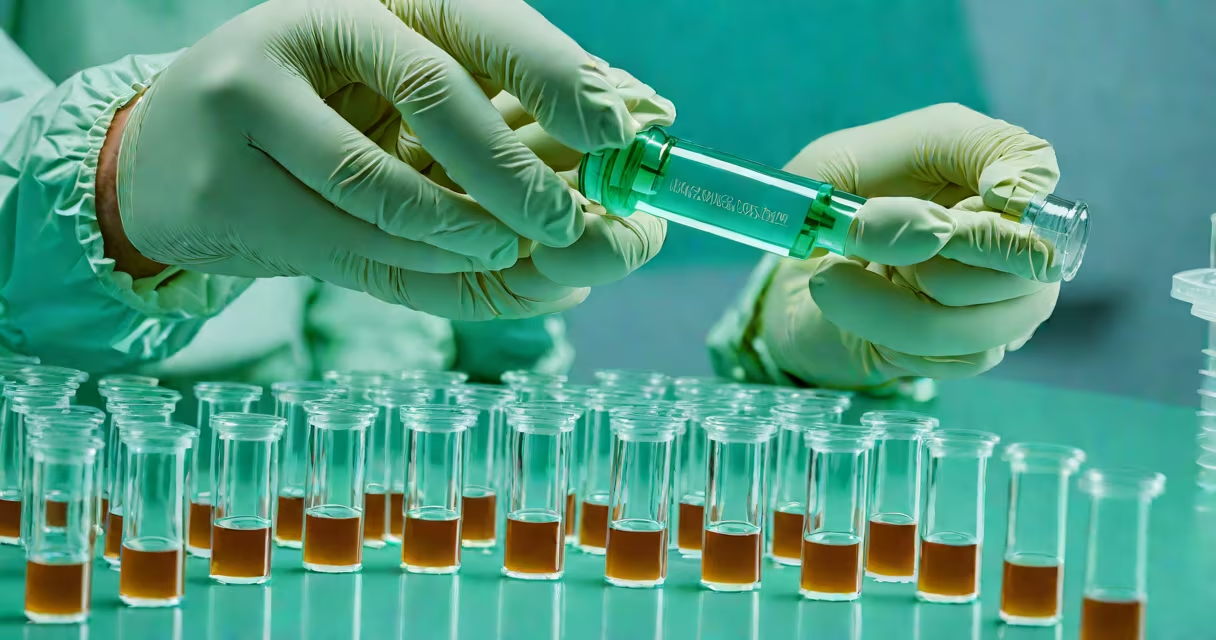
The measles vaccine is produced by growing a weakened (attenuated) version of the measles virus in human diploid cells, then purifying and stabilizing it for storage and distribution. This process ensures the virus triggers immunity without causing disease.
Measles vaccine is a live attenuated vaccine, meaning it uses a version of the virus that has been modified to replicate poorly in humans. This allows the immune system to recognize and respond to the virus without causing illness. The original strain used in the vaccine was isolated from a child with measles in 1954 and passed through multiple cell cultures to reduce virulence.
Manufacturers begin by infecting cultured human diploid fibroblast cells with the attenuated virus. These cells, derived from fetal tissue but grown in controlled lab conditions, support viral replication while maintaining safety standards. After incubation, the virus is harvested from the cell culture medium, purified, and formulated into a stable liquid or freeze-dried powder.
Production occurs in several distinct phases: virus selection, cell culture, purification, formulation, and quality control. Each stage follows strict guidelines set by the FDA and WHO.
Step one involves selecting a safe, genetically stable attenuated strain. The Edmonston strain, developed in the 1960s, remains the foundation for most global measles vaccines. It underwent over 50 passages in chick embryo cells and human diploid cells to ensure it could not revert to a pathogenic form.
Next, the virus is grown in large-scale bioreactors using human diploid cells (like MRC-5 or WI-38 lines). These cells are derived from aborted fetuses but are not used directly in production-they are propagated in labs for decades. The culture runs for 7-10 days, during which the virus replicates and spreads through the cell monolayer.
After harvesting, the viral suspension undergoes multiple purification steps. Centrifugation removes cellular debris, followed by ultrafiltration and chromatography to isolate the virus particles. The final product contains less than 100 nanograms of residual host cell DNA per dose, well below safety thresholds.
| Stage | Duration | Key Input | Output |
|---|---|---|---|
| Virus propagation | 7-10 days | Attenuated measles virus, human diploid cells | Infected cell culture fluid |
| Purification | 3-5 days | Harvested fluid, filters, chromatography resins | High-purity viral antigen |
| Formulation | 1-2 days | Purified virus, stabilizers (sucrose, gelatin) | Stable liquid or lyophilized powder |
The final vaccine contains the attenuated measles virus, along with excipients such as sucrose (to prevent freezing damage), gelatin (to stabilize protein structure), and trace amounts of antibiotics (e.g., neomycin) to prevent bacterial contamination during production.
Each 0.5 mL dose typically contains at least 1000 median tissue culture infectious doses (TCID50) of the virus. This potency level ensures a strong immune response in nearly all recipients. The vaccine is stored frozen at -15°C to -25°C until use, though it can remain viable for up to 10 years under proper conditions.
A common misconception is that the measles vaccine contains formaldehyde or mercury. Formaldehyde is used in trace amounts during inactivation steps for some vaccines, but not in measles. Mercury is absent entirely-the myth likely stems from confusion with thimerosal, a preservative used in multi-dose vials of other vaccines, which is not present in the standalone measles vaccine.
Measles vaccine is administered as part of the MMR (measles, mumps, rubella) combination vaccine. It is recommended at 12-15 months of age, with a second dose at 4-6 years. The CDC reports that two doses provide 97% protection against measles.
Global production is concentrated in five major manufacturers: Merck (USA), GlaxoSmithKline (UK), Sanofi Pasteur (France), Serum Institute of India (Pune), and Sinovac (China). The World Health Organization estimates that over 140 million doses were distributed globally in 2022, primarily through Gavi, the Vaccine Alliance.
India's Serum Institute produces over 1 billion doses annually-about 50% of global supply. Their process uses a single-use bioreactor system that reduces contamination risk and enables rapid scaling during outbreaks. In 2021, they delivered 300 million doses to low-income countries at $0.25 per dose.
Some people believe the measles vaccine causes autism. This claim originated from a 1998 study published in *The Lancet* that was later retracted due to falsified data and ethical violations. Subsequent research involving over 1.2 million children in Denmark and the UK found no link between MMR vaccination and autism.
Another misunderstanding is that the vaccine is made from live measles cases. The virus used is not taken from infected individuals-it is a laboratory-modified strain that has been passaged through cells for decades. The original isolate came from a boy named David Edmonston, whose blood sample was collected in 1954 during a measles outbreak in New York City.
I once visited a vaccine manufacturing facility in Pune, India, where I observed the final filling line. Vials were filled under laminar airflow hoods, sealed with rubber stoppers, and labeled with batch numbers and expiration dates. The entire process takes place in a Class 100 cleanroom-air is filtered to remove particles larger than 0.5 microns.
For context, the measles virus is a single-stranded RNA virus in the *Morbillivirus* genus. Its genome is approximately 15,900 nucleotides long. The attenuated version has mutations in the P gene (phosphoprotein) and F gene (fusion protein), reducing its ability to suppress interferon responses and limit spread in human cells.
Understanding how the measles vaccine is made clarifies its safety and effectiveness. It is not a crude extract from sick patients, nor does it contain harmful additives. Instead, it is a precisely engineered biological product designed to train the immune system without risk.