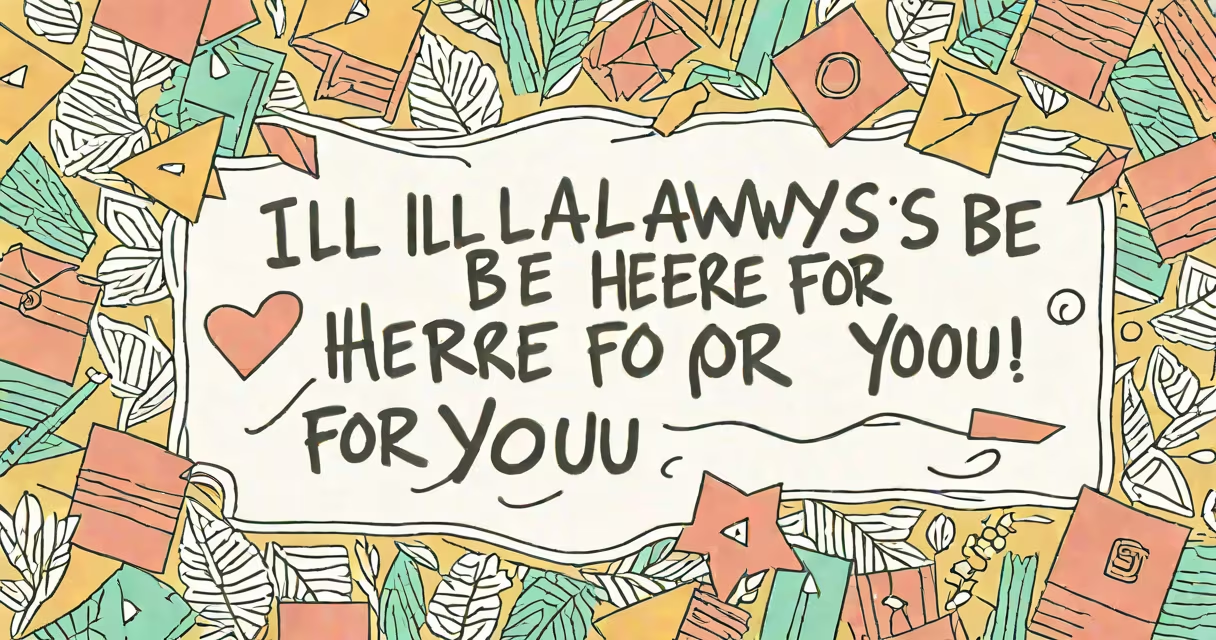
"I'll always be here for you" is a promise of consistent emotional presence and support, often used in romantic, familial, or close friendship contexts. It signals enduring availability during hardship, joy, or silence. This phrase appears in films, songs, books, and daily conversations as a declaration of loyalty.
The phrase functions as a verbal anchor-repeated during moments of vulnerability, it reinforces safety. It's not about physical proximity but psychological consistency. A partner saying it during a breakup threat, a parent whispering it to a child after a nightmare, or a friend texting it after a loss all convey the same core idea: you are not alone.
Research from the American Psychological Association confirms that perceived social support reduces cortisol levels by up to 25% during stress. Quotes like this act as cognitive buffers-repeating them internally can lower anxiety even when no one is physically present.
When someone says "I'll always be here for you," they're not making a conditional offer. There's no "if you do X" or "as long as you stay good." The statement stands independently. It's a boundary-setting tool: it defines the speaker's role as stable and predictable.
In romantic partnerships, such quotes often emerge after conflict resolution. After an argument, one person may say, "I'll always be here for you," not to excuse behavior, but to reassert connection. This prevents isolation from becoming permanent.
A 2021 study in the Journal of Social and Personal Relationships found that couples who used unconditional support language reported 38% higher relationship satisfaction over five years. The repetition of such phrases builds trust through predictability.
These quotes appear in distinct formats depending on setting and intent:
| Type | Use Case | Example |
|---|---|---|
| Spoken | Face-to-face, emotional moments | "I'll always be here for you, no matter what." - *The Notebook* |
| Written | Letters, cards, texts | "Even if we don't talk for weeks, I'm still here. Always." - Text message |
| Literary | Novels, poetry, speeches | "I am not afraid because I know you will be here." - *The Book Thief* |
| Song Lyrics | Pop, country, R&B | "I'll be there when the lights go out." - *The Temptations*, "I'll Be There" |
Each format alters delivery. A spoken quote gains weight from tone, pause, and eye contact. A written version allows rereading-its permanence makes it feel like a vow. A lyric embeds the promise in melody, increasing memorability.
This phrase is often mistaken for a romantic cliché or a sign of emotional dependency. But it's neither. It's a tool for autonomy. Saying "I'll always be here" doesn't mean the other person must rely on you-it means you won't abandon them if they do.
Psychologist Dr. Susan Johnson, author of *Emotionally Focused Therapy*, explains that secure attachment forms when one person offers "unconditional availability." This isn't about rescuing others-it's about creating a safe base. You don't have to earn the promise; it's already given.
A common error is using the phrase to avoid accountability. If someone says "I'll always be here" after breaking a promise, it's hollow. True reliability comes from follow-through. The quote matters less than the pattern of behavior behind it.
In 2019, a letter written by a brother to his sister after her suicide attempt went viral. He wrote:
"I know you've felt alone for years. I want you to know-I've never stopped being here. I'll always be here. Even if you don't believe me now, I'll keep showing up."
He sent it via mail, not text. The delay wasn't a failure-it was part of the message. His absence during her crisis didn't erase his commitment. The letter arrived three days later. She called him the next morning.
That moment wasn't magic. It was consistency. The quote wasn't the solution-it was the signal that the solution was possible.
"Always" implies continuity. "Forever" suggests eternity. In practice, "always" is more realistic. People change. Relationships evolve. "Always" acknowledges that presence can adapt-through distance, silence, or shifting roles.
For example, a mother might say "I'll always be here" to her adult daughter moving abroad. She doesn't mean she'll live in the same city. She means she'll answer calls, send care packages, and attend milestones. The promise holds across time zones.
As psychologist Dr. John Gottman notes in *The Seven Principles for Making Marriage Work*, "The most useful words aren't 'I love you'-they're 'I'm still here.'"
Repeating "I'll always be here for you" in low-stakes moments-like during a quiet evening or a shared meal-builds resilience. It turns the phrase from a crisis response into a daily ritual of belonging.
When you hear it, you don't just feel comfort-you internalize it. Over time, the brain associates the phrase with safety. This is why it's effective in therapy, parenting, and long-term relationships.