In Spanish, "in the morning" is most accurately translated as "por la mañana," a phrase used to indicate time during the early hours of the day, typically from sunrise to around noon.
"Por la mañana" functions as a prepositional phrase that specifies timing. It appears in sentences like "Voy al gimnasio por la mañana" (I go to the gym in the morning). The structure uses "por" (meaning "during") and "la mañana" (the morning), forming a standard temporal expression in everyday speech.
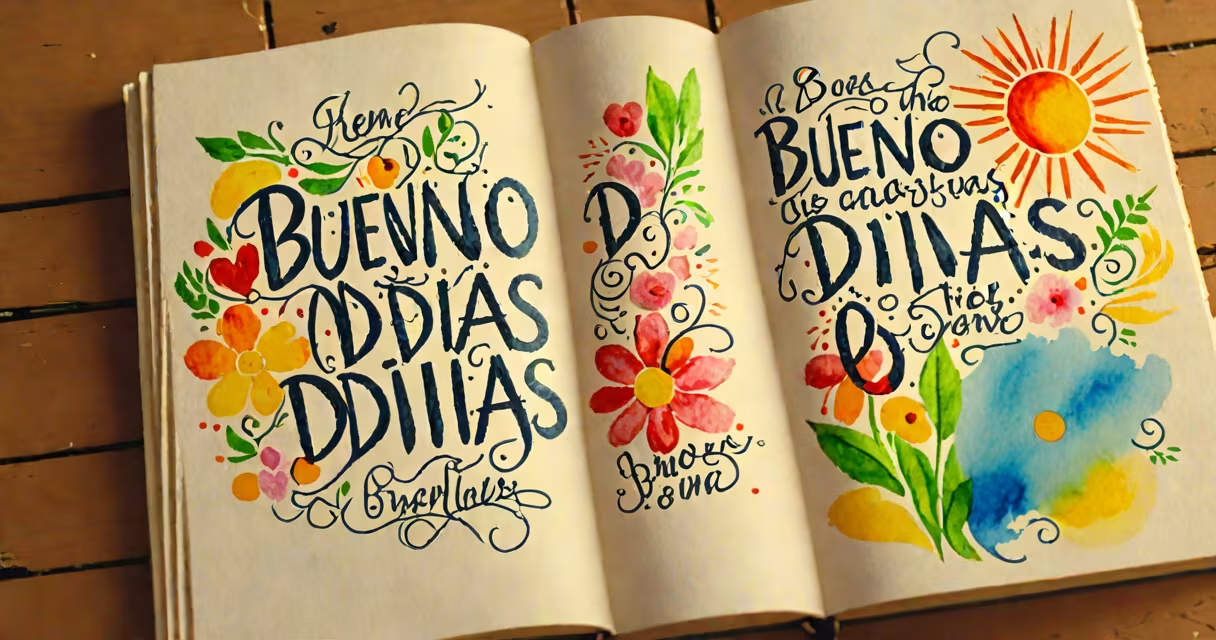
Spanish speakers often use "buenos días" as a greeting during this period. This phrase, meaning "good morning," is appropriate from approximately 6 a.m. to noon. It's not just a time marker-it's a social ritual. In many Spanish-speaking cultures, saying "buenos días" upon meeting someone in the morning is expected, especially in formal or professional settings.
The phrase "por la mañana" is used to describe activities, routines, or events occurring during the early part of the day. It's not limited to literal sunrise-to-noon hours. For example, someone might say "Me gusta leer por la mañana" (I like to read in the morning), even if they start reading at 8:30 a.m.
It's also used in schedules and planning. A student might say, "Tengo clase de física por la mañana," meaning their physics class is scheduled in the morning. The phrase avoids ambiguity by indicating the time frame without needing to specify exact hours.
When paired with verbs, "por la mañana" follows the subject and verb. It doesn't come before the subject unless for emphasis. For example: "Por la mañana, siempre desayuno pan con mermelada" (In the morning, I always eat bread with jam for breakfast).
While "por la mañana" is the standard translation, several related expressions appear in spoken and written Spanish:
"De mañana" is acceptable in informal contexts but may sound less precise. For example, "Voy al mercado de mañana" (I'm going to the market in the morning) is understandable but less formal than using "por la mañana."
| Phrase | Meaning | Usage Context | Regional Notes |
|---|---|---|---|
| por la mañana | in the morning | Standard, formal, universal | Used everywhere in Spanish-speaking regions |
| de mañana | in the morning | Informal, spoken | Common in Mexico, Colombia, Argentina |
| buenos días | good morning | Greeting | Universal, expected in morning interactions |
A frequent error is assuming "mañana" alone means "in the morning." "Mañana" actually means "tomorrow." Confusing the two leads to misunderstandings. For example, "Voy al cine mañana" means "I'm going to the movies tomorrow," not "in the morning."
Another mistake is using "en la mañana." This construction is incorrect in standard Spanish. "En" suggests location or specific time points, not extended periods. "En la mañana" sounds unnatural and is rarely used in native speech.
Even native speakers sometimes misuse "por la mañana" when referring to afternoon or evening events. For example, saying "Estudio por la mañana" to mean "I study in the afternoon" is inaccurate. The phrase strictly refers to the morning hours.
I once visited a café in Madrid where a local woman ordered her usual: "Un café con leche y un cruasán, por la mañana." She wasn't referring to a specific time-it was just how she described her daily habit. The barista responded with "¡Buenos días!" as she handed over the drink.
This exchange shows how "por la mañana" blends into routine talk. It's not just a time marker-it's part of identity and culture. In Spain, people often have a light breakfast around 8 a.m., and saying "por la mañana" helps place actions within a familiar rhythm.
Another example: A teacher in Buenos Aires wrote on a whiteboard, "Clase de matemáticas por la mañana." Students nodded and began preparing. The phrase set expectations without needing to list times.
Spanish distinguishes between "por la mañana" and "por la tarde" (in the afternoon) not just linguistically but culturally. In many Spanish-speaking countries, meals and work patterns are structured around these divisions. Lunch is typically eaten around 2 p.m., and dinner later-around 9 p.m. This rhythm makes "por la mañana" a key anchor in daily life.
According to the Real Academia Española (RAE), "por la mañana" is the preferred form in formal writing and official documents. The RAE notes that "de mañana" is acceptable in spoken language but should be avoided in academic or legal texts.
The use of "buenos días" as a greeting is not optional in many workplaces. In Colombia, for instance, employees are expected to greet colleagues with "buenos días" when arriving between 7 a.m. and 11 a.m. Failing to do so can be seen as rude or disengaged.
Mastering "in the morning in spanish" isn't just about vocabulary-it's about fitting into rhythms of daily life. writing a letter, knowing how to place actions in time improves clarity and connection.