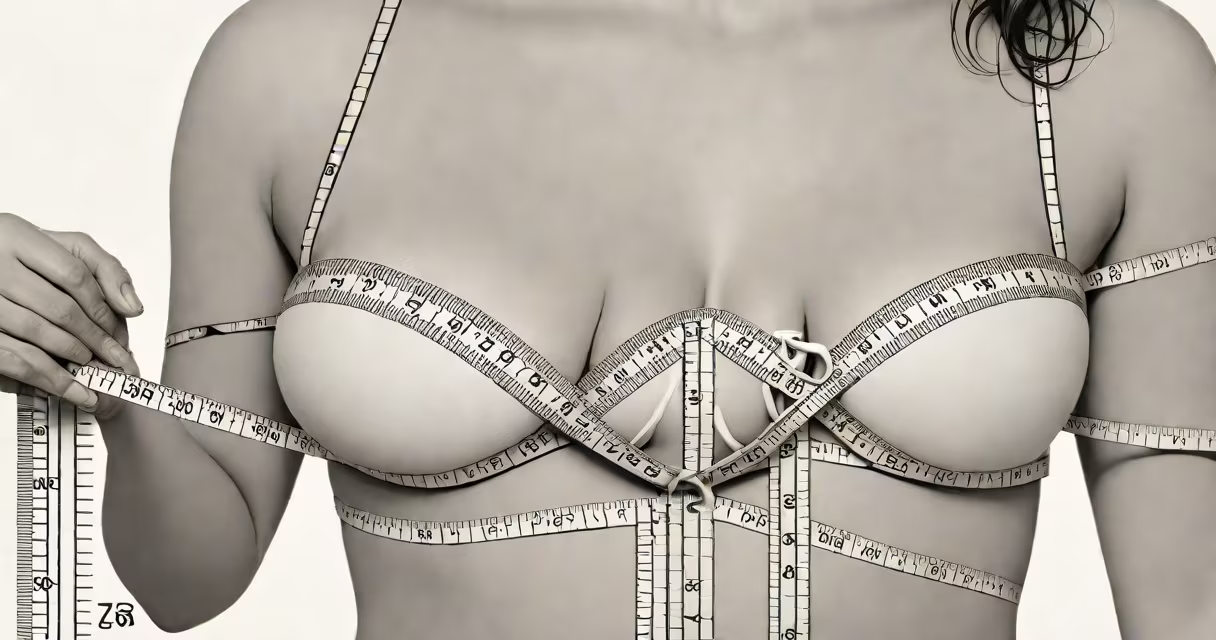
The meaning of cup size in bra is the volume difference between the fullest part of the bust and the underbust measurement, expressed in inches or centimeters. Cup size is not a standalone number-it's derived from the difference between two measurements, and each letter corresponds to a specific volume increment.
Cup size is determined by subtracting the band size (measured around the ribcage, just below the bust) from the bust size (measured at the fullest part of the breasts). The resulting difference determines the cup letter. For example, a 3-inch difference equals a B cup, 4 inches is a C, and so on. This system applies across most Western sizing standards, though exact values differ slightly between countries.
Understanding the meaning of cup size in bra is essential for finding a well-fitting bra. A mismatched cup size leads to poor support, discomfort, and visible bulges. According to the American Society for Aesthetic Plastic Surgery, nearly 80% of women wear the wrong bra size, often due to misinterpreting cup size as a standalone value rather than a result of measurement differences.
Cup size is not arbitrary-it follows a consistent mathematical rule. Measure the underbust (just below the breasts) in inches or centimeters. Then measure the bust at its fullest point. Subtract the underbust from the bust. The result is the cup size.
For example: Underbust: 32 inches Bust: 36 inches Difference: 4 inches → C cup
This 4-inch gap translates to a C cup in standard U.S. sizing. Each letter represents a 1-inch increase in volume. So a 1-inch difference is an A cup, 2 inches is B, 3 inches is C, 4 inches is D, and so on. Some systems extend beyond D-such as DD, DDD, or E, F, G-but these are less standardized and vary by brand.
A common mistake is assuming that cup size is a fixed volume. A C cup in a 32-band size holds less volume than a C cup in a 38-band size. The cup letter only reflects the difference, not the absolute size. This is why a 34C and a 38C are not the same size-they have different volumes despite the same letter.
Different countries use slightly different formulas for converting measurement differences into cup letters. The U.S., Canada, and UK share a similar system, but Europe uses centimeters and sometimes shifts the letter assignments.
| Region | Band Size (inches) | Measurement Difference (inches) | Cup Letter |
|---|---|---|---|
| U.S./Canada | 32 | 3 | B |
| U.S./Canada | 34 | 4 | C |
| UK | 32 | 3 | B |
| Europe (cm) | 80 | 7 cm | C |
In Europe, the difference is measured in centimeters. A 7 cm difference equals a C cup. The system is similar but uses metric units. Brands like Triumph and Panache use this format, which can confuse shoppers used to inch-based sizing.
One non-obvious fact: some brands skip letters entirely. For example, a brand may label a 5-inch difference as E instead of D. This is called "non-standard" or "brand-specific" sizing. It's why trying on bras is critical-even if two bras have the same size, the fit can differ based on construction and fabric.
Many people assume that cup size is a direct indicator of breast size. That's false. A woman with a small frame and a large cup size (e.g., 32D) may have smaller actual volume than someone with a larger frame and a smaller cup (e.g., 38B). Volume depends on both band and cup.
Another misconception is that cup size changes with weight gain or loss. While breast size may change, the cup size only shifts if the difference between bust and band increases. Gaining 10 pounds might increase bust size by 2 inches, but if the band also expands by 1 inch, the difference stays the same-cup size doesn't change.
I once tried on a 34C bra during a fitting session and felt it was too tight. After measuring myself, I discovered my underbust was actually 33 inches-not 34. My correct size was 33C, not 34C. The band size affects the entire fit. This is why the bra cup size meaning must include both numbers.
To find your accurate cup size, follow these steps:
For example: Underbust: 36 inches Bust: 40 inches Difference: 4 inches → D cup Correct size: 36D
Some brands offer online tools that automate this process. But because of variation in fit and fabric stretch, nothing replaces a professional fitting. The how to size a bra cup guide includes step-by-step video demos and printable charts for reference.
Remember: cup size is not a standalone number. It's a derived value based on measurement difference. Always pair it with band size for accuracy. Misunderstanding this leads to ill-fitting bras, discomfort, and long-term posture issues.