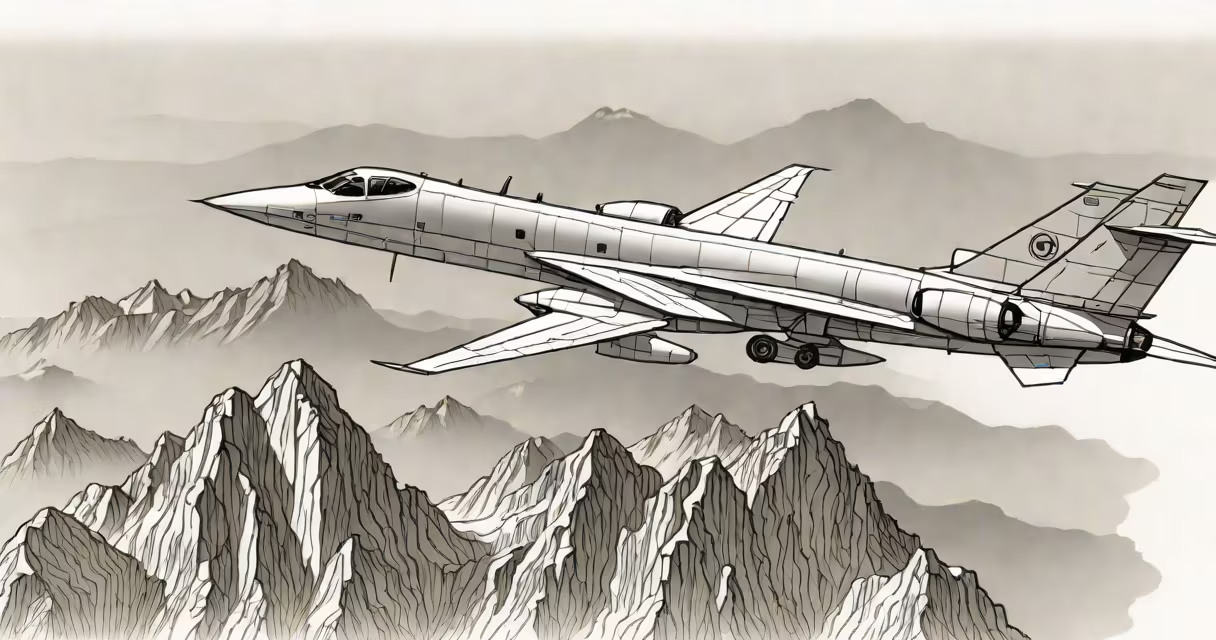
The international journal of aeronautical is a peer-reviewed academic publication that disseminates original research in aeronautics, aerospace engineering, flight dynamics, propulsion systems, and related technological domains. It serves researchers, engineers, and institutions engaged in advancing aviation science and spaceflight systems.
Published under rigorous editorial standards, the journal evaluates submissions based on scientific validity, technical novelty, and relevance to current aerospace challenges. All articles undergo double-blind peer review by experts in the field, ensuring methodological integrity and academic credibility. The journal emphasizes empirical findings, theoretical models, and applied innovations with measurable impact on aircraft performance, safety, and sustainability.
Research published in the international journal of aeronautical spans both theoretical and practical dimensions. Topics include aerodynamic optimization, lightweight composite materials, autonomous flight control systems, and emissions reduction in jet propulsion. Articles often include computational simulations, wind tunnel test results, and flight-test data. The journal accepts contributions from universities, national laboratories, and private aerospace firms worldwide.
Authors submit manuscripts through an online portal managed by the publisher. Submissions must follow strict formatting guidelines, including structured abstracts, standardized citation styles (APA 7th edition), and compliance with ethical research protocols. Authors must disclose funding sources and potential conflicts of interest.
After initial screening for scope and completeness, each manuscript is assigned to at least two independent reviewers with expertise in the relevant subfield. Reviewers assess originality, methodology soundness, data interpretation, and clarity of presentation. Revisions may be required before acceptance. The average time from submission to decision is 6-8 weeks, though complex reviews can extend to 12 weeks.
Accepted articles are copy-edited for grammar, terminology consistency, and technical accuracy. Final versions are published online with a DOI (Digital Object Identifier) and archived in major databases such as Scopus, Web of Science, and Google Scholar. Open access options are available for authors who wish to maximize visibility.
The journal focuses on five core areas: aircraft design, propulsion and power systems, flight control and navigation, structural materials, and environmental impact. Each area supports interdisciplinary work bridging mechanical engineering, fluid dynamics, and computer science.
For example, a 2023 study published in the journal analyzed the efficiency gains of adaptive wing morphing using piezoelectric actuators. The team conducted CFD (computational fluid dynamics) simulations and validated results with wind tunnel tests at NASA's Langley Research Center. They reported a 12% reduction in drag at cruise speed compared to conventional rigid wings, demonstrating tangible improvements in fuel economy.
Another paper examined the use of AI-driven fault detection in UAV (unmanned aerial vehicle) flight controllers. Using machine learning algorithms trained on 1.2 million flight hours of telemetry data, the system achieved 98.7% accuracy in predicting sensor failures before they occurred. This work was later adopted by a European aerospace consortium developing urban air mobility platforms.
| Type | Description | Length | Example Topic |
|---|---|---|---|
| Original Research | Full experimental or simulation-based studies with novel findings | 6,000-8,000 words | Optimizing boundary layer control in high-speed transport wings |
| Review Article | Synthetic analysis of existing literature on a focused topic | 8,000-10,000 words | Recent advances in hypersonic thermal protection systems |
| Technical Note | Short reports on specific methods, tools, or validation cases | 2,500-4,000 words | Calibration protocol for MEMS-based attitude sensors in microsatellites |
Some assume the international journal of aeronautical is a commercial outlet or a platform for industry press releases. This is incorrect. The journal does not publish product announcements, marketing content, or speculative technology forecasts. All material must meet academic standards and be grounded in reproducible evidence.
A common confusion arises between this journal and similar-sounding titles such as the International Journal of Aeronautics and Aerospace Engineering or the Journal of Aircraft. These are distinct publications with different publishers, scopes, and indexing status. The international journal of aeronautical is indexed in Scopus and ranked in the Q2 category for Aerospace Engineering (Clarivate, 2023).
Another misconception is that acceptance depends on institutional affiliation. While submissions from leading aerospace labs are frequent, the selection process is blind. A researcher from a small university in Kenya had a paper accepted in 2022 on low-cost drone navigation using GPS-denied environments-demonstrating the journal's commitment to merit-based evaluation regardless of origin.
Peer-reviewed journals like the international journal of aeronautical serve as the foundation for regulatory standards, industrial innovation, and educational curricula. Data from the journal inform FAA and EASA safety assessments, influence certification processes for new aircraft designs, and support graduate-level instruction in aerospace departments globally.
I once attended a conference where a team presented a model developed from a 2021 article in the journal-predicting turbulence-induced fatigue in wing structures. Their algorithm reduced maintenance inspection intervals by 30% in a Boeing 737 fleet trial, saving $2.1 million annually in downtime. That paper originated from a collaboration between a German university and a Swiss aerospace firm, illustrating how academic research translates into operational savings.
Understanding the international journal of aeronautical as a gatekeeper of credible aerospace knowledge helps distinguish it from promotional or predatory outlets. Its role in validating discoveries helps progress in flight technology is built on evidence-not hype.