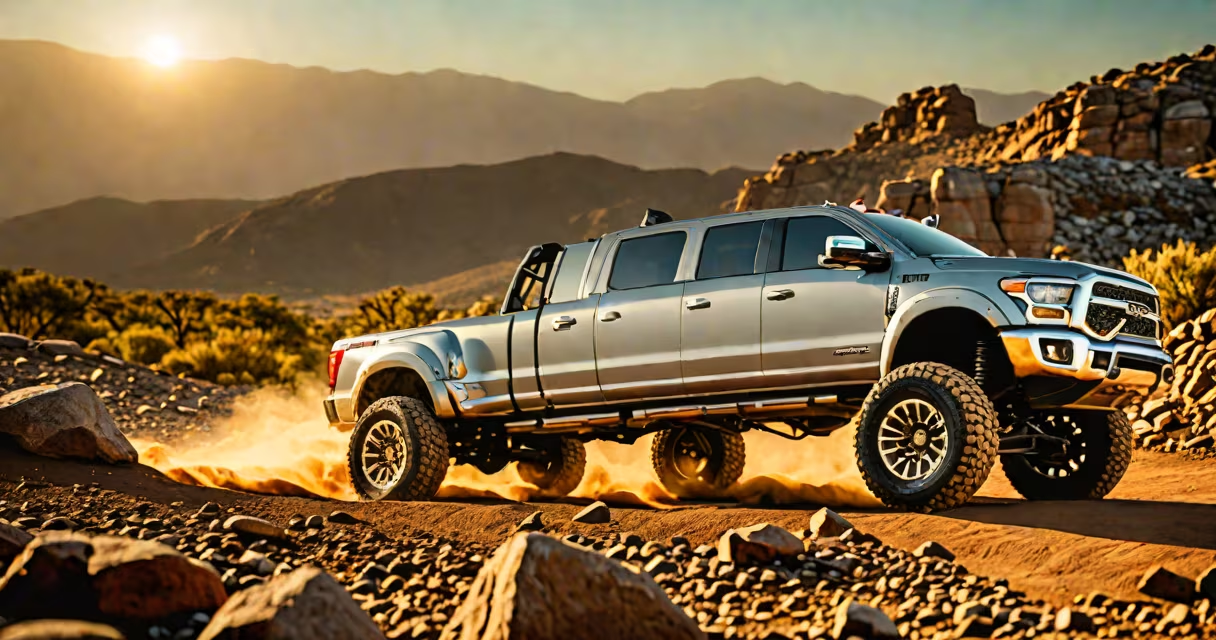
Is 4 wheel drive worth it? Four-wheel drive (4WD) delivers power to all four wheels simultaneously, improving traction on slippery or uneven surfaces. It's designed for off-road use, heavy towing, and extreme weather conditions where standard two-wheel drive systems struggle.
4WD systems typically engage manually or automatically via a transfer case, which splits engine power between front and rear axles. This setup prevents wheel slip during low-traction events such as snow, mud, sand, or steep inclines. Unlike all-wheel drive (AWD), which operates continuously and adjusts torque distribution electronically, 4WD is intended for deliberate use in challenging environments.
For drivers who regularly travel in mountainous regions, rural areas with unpaved roads, or snowy climates, 4WD offers measurable safety and control benefits. However, it adds weight, complexity, and fuel consumption compared to two-wheel drive setups. Whether it's worth the trade-offs depends on actual usage patterns and environmental demands.
4WD systems rely on mechanical components rather than electronic sensors to distribute torque. When activated, a transfer case routes engine power through both front and rear differentials. This creates equal traction across all four wheels, reducing the chance of spinning or losing grip.
Most 4WD vehicles feature a low-range gear setting (often labeled "4LO") that multiplies torque for slow-speed crawling over obstacles. This mode is essential for rock crawling, deep mud, or steep ascents where maximum control is needed. High-range 4WD ("4HI") provides enhanced grip on loose surfaces like gravel or snow but maintains normal highway speeds.
Modern 4WD systems often include locking differentials, which force both wheels on an axle to turn at the same speed. This prevents one wheel from spinning while the other remains stationary-a common issue on slick terrain. For example, a Jeep Wrangler with locked front and rear diffs can climb a frozen hillside without slipping.
There are two primary categories of 4WD: part-time and full-time. Part-time systems require driver input to switch between two-wheel and four-wheel modes. They're ideal for occasional off-roading but unsuitable for dry pavement because they can cause drivetrain binding.
Full-time 4WD systems run continuously and use a center differential to allow front and rear axles to rotate at different speeds. These are better suited for daily driving and varied road conditions. Examples include the Toyota Land Cruiser and Ford F-150 with 4WD options.
| Type | Engagement | Best For | Limitations |
|---|---|---|---|
| Part-Time 4WD | Manual via transfer case | Occasional off-road, snow-heavy zones | Not safe on dry pavement; risks drivetrain damage |
| Full-Time 4WD | Always-on with center differential | Daily driving, variable terrain, winter conditions | Higher fuel consumption; more complex maintenance |
| On-Demand 4WD | Automatic based on wheel slip | Light off-road, urban winter driving | Limited capability in deep mud or steep grades |
On-demand systems, such as those in many SUVs and crossovers, activate 4WD only when sensors detect wheel slip. These are less capable than true 4WD but offer improved fuel economy and ease of use. They're not recommended for sustained off-road use.
4WD excels in environments where consistent traction is critical. In northern states like Minnesota, Alaska, and Montana, drivers depend on 4WD to go through icy roads and deep snowdrifts. According to the National Highway Traffic Safety Administration (NHTSA), vehicles equipped with 4WD have a 26% lower crash rate in winter conditions compared to two-wheel drive models.
For outdoor recreation, 4WD enables access to remote trails, campgrounds, and ski resorts. A 2022 study by the Outdoor Industry Association found that 68% of off-road enthusiasts prefer 4WD or AWD vehicles for weekend trips into national forests and backcountry areas.
Heavy-duty applications also benefit. Construction crews, farmers, and utility workers use 4WD trucks to haul equipment across rough terrain. A Ford F-150 with 4WD can tow up to 14,000 pounds and maintain stability on uneven ground, a task impossible for most two-wheel drive pickups.
Many people confuse 4WD with all-wheel drive (AWD). While both send power to all four wheels, AWD systems operate continuously and adjust torque dynamically using electronic controls. They're optimized for on-road performance and improve handling in rain or light snow-but aren't built for sustained off-road use.
Another misconception is that 4WD makes a vehicle faster or more agile. It doesn't. 4WD improves grip and control, not acceleration. A 4WD Jeep Wrangler still takes 10.2 seconds to reach 60 mph-slower than a similarly powered two-wheel drive sports car due to added weight and mechanical resistance.
A lesser-known fact: 4WD increases wear on tires, drivelines, and suspension components. The U.S. Department of Energy reports that 4WD vehicles consume 5-7% more fuel than their two-wheel drive counterparts. Over 100,000 miles, this adds up to $1,200-$1,800 in extra fuel costs depending on gas prices and driving habits.
Consider a family living in Boulder, Colorado, who commutes 30 miles each way to work. Snowfall averages 120 inches annually, and roads frequently ice over in January and February. Their 2023 Subaru Outback with AWD handles most winter days well, but during a blizzard in December, a sudden storm dropped 18 inches of wet snow in 12 hours.
The Outback lost traction on a steep grade near Nederland. The driver switched to manual 4WD mode (available on higher trims), which stabilized the vehicle. Without 4WD, the car would have slid sideways into a ditch. The system held firm until the road crew cleared the area.
This scenario illustrates that 4WD isn't necessary for everyday driving but becomes important during extreme weather events. The family had previously dismissed 4WD as unnecessary-until that storm revealed its value.
Is 4 wheel drive worth it? Yes, if you regularly drive in snow, mud, or rugged terrain. It improves safety, control, and access in high-risk environments. No, if you live in a flat, dry climate with mild winters and drive mostly on paved roads.
Assess your environment. If you're in a region with frequent snowstorms, mountain passes, or unpaved roads, 4WD reduces risk and increases confidence. But if your commute is entirely urban and seasonal, the added cost, weight, and fuel burn may outweigh the benefits.
For context, a 2023 Consumer Reports analysis showed that 4WD-equipped vehicles depreciate 1.8% faster over five years than comparable two-wheel drive models. That loss, combined with higher insurance premiums and maintenance, should factor into the decision.