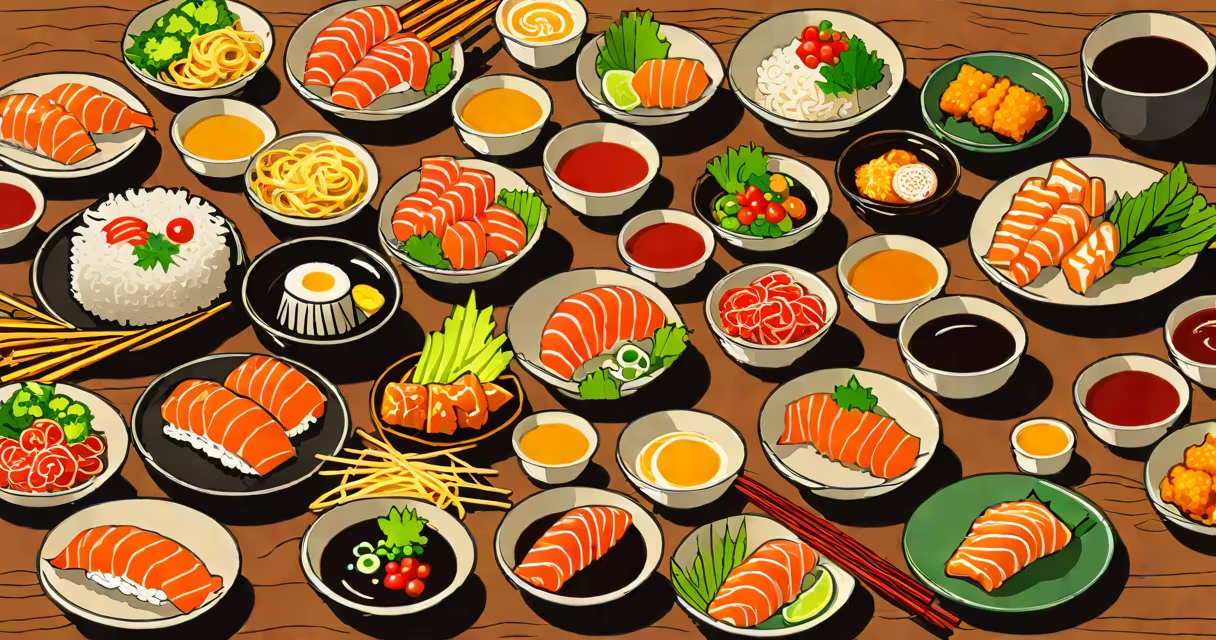
japanese food names refer to the specific terms used in Japan for traditional and modern dishes rooted in regional cuisine, seasonal ingredients, and centuries-old cooking methods. These names often reflect preparation style, core ingredients, or cultural context, such as "sushi" for vinegared rice with raw fish or "ramen" for wheat noodles in broth.
Each name carries historical weight and regional variation. For example, "tonkatsu" describes breaded pork cutlets originating in Osaka, while "okonomiyaki" - a savory pancake - varies between Hiroshima and Kyoto styles. Understanding these names reveals more than just dish identification; they signal culinary identity, ingredient sourcing, and local pride.
Japanese food names follow consistent linguistic patterns. Most begin with a descriptive noun, then specify preparation or form. "Sushi" (寿司) comes from "su" (vinegar) and "meshi" (rice), indicating the central role of seasoned rice. "Tempura" (天ぷら) derives from "ten" (heaven), referencing the Buddhist concept of purity, and "para" (to fry), highlighting its deep-fried nature.
Names often encode regional specificity. "Wagyu" (和牛) combines "wa" (Japanese) and "gyu" (cow), denoting Japanese beef bred for marbling and tenderness. The term is legally protected: only cattle raised in specific prefectures and meeting strict grading standards qualify. A steak labeled "wagyu" in Tokyo may differ from one sold in Hokkaido due to breed and feeding practices.
Some names are borrowed into English with altered pronunciation. "Miso" (味噌) is pronounced "mee-so" in Japanese but often misheard as "mee-zoh" in Western speech. Similarly, "udon" (うどん) - thick wheat noodles - is frequently mispronounced as "oo-don" rather than "oo-dohn."
The following table outlines major Japanese food names, their meanings, ingredients, and typical regions of origin.
| Dish Name | Literal Meaning | Core Ingredients | Regional Origin |
|---|---|---|---|
| Sushi | "Sour rice" | Rice, vinegar, fish, seaweed | Tokyo (Edo-style) |
| Ramen | "Noodles in soup" | Wheat noodles, broth (shoyu, miso, tonkotsu) | Fukuoka (Hakata-style) |
| Miso soup | "Fermented bean paste soup" | Miso paste, dashi, tofu, wakame | National, but popularized in Kyoto |
| Tempura | "Heavenly frying" | Seafood, vegetables, light batter, oil | Osaka (developed by Portuguese traders) |
| Tonkatsu | "Pork cutlet" | Pork loin, breadcrumbs, deep-fried | Osaka |
These names are not interchangeable. "Sashimi" - raw fish - is distinct from "sushi," which includes rice. Confusing them leads to incorrect expectations: sashimi lacks rice and is served chilled, not warmed.
Japanese food names appear on menus, packaging, and restaurant signage worldwide. Their use preserves authenticity and signals quality. A restaurant labeling a dish "yakitori" (grilled chicken skewers) implies adherence to traditional grilling techniques using binchotan charcoal, not just any grilled chicken.
Global adoption sometimes distorts names. "California roll" - a Western invention - contains avocado and crab, not nori or raw fish. Yet it's widely labeled "sushi" in American restaurants, blurring the line between tradition and adaptation. This shift reflects cultural fusion, not error.
Food historians note that many names were standardized during the Meiji Restoration (1868-1912), when Japan industrialized and codified regional dishes into national cuisine. Before that, similar foods had different names across provinces. Today, the Ministry of Agriculture, Forestry and Fisheries maintains official lists of designated regional specialties, such as "Hokkaido salmon" or "Kumamoto oysters."
One widespread mistake is equating "ramen" with "udon" or "soba." While all are noodle dishes, ramen uses alkaline water (kansui) to create elasticity and chewiness. Udon is thicker and made from wheat flour and water. Soba is buckwheat-based and typically served cold with dipping sauce.
Another error: assuming "tempura" always includes seafood. In reality, vegetable tempura - like sweet potato, eggplant, or shiitake mushrooms - is equally common. In Kyoto, tempura is often served with a delicate, clear broth called "tare," unlike the heavier sauces used in Osaka.
I once visited a small izakaya in Nara where the chef refused to serve "katsudon" unless the customer specified "chicken katsu" or "pork katsu." He explained that "katsudon" - a bowl of rice topped with tonkatsu - is a distinct dish, not a generic term for fried meat. The name itself specifies both the protein and the serving style.
Even within Japan, naming conventions vary. In Kyushu, "yakiniku" refers to grilled meats cooked at the table, while in Tokyo, it often means a restaurant chain serving marinated beef. The same name applies to different experiences based on region and context.
Understanding japanese food names means recognizing that each term is a precise descriptor, not a vague label. They reflect history, geography, and technique. When ordering, knowing the difference between "sushi" and "nigiri" - the latter being a single piece of fish on rice - prevents confusion and enhances dining accuracy.
For those exploring Japanese cuisine, learning the correct names improves authenticity. A dish labeled "tai" (sea bream) is not the same as "hamachi" (yellowtail), despite both being fish. Tai is prized in celebrations, while hamachi is associated with summer and freshness.
When in doubt, ask about the name's origin. A server who explains "okonomiyaki" as "a pancake you make yourself" is likely describing the interactive style common in Hiroshima. That detail matters. The name isn't just a label - it's a window into the culture behind the meal.