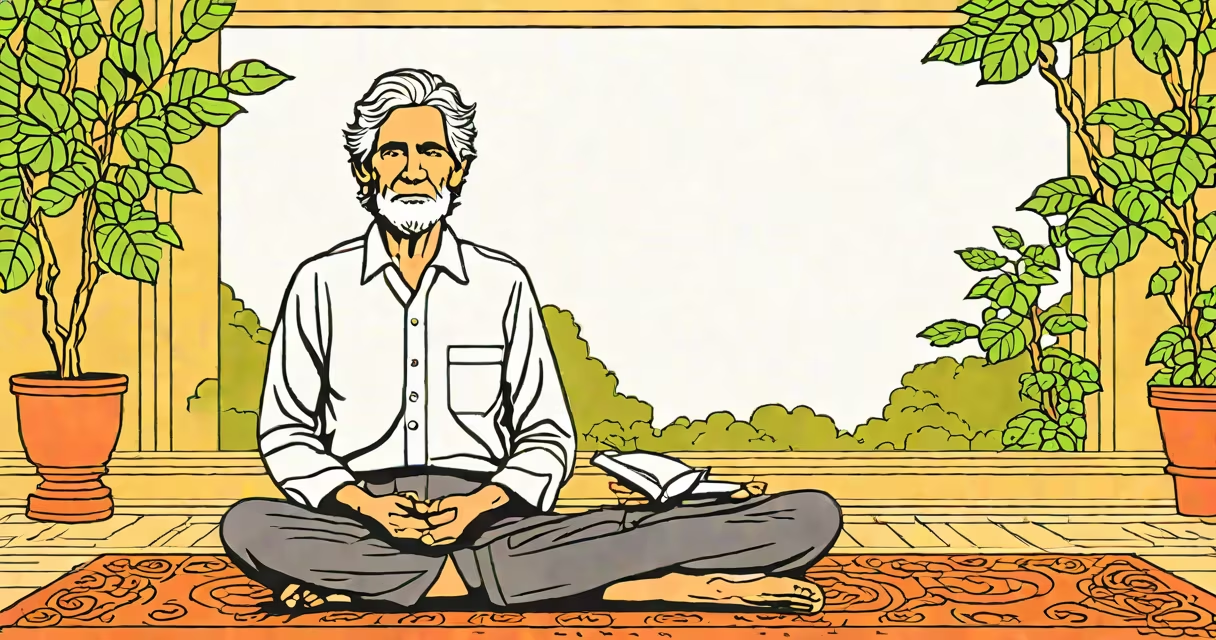
Jon Kabat-Zinn defines mindfulness as the intentional, non-judgmental awareness of the present moment, cultivated through regular meditation and daily practice. He developed this concept in the 1970s at the University of Massachusetts Medical School, where he created the Mindfulness-Based Stress Reduction (MBSR) program. His work turned ancient Buddhist practices into a structured, evidence-based approach to mental and physical health.
Mindfulness is not about emptying the mind or achieving a state of bliss. It's about noticing what's happening right now-thoughts, sensations, emotions-without reacting automatically. Kabat-Zinn emphasizes that mindfulness is not passive observation. It's active engagement with experience, accepting it as it is, even when uncomfortable.
The core of his definition appears in his 1990 book *Full Catastrophe Living*: "Mindfulness means paying attention in a particular way: on purpose, in the present moment, and non-judgmentally." This three-part structure-intention, presence, non-judgment-is the foundation of his teaching. Intention means choosing to focus. Present moment means observing what's actually occurring, not what you wish were happening. Non-judgment means seeing experiences as they are, without labeling them good or bad.
Kabat-Zinn's MBSR program uses formal and informal practices. Formal practices include sitting meditation, body scans, and mindful walking. Informal practices involve bringing full attention to routine activities-eating, washing dishes, listening to someone speak. The goal is to train the mind to stay anchored in the now, reducing reactivity.
For example, during a body scan, participants lie down and mentally move attention through each part of the body. When tension arises in the shoulders, the practice isn't to push it away. Instead, the person notices the sensation, acknowledges it, and continues breathing. Over time, this reduces the habit of resisting discomfort, which often amplifies stress.
A 2014 meta-analysis published in *JAMA Internal Medicine* found that mindfulness meditation programs had moderate evidence of improving anxiety, depression, and pain. These results align with Kabat-Zinn's original clinical trials, where patients with chronic pain reported significant symptom reduction after eight weeks of MBSR. One participant, a teacher with fibromyalgia, said her pain didn't disappear, but she stopped fighting it-and that shift reduced her suffering by 40%.
Many people confuse mindfulness with relaxation or mental stillness. Kabat-Zinn corrects this: mindfulness includes difficult emotions and physical pain. You don't have to feel peaceful to be mindful. In fact, the practice often begins with discomfort, and the skill lies in staying with it.
Another misconception is that mindfulness requires hours of daily meditation. Kabat-Zinn's research shows that 45 minutes a day, five days a week, is effective-but even shorter sessions help. A 2018 study in *Mindfulness* journal found that just 10 minutes of daily mindfulness reduced cortisol levels in office workers over four weeks.
Here's a distinction few sources make: mindfulness is not a technique to control thoughts. It's a way of relating to them. When a thought arises-"I'm failing"-mindfulness doesn't try to stop it. It observes: "There's a thought about failure." This creates space between the thought and the reaction, allowing choice instead of automatic stress.
| Element | Description | Common Error |
|---|---|---|
| Intention | Deliberately choosing to pay attention | Assuming mindfulness happens passively |
| Present Moment | Focusing on current experience, not past or future | Ruminating on regrets or worrying about tomorrow |
| Non-Judgment | Observing without labeling as good/bad | Reacting emotionally to sensations or thoughts |
Mindfulness is now integrated into healthcare, education, and corporate wellness. Hospitals use MBSR to treat chronic illness. Schools teach it to students struggling with focus or emotional regulation. Companies like Google and Aetna offer mindfulness training to reduce burnout and improve decision-making.
In healthcare, mindfulness reduces patient anxiety during procedures. A 2020 study in *The Lancet* showed that patients undergoing surgery who practiced mindfulness for two weeks before their procedure reported lower pre-op anxiety and needed less sedation. Kabat-Zinn's structure remains central to these applications.
I've seen it work firsthand. A friend with panic disorder tried MBSR after years of medication. After six weeks, she noticed her panic attacks decreased from weekly to monthly. Not because she changed her life-but because she stopped fighting her fear. She learned to sit with the rising heat in her chest and say, "This is happening. I am here." That shift was the practice.
Mindfulness is frequently mistaken for meditation, but they're not the same. Meditation is a practice that can cultivate mindfulness. Mindfulness is the quality of awareness that can exist during any activity-driving, talking, eating.
It's also not a form of escapism. Kabat-Zinn stresses that mindfulness brings you deeper into life, not away from it. You notice the texture of bread, the sound of rain, the weight of a child's hand. These moments aren't distractions-they're the content of awareness.
Finally, mindfulness is not a quick fix. It's a skill built over time. Kabat-Zinn compares it to learning to ride a bike: you fall, you get back on, and eventually, balance becomes natural. There's no "perfect" mindfulness. There's only consistent return to attention.
The long-term benefits of consistent practice include better emotional regulation, improved focus, and reduced inflammation markers linked to chronic disease. Research from Harvard Medical School shows that eight weeks of MBSR increases gray matter density in brain regions associated with learning and emotion regulation.
Jon Kabat-Zinn's definition of mindfulness remains the gold standard. It's not a buzzword. It's a discipline rooted in attention, acceptance, and presence. Whether used in therapy, classrooms, or daily routines, this structure offers a practical path to greater resilience and clarity.
Understanding what mindfulness is-through Kabat-Zinn's lens-helps cut through the noise. It's not about achieving peace. It's about being awake, exactly as you are.