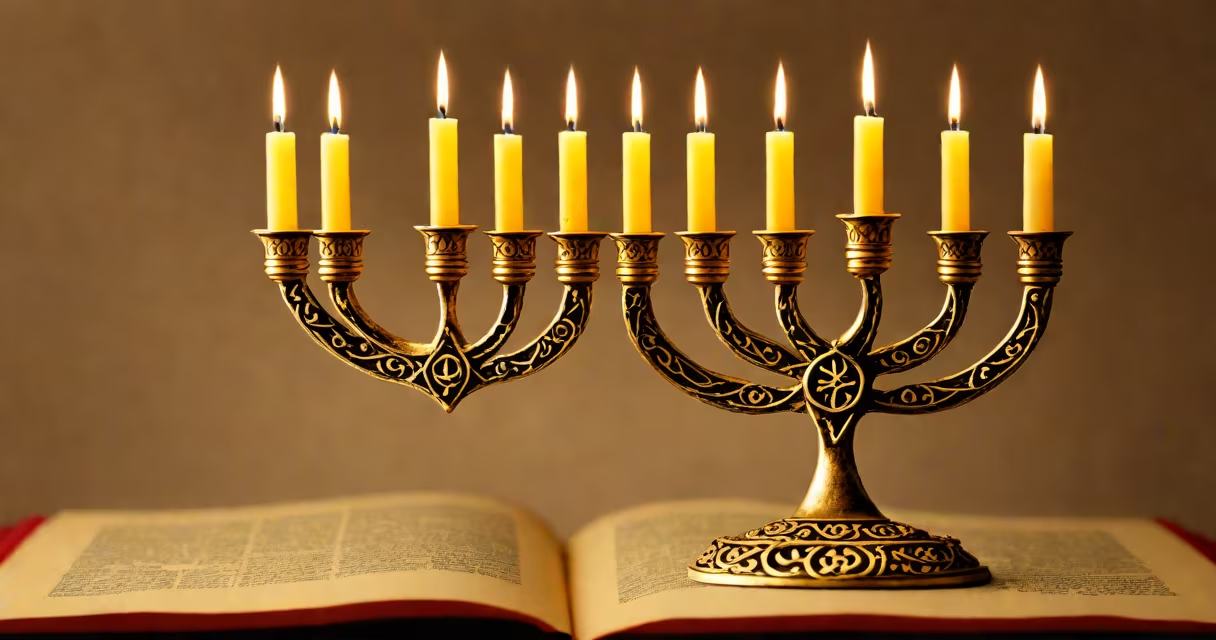
The number 7 appears 58 times in the King James Version of the Bible, symbolizing completion, perfection, and divine order. It is woven into creation, covenants, and apocalyptic visions.
Number 7 holds a central place in biblical narrative. It marks the seventh day of creation as holy, establishes the cycle of sabbatical years, and structures the vision of the seven churches in Revelation. Its recurrence is not random-it reflects a theological structure where God's work reaches fulfillment.
Scripture uses 7 to signal closure and divine intentionality. In Genesis 2:2-3, God rests on the seventh day, sanctifying it. This pattern sets the foundation for the Sabbath, a weekly reminder of divine completion. The number appears in both Old and New Testaments, often tied to cycles of time, ritual, and redemption.
Seven functions as a structural unit in biblical storytelling. It organizes time, rituals, and divine actions. For example, the Israelites marched around Jericho for seven days, with seven priests blowing seven trumpets on the seventh day (Joshua 6:4-16).
Each circuit was a step toward divine intervention. On the seventh day, they circled seven times, and the walls fell. The number 7 here is not incidental-it represents the culmination of obedience and faith. The walls did not fall on day one or five. They fell on the seventh, when the pattern was complete.
Another example is the seven-year cycle of sabbatical years. Every seventh year, land lay fallow, debts were canceled, and slaves were freed (Leviticus 25:1-7). This system ensured economic justice and ecological restoration. The number 7 here is not just symbolic-it enforces social and environmental balance.
Seven appears in several distinct forms across scripture:
| Type | Examples | Meaning |
|---|---|---|
| Creation Cycle | Genesis 1:1-2:3 | God creates in six days, rests on the seventh. Completion and rest. |
| Ritual Purification | Leviticus 14:10-20 (cleansing of lepers) | Seven days of purification, symbolizing spiritual cleansing. |
| Divine Judgment | Revelation 8:1-11:19 (seven trumpets) | Seven judgments unfold in sequence, marking God's final intervention. |
| Prophetic Vision | Revelation 1:20 (seven stars, seven lampstands) | Represents seven churches, each with a message from Christ. |
These forms show that 7 is not a single concept but a flexible symbol. It adapts to context-whether marking time, ritual, or prophecy-but consistently points to divine order.
Many assume 7 is purely mystical or numerological. But in biblical theology, it is rooted in history and structure. The number is not magic-it is meaningful within the narrative.
Some interpret the seven seals in Revelation as literal events, but their purpose is symbolic. They represent stages of divine judgment unfolding over time. The book does not claim the seals appear in chronological order, but rather in a sequence designed to convey completeness.
A common error is treating 7 as a universal code. The Bible never says "7 means perfection" in a standalone verse. Instead, it shows 7 being used in contexts where completion is achieved. The number gains meaning through its use, not abstract definition.
Consider the story of Joseph in Egypt. Pharaoh dreams of seven fat cows eaten by seven lean ones (Genesis 41:1-4). Joseph interprets this as seven years of abundance followed by seven years of famine. He advises storing grain during the good years.
Joseph's plan saved Egypt and surrounding nations. The number 7 here is practical and predictive. It signals a cycle of harvest and scarcity. The interpretation relies on recognizing the pattern-not mysticism.
Another example: David kills Goliath with seven stones (1 Samuel 17:40). The text doesn't say he used seven stones because 7 is lucky. It says he chose seven because he had them. But the number becomes significant later: David is described as "the man who struck down seven men" (2 Samuel 21:19). His strength is measured against multiples of 7, showing his divine favor.
I once led a small group study on Revelation's seven churches. We read each letter aloud, then discussed the themes. One member asked why the messages were grouped in sevens. I pointed to the Greek word *hepta*, meaning seven, used repeatedly in the text.
We noticed that each church received a unique message, yet all began with "He who holds the seven stars..." (Revelation 2:1). The number wasn't decorative-it anchored the authority of Christ. The seven stars represented leadership, the seven lamps stood for the presence of the Holy Spirit. The structure reinforced that Christ is sovereign over all communities.
While 7 is prominent, it is not the only sacred number. The number 12 appears in the tribes of Israel and the apostles. The number 40 marks periods of testing (e.g., 40 days in the wilderness).
But 7 stands apart. It is the only number used in creation's timeline. It is the only number that appears in the commandment to observe the Sabbath. It is the only number associated with divine rest.
For example, Leviticus 25:8-13 describes the Year of Jubilee-a fiftieth year, but it is calculated as seven sabbatical years. The number 7 is foundational to the larger cycle. Without 7, the Jubilee cannot exist.
According to the New Interpreter's Dictionary of the Bible, "The number seven in the Hebrew Bible signifies completion and divine perfection." This aligns with the scholarly view that 7 is not arbitrary but embedded in religious structure.
The Anchor Bible Dictionary notes that "seven is the number of divine completion in ancient Near Eastern thought," and the Bible inherits and redefines this tradition. It does not adopt pagan numerology-it transforms it into a structure of covenant and redemption.
The list of number 7 in the bible is not a catalog of coincidences. It is a deliberate pattern of divine design. From the first day of creation to the final vision in Revelation, 7 marks moments of fulfillment, rest, and renewal.
Understanding this requires seeing 7 not as a cipher, but as a narrative device. It tells us that God's work is complete, that justice is restored, and that salvation is final. The number appears 58 times in KJV-each instance reinforcing that what God begins, He finishes.