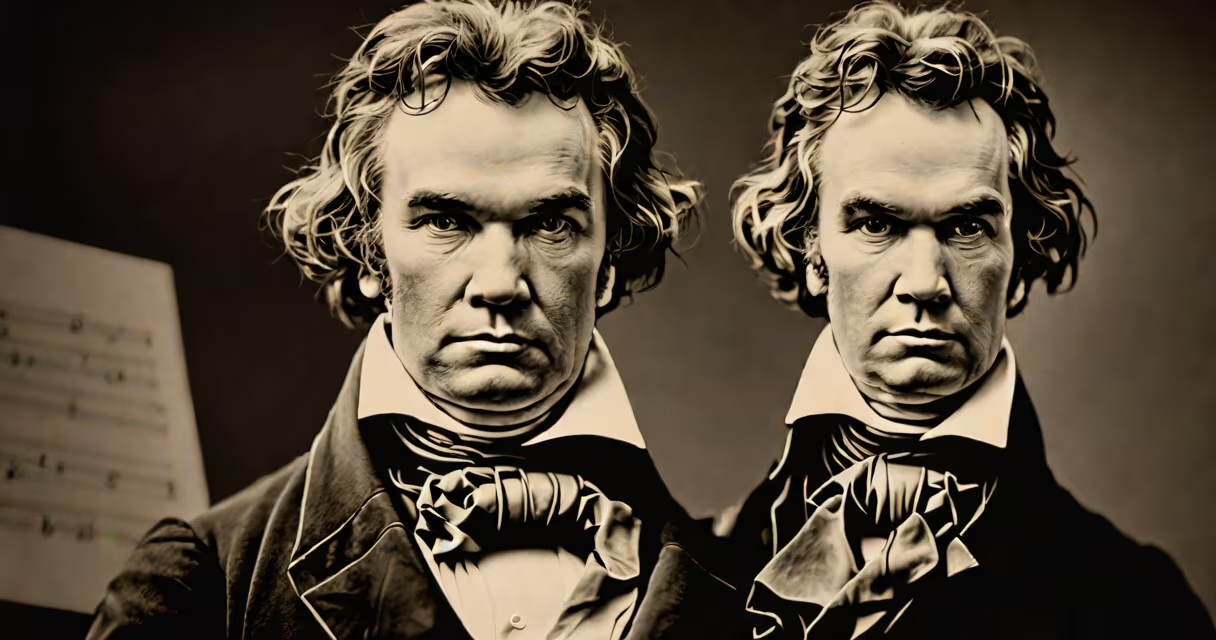
Ludwig van Beethoven symphonies are nine large-scale orchestral works composed between 1800 and 1824, marking a turning point in Western classical music through expanded form, dramatic expression, and psychological intensity. They established the symphony as a vehicle for personal and philosophical exploration, moving beyond the Classical balance of Haydn and Mozart.
Beethoven wrote his symphonies during a period of profound personal struggle. He began losing hearing in his late twenties and was diagnosed with progressive deafness by 1814. Despite this, he composed his final three symphonies-Nos. 7, 8, and 9-while nearly completely deaf. His ability to hear his own music internally, relying on muscle memory and mental visualization, allowed him to push orchestral boundaries further than any composer before him.
The symphonies are structured in four movements, following the Classical model, but Beethoven transformed each movement into a narrative arc. The first movement often opens with a bold, rhythmic gesture-like the iconic four-note motif in Symphony No. 5-that drives the entire work. The development sections grow longer and more intense, reflecting internal conflict. The final movements frequently conclude with a sense of resolution that feels earned, not merely decorative.
Beethoven's symphonies evolved from the formal clarity of his early works to the radical abstraction of his late period. Symphony No. 1 (1800) still adheres closely to Haydn's model, with balanced phrasing and clear tonal architecture. By Symphony No. 3, "Eroica" (1803), he broke convention: the first movement is twice as long as typical Classical symphonies, and the funeral march in the second movement reflects a heroic, tragic vision far beyond the genre's original intent.
Symphony No. 5 (1808) introduced the famous "fate motif"-short-short-short-long-used throughout the piece. This motif functions as a unifying theme, appearing in multiple keys and transformations. The symphony progresses from C minor to C major, symbolizing triumph over adversity. Musicologist Maynard Solomon notes that Beethoven described the motif as "fate knocking at the door," though this attribution is debated among scholars.
Symphony No. 9 (1824) contains the first choral finale in symphonic history. Beethoven added vocal soloists and chorus to perform Friedrich Schiller's "Ode to Joy." This move shattered the tradition of purely instrumental composition and redefined the symphony's purpose. The final movement begins with a chaotic, dissonant passage before resolving into a radiant D major fugue. The inclusion of human voices in a symphony remains one of the most audacious gestures in music history.
| Opus Number | Year | Key | Notable Feature |
|---|---|---|---|
| Op. 21 | 1800 | C major | First symphony; stylistic debt to Haydn |
| Op. 55 | 1803 | E-flat major | "Eroica"; expanded form, heroic tone |
| Op. 67 | 1808 | C minor | "Fate" motif; dramatic tension and release |
| Op. 92 | 1814 | A major | "Pastoral"; programmatic elements, nature imagery |
| Op. 125 | 1824 | D major | Choral finale; "Ode to Joy" sung by choir and soloists |
Many assume Beethoven's symphonies were written for elite salons or royal courts. In reality, they were composed for public concerts in Vienna's growing middle class. The audience for Symphony No. 5 included merchants, civil servants, and artists-not just aristocrats. The public nature of these performances helped democratize access to high art.
Another misconception is that Beethoven's deafness rendered him incapable of composing. He continued to write complex scores using a wooden rod placed between his teeth and the piano's soundboard, allowing vibrations to travel through bone. He also relied on detailed sketches and mental rehearsal. A surviving sketch of Symphony No. 9 shows extensive revisions-some in red ink-indicating his meticulous process.
Some confuse the term "symphony" with "sonata." While both are multi-movement forms, a sonata is typically for solo instrument (e.g., piano or violin), while a symphony is scored for full orchestra. Beethoven's Piano Sonata No. 23, "Appassionata," is useful and dramatic-but it is not a symphony. The scale, instrumentation, and collective sonic force distinguish the symphony as a distinct genre.
Beethoven's symphonies remain central to orchestral repertoires. The New York Philharmonic performs Symphony No. 5 at least once every season. In 2022, the Berlin Philharmonic gave a live-streamed performance of Symphony No. 9 during the anniversary of the fall of the Berlin Wall, linking the "Ode to Joy" to themes of unity and freedom.
Each symphony has influenced film and popular culture. The opening motif of Symphony No. 5 appears in the 1989 film *The Dead Zone*, where it underscores a protagonist's awakening to prophecy. The "Ode to Joy" melody is used in the European Union's anthem, adopted in 1985. The EU's choice reflects the idea that music can transcend borders and embody shared ideals.
One lesser-known fact: Beethoven's Symphony No. 6, "Pastoral," includes actual bird calls. He wrote specific instructions in the score: "The cuckoo (in C#), the quail (in B), and the nightingale (in E)" are to be played by woodwinds. These are not symbolic but literal imitations of real birdsong. This level of detail shows his commitment to realism within a musical structure.
I once attended a rehearsal of Symphony No. 7 with a professional orchestra in Vienna. The conductor emphasized that the second movement-Allegretto-was not meant to be slow or sentimental. He insisted on a steady, relentless pulse, comparing it to a machine grinding forward. After the run-through, the cellist said, "You don't feel the weight until you play it. The rhythm is a kind of suffering." That moment clarified how Beethoven used structure not just to express emotion, but to embody it physically.
For listeners unfamiliar with the symphonies, start with Symphony No. 5. Its opening four notes are instantly recognizable. Listen to the way the motif transforms across movements-from anxiety to resolve. Then move to Symphony No. 9. The shift from instrumental to choral is jarring, but the joy in the final movement is undeniable. You don't need to understand counterpoint to feel the catharsis.
Beethoven's symphonies endure because they are not just music-they are documents of human resilience. They reflect loss, struggle, and transcendence. When you hear the final chord of Symphony No. 9, you're not just listening to a note. You're hearing a declaration: joy is possible, even in darkness.
Understanding ludwig van beethoven symphonies requires more than technical analysis. It demands attention to the emotional arc, historical context, and the sheer will behind their creation. These works are not relics. They are living statements, still being performed, interpreted, and felt across generations.