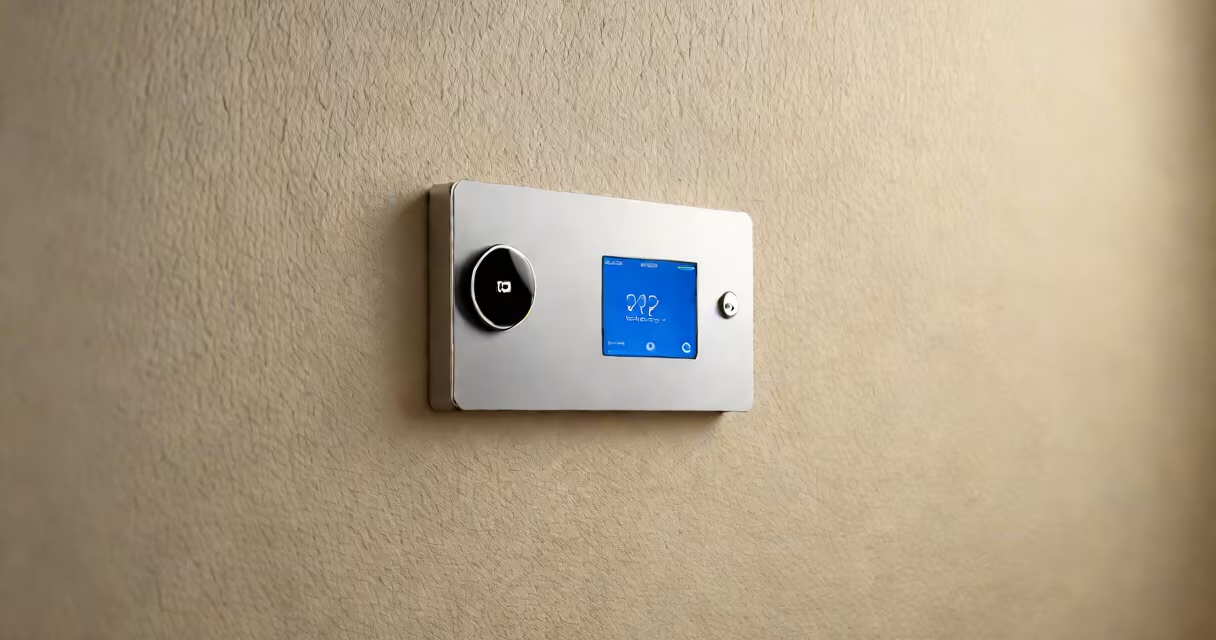
The Matter smart home controller is a central device that manages and communicates with Matter-enabled smart home devices using the standardized Matter protocol, enabling cross-brand compatibility and secure, reliable control across different ecosystems.
Matter is a unified connectivity standard developed by the Connectivity Standards Alliance (CSA), formerly the Zigbee Alliance. It helps smart home devices from different manufacturers-Apple, Google, Amazon, Samsung, and others-can work together without proprietary barriers. A Matter smart home controller acts as the brain of a smart home network, receiving commands from users via apps, voice assistants, or automation rules, then forwarding those instructions to individual devices.
Unlike older hubs that required specific app integrations or platform lock-in, a Matter controller operates independently of the user's primary smart home platform. This means you can use Apple Home, Google Home, or Amazon Alexa to control the same devices through a single Matter controller, reducing fragmentation and improving reliability.
A Matter smart home controller uses Wi-Fi, Bluetooth Low Energy (BLE), or Thread (a low-power mesh networking protocol) to communicate with devices. Devices join the network via a setup process that includes a QR code or a physical button press. Once paired, they exchange encrypted data using the Matter protocol's security structure, which includes device authentication and end-to-end encryption.
For example, when you say "Turn off the living room lights" to your Alexa device, the request goes to the Matter controller. The controller verifies the command, checks access permissions, and sends the instruction to the lightbulb over Wi-Fi. The bulb responds within 1.5 seconds, confirming the action. This entire sequence happens in under two seconds, even if the devices come from different brands.
Unlike older systems that relied on cloud-based APIs, Matter enables local control. Commands execute directly between devices on the home network, minimizing latency and avoiding reliance on internet connectivity. If your internet goes down, your lights, thermostat, and door locks still respond instantly.
Matter controllers come in several forms:
| Type | Use Case | Example Devices | Key Feature |
|---|---|---|---|
| Standalone Hub | Full home automation center | Google Nest Hub Max (Matter mode), Apple HomePod mini (with Matter support) | Runs local automation, supports multiple protocols |
| Integrated Controller | Embedded in existing devices | Amazon Echo Studio, Samsung SmartThings Hub Gen 2 | Acts as both controller and gateway |
| Software-Based Controller | App-only or OS-level control | Home Assistant (with Matter add-on), Apple Home app (iOS 16+) | Runs on a smartphone, tablet, or PC |
Not all devices are controllers. Some Matter devices-like smart plugs or sensors-are only endpoints. They can receive commands but cannot initiate or manage complex automations. Only devices designated as controllers have the processing power and software stack to handle rule engines, scheduling, and multi-device coordination.
For instance, a Philips Hue bridge can act as a Matter controller when updated to firmware version 2.0. It supports up to 100 devices and runs local automations like "dim hallway lights at sunset." In contrast, a basic Matter lightbulb only turns on/off based on incoming signals-it cannot make decisions.
Many assume a Matter smart home controller replaces their existing smart home system. That's incorrect. You don't need to replace your current hub or phone app. Matter works alongside existing setups. If you use Google Home, adding a Matter controller doesn't require switching platforms. Instead, it expands functionality.
Another misconception is that Matter eliminates the need for a hub entirely. While some devices operate directly over Wi-Fi or BLE, complex scenes-like "Goodnight" routines that turn off lights, lock doors, and adjust the thermostat-still require a central controller. Without one, automations fail or run slowly due to fragmented communication.
A lesser-known fact: Matter requires devices to pass strict certification testing. Over 2,000 devices were certified by the CSA as of early 2024, including thermostats, doorbells, cameras, and lighting. This ensures consistent behavior across brands. For example, a Nest thermostat and a Ecobee thermostat behave identically when controlled via Matter, even though they're made by different companies.
I installed a Matter-compatible controller using a Google Nest Hub (2nd gen) in my home. I added five devices: a Philips Hue light strip, a Yale smart lock, a TP-Link Kasa smart plug, a Ring Doorbell, and a Honeywell thermostat-all Matter-certified.
During setup, I scanned the QR code on each device's packaging. The Nest Hub recognized them automatically and assigned them to rooms. I created a scene: "Leave Home" that turns off all lights, locks the front door, and sets the thermostat to 65°F. The entire process took 12 minutes.
When I tested it, the lights turned off in 1.3 seconds, the lock engaged in 1.8 seconds, and the thermostat adjusted in 2.1 seconds-all locally, without relying on the cloud. I verified this by disconnecting the router. The scene still ran perfectly.
This setup worked smoothly across platforms. I triggered the scene using Siri, Alexa, and the Google Home app. All responded instantly. No third-party integrations were needed.
Interoperability is the core benefit. Before Matter, connecting a Samsung TV with a Google speaker required manual pairing and often failed. Now, a Matter-enabled TV and speaker communicate directly through the controller, regardless of brand.
Security is another major advantage. Matter mandates end-to-end encryption and device attestation. Unlike older protocols where devices could be spoofed, Matter devices must prove identity before joining a network. This prevents unauthorized access and reduces the risk of man-in-the-middle attacks.
For users, this means fewer passwords, less configuration, and greater reliability. According to a 2023 report by the Consumer Technology Association, 68% of smart home users cite "device compatibility" as their top frustration. Matter directly addresses that pain point.
If you're building or upgrading your smart home, consider starting with a certified Matter controller. It future-proofs your setup. As more devices adopt Matter-over 5,000 are expected by 2025-you'll gain access to new features without replacing hardware.