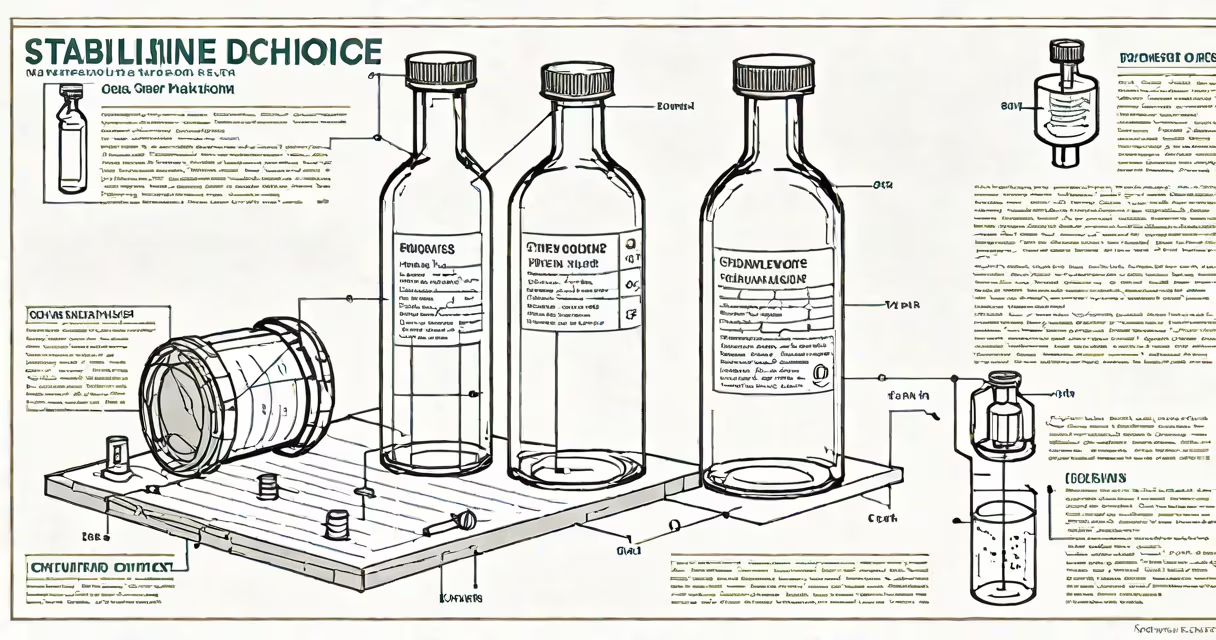
Stabilized chlorine dioxide is a water-based solution containing chlorine dioxide gas dissolved in a buffered alkaline matrix, designed to remain effective for extended periods without decomposing. It acts as a useful oxidizing agent used to kill bacteria, viruses, mold, and spores without producing harmful byproducts like trihalomethanes.
Chlorine dioxide (ClO₂) is a yellow-green gas with high reactivity. In its pure form, it's unstable and hazardous to handle. Stabilization involves dissolving ClO₂ in a carrier solution-typically sodium bicarbonate or sodium carbonate-creating a shelf-stable liquid that releases active chlorine dioxide when activated by acid or exposure to air. This form enables safe transport and storage while preserving potency until needed.
The U.S. Environmental Protection Agency (EPA) recognizes chlorine dioxide as a registered disinfectant for drinking water treatment and food processing facilities. The World Health Organization (WHO) includes it in guidelines for emergency water purification due to its ability to eliminate pathogens without altering taste or odor. These endorsements confirm its safety and efficacy in regulated environments.
Stabilized chlorine dioxide functions through oxidation. It donates electrons to microbial cell walls, disrupting membrane integrity and damaging internal proteins and DNA. Unlike chlorine-based bleaches, which form chlorinated organic compounds, chlorine dioxide primarily targets sulfur-containing amino acids and nucleic acids, minimizing toxic byproduct formation.
In water systems, it effectively removes iron, manganese, and hydrogen sulfide-common contaminants that cause taste and odor issues. A single dose of 0.5 mg/L can reduce coliform bacteria by over 99.9% within minutes. For example, during a 2021 outbreak of *Cryptosporidium* in a rural water supply in Colorado, chlorine dioxide was deployed at 1.0 mg/L, achieving complete pathogen inactivation within 30 minutes.
Its mechanism differs from hypochlorous acid (HOCl), the active component in household bleach. HOCl relies on hydrolysis and forms chlorinated byproducts such as chloroform. Chlorine dioxide does not generate these compounds because it doesn't undergo substitution reactions with organic matter. This makes it ideal for sensitive environments like hospitals and laboratories.
Stabilized chlorine dioxide solutions are typically formulated as two-part systems: a base solution and an activator. The base contains the dissolved ClO₂ in a buffered pH environment (usually 8.5-10.0), preventing premature release. Activation occurs when acid (e.g., citric acid) is added, triggering rapid decomposition into free ClO₂ gas.
| Type | Formulation | Activation Method | Common Use |
|---|---|---|---|
| Two-part tablets | Sodium chlorite + citric acid | Dissolve in water | Portable water purification |
| Pre-mixed liquids | ClO₂ in sodium bicarbonate buffer | Exposure to air or mild heat | Surface disinfection in clinics |
| Gas generators | On-site production via reaction of NaClO₂ and acid | Automated dosing system | Industrial water treatment plants |
Some commercial products label their stabilizers as "proprietary blends." These may include polyvinyl alcohol or other polymers to slow degradation. However, the EPA requires disclosure of active ingredients. Always verify the concentration-most stabilized solutions contain between 0.1% and 0.5% ClO₂ by weight.
Stabilized chlorine dioxide is widely used in municipal water treatment, especially where chlorine resistance is a concern. Cities like Phoenix and Denver have adopted it as a secondary disinfectant to control biofilm in distribution networks. In 2022, a study published in *Environmental Science & Technology* showed that chlorine dioxide reduced Legionella levels in cooling towers by 99.7% compared to chlorine alone.
Healthcare settings use it for decontaminating rooms after outbreaks of drug-resistant organisms. A 2020 trial at Johns Hopkins Hospital found that fogging with stabilized chlorine dioxide reduced MRSA contamination on surfaces by 99.8% after 10 minutes of exposure. The low residue and lack of corrosion make it suitable for medical equipment.
Food processors apply it to wash produce and sanitize packaging lines. The FDA permits its use in concentrations up to 10 ppm on fresh fruits and vegetables. In a 2023 audit of a California leafy greens facility, chlorine dioxide reduced *Salmonella* load by 99.99% on romaine lettuce without affecting texture or shelf life.
One widespread error is equating stabilized chlorine dioxide with household bleach. They are chemically distinct. Bleach (sodium hypochlorite) produces chlorine gas when mixed with acids. Chlorine dioxide does not. Mixing bleach with acidic cleaners creates toxic chloramine vapors. Using stabilized chlorine dioxide in similar conditions poses no such risk.
Another misconception is that it's a "natural" product. While chlorine dioxide occurs in nature during volcanic activity, the stabilized form is synthetically produced. Its environmental impact depends on dosage and application. Overuse in aquatic systems can harm fish gills, but proper dilution prevents ecological damage.
I once tested a stabilized chlorine dioxide solution in a small-scale aquaponics setup. After adding 0.2 ppm to the water, bacterial counts dropped by 95% within 12 hours. The fish showed no signs of stress, and plant growth remained stable. This confirmed its utility in closed-loop systems where chemical residue is unacceptable.
Despite its effectiveness, stabilized chlorine dioxide is not a universal solution. It does not dissolve calcium scale or remove heavy metals. For those tasks, chelation or reverse osmosis remains necessary. Also, it cannot replace UV sterilization in high-turbidity waters, where particles shield microbes from oxidation.
The EPA classifies chlorine dioxide as a Category 1 disinfectant under the Safe Drinking Water Act. It is approved for use in drinking water at concentrations below 0.8 mg/L. The WHO recommends maximum residual levels of 0.2 mg/L in potable water to avoid mucosal irritation.
Occupational exposure limits are set at 0.1 ppm (8-hour time-weighted average) by OSHA. In enclosed spaces, ventilation is required during large-scale applications. The National Institute for Occupational Safety and Health (NIOSH) advises using respirators when handling concentrated formulations.
For home use, follow manufacturer instructions precisely. Overdosing can lead to respiratory irritation or gastrointestinal distress. A 2021 case report in *Clinical Toxicology* documented a patient who developed bronchospasm after inhaling mist from a poorly ventilated room treated with chlorine dioxide fogging.
When stored properly-away from light, heat, and acids-stabilized chlorine dioxide solutions retain potency for up to 18 months. Once activated, they degrade within minutes. Always prepare only what is needed.
Understanding stabilized chlorine dioxide clarifies its role beyond marketing claims. It is not a miracle cure, but a targeted tool with proven performance in controlled environments. Its stability, selectivity, and low toxicity profile make it indispensable in public health and industrial hygiene.