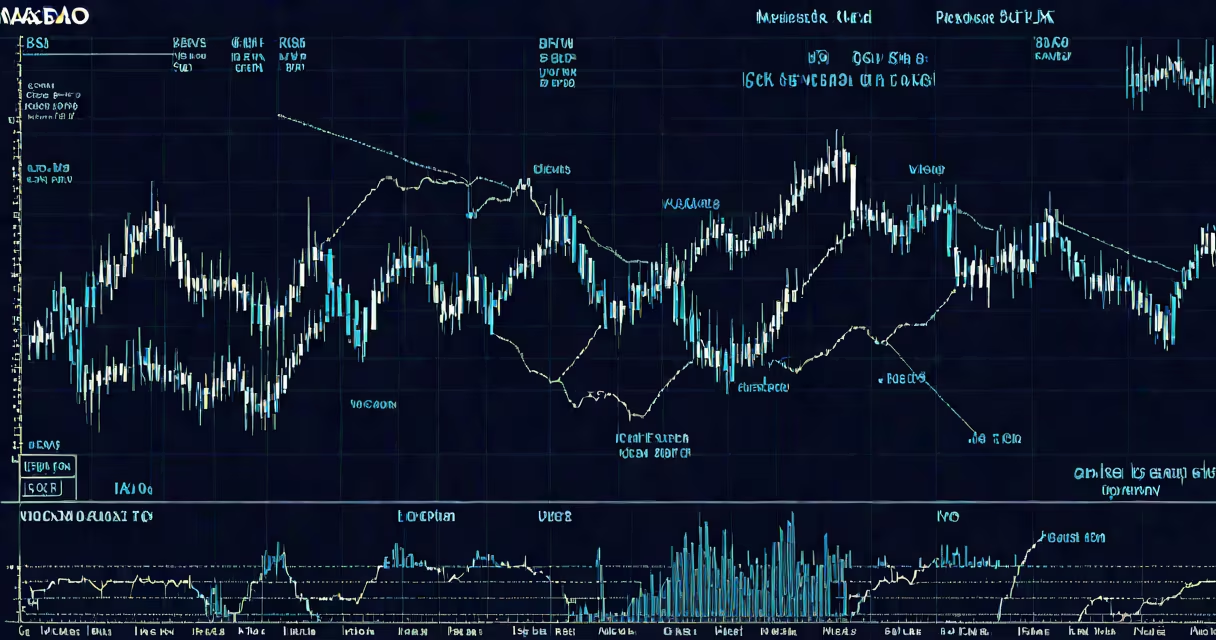
The Nasdaq index quote displays the real-time value of the Nasdaq Composite Index, a benchmark for U.S. technology and growth-oriented stocks. It reflects price changes across over 3,000 securities listed on the Nasdaq Stock Market, with heavy weighting toward large-cap tech firms.
Unlike broad-market indexes such as the S&P 500, which includes companies from diverse sectors, the Nasdaq Composite is heavily influenced by technology, consumer discretionary, and communication services. Its value adjusts continuously during trading hours based on the prices of constituent stocks. A Nasdaq index quote appears on financial platforms like Bloomberg, Yahoo Finance, and Google Finance, often accompanied by percentage change, daily high/low, and volume metrics.
For example, on April 5, 2024, the Nasdaq index quote closed at 17,643.28, up 0.87% from the previous session. This movement reflected gains in major components like Apple (AAPL), Microsoft (MSFT), and Nvidia (NVDA), whose shares rose 1.2%, 0.9%, and 3.4% respectively. The index's daily quote captures these shifts instantly, providing a snapshot of investor sentiment toward innovation-driven equities.
The Nasdaq Composite Index uses a market-capitalization-weighted methodology. Larger companies contribute more to the index's movement. For instance, Apple's market cap exceeds $2.8 trillion, making it one of the most influential stocks in the index. A 1% move in Apple's share price affects the index more than a 1% move in a smaller firm like Roku (ROKU).
Quotes update every second during regular trading hours (9:30 AM to 4:00 PM Eastern Time). After-hours trading may show delayed data. Real-time Nasdaq index quotes are available through paid data feeds like Bloomberg Terminal or via APIs from providers such as Alpha Vantage and Polygon. Free platforms like Yahoo Finance display a 15-minute delay.
A key distinction: the Nasdaq Composite includes all stocks traded on the Nasdaq exchange, regardless of sector. This differs from the Nasdaq-100 Index, which tracks only the 100 largest non-financial companies. The Nasdaq index quote therefore reflects broader market dynamics, including momentum in biotech, electric vehicles, and AI-related stocks.
The Nasdaq Composite is composed of over 3,000 securities. Top holdings account for a significant portion of the index's daily movement. As of Q1 2024, the top five constituents by weight were:
| Company | Ticker | Weight (%) | Market Cap (USD) |
|---|---|---|---|
| Apple Inc. | AAPL | 12.4% | $2.8T |
| Microsoft Corp. | MSFT | 10.1% | $3.1T |
| NVIDIA Corp. | NVDA | 8.7% | $2.3T |
| Alphabet Inc. (Google) | GOOGL | 6.3% | $1.9T |
| Amazon.com Inc. | AMZN | 5.9% | $1.8T |
These five companies together make up 43.4% of the index's total value. Their stock movements dominate the Nasdaq index quote, especially during earnings seasons. In March 2024, NVDA's 22% quarterly revenue jump caused the index to rise 1.5% in a single day, despite mixed results from other tech names.
Non-tech stocks also appear in the index. For example, Tesla (TSLA) contributes 2.1% despite being classified as an industrial company. This inclusion underscores the Nasdaq's role as a broad gauge of innovation-driven equities, not just pure tech.
Many assume the Nasdaq index quote tracks only software or internet companies. That's incorrect. While tech dominates, the index includes healthcare, media, and consumer goods firms listed on Nasdaq. For example, Zoom Video Communications (ZM) is a communications software company, but its inclusion reflects the index's focus on growth potential, not sector purity.
Another misconception: the Nasdaq index quote is the same as the Nasdaq-100. They are not. The Nasdaq-100 excludes financials and focuses on the 100 largest non-financial companies. The Nasdaq Composite includes all eligible stocks, including financials like PayPal (PYPL) and fintech firms like Square (SQ).
A lesser-known fact: the Nasdaq Composite was launched in 1971, not 1980. It began with 330 stocks and now spans over 3,000. The index's base value was set at 100 on February 5, 1971. By April 2024, it had risen over 175-fold, reflecting long-term growth in innovation sectors.
Financial professionals use the Nasdaq index quote to assess market sentiment toward growth stocks. Traders monitor it for entry and exit signals. For example, a sustained drop below 16,500 in early 2023 signaled risk-off behavior, prompting portfolio rebalancing among institutional investors.
Individual investors track the Nasdaq index quote to time their investments. During the 2020 pandemic, the index surged 85% from March 2020 to March 2021, driven by remote work demand and cloud computing adoption. Investors who monitored the quote closely adjusted allocations to capture gains in companies like Zoom and Shopify.
When analyzing market trends, the Nasdaq index quote offers insight into sector rotation. In late 2023, a sharp decline in the quote coincided with rising interest rates. Tech stocks, sensitive to discount rates, fell faster than utilities or energy. This correlation helped identify macroeconomic pressure points.
I once tracked the Nasdaq index quote during a 2022 market downturn. On a single day, the quote dropped 3.8% while the S&P 500 fell 2.1%. The wider drop highlighted the Nasdaq's sensitivity to rate hikes and AI valuation shifts. I used this data to adjust my ETF allocation, favoring dividend-paying stocks temporarily.
A typical Nasdaq index quote shows:
The "+152.10" indicates the index gained 152.10 points since the prior close. The positive percentage suggests bullish momentum. The day range shows intraday volatility. Volume reflects participation levels - higher volume confirms strength in the move.
For deeper analysis, compare the Nasdaq index quote to the S&P 500 and Dow Jones Industrial Average. In 2023, the Nasdaq outperformed both indices by 18.2% and 12.4% respectively, highlighting the dominance of tech and AI-related equities.