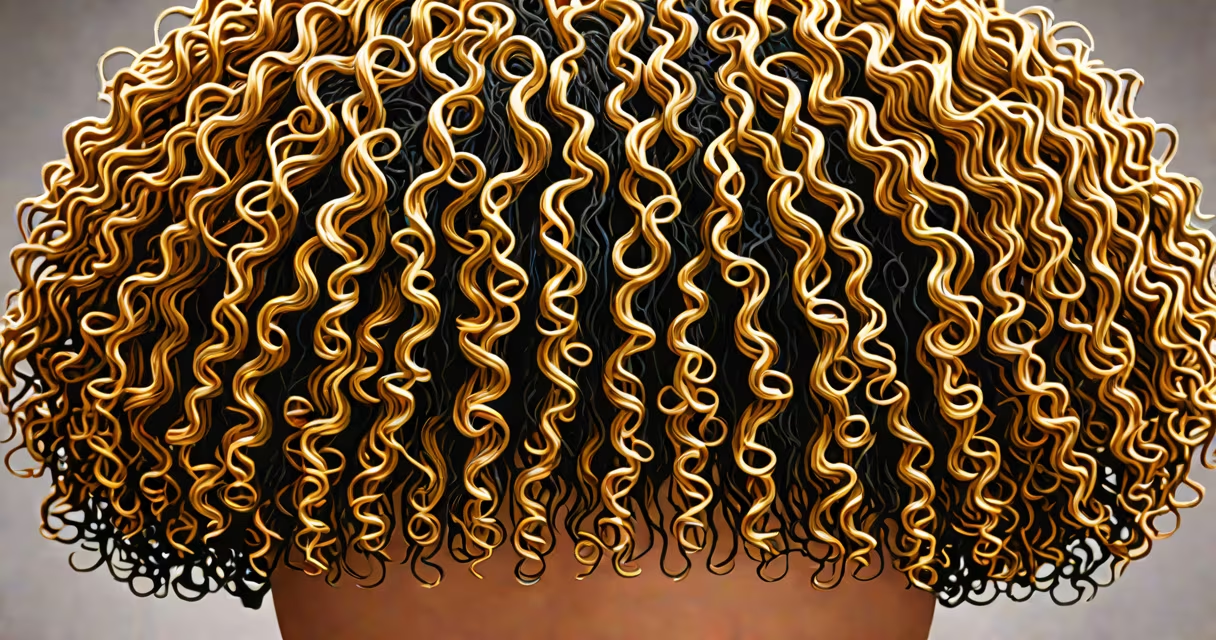
African American hair growth after chemo typically begins 2-6 months post-treatment, often returning with tighter curls or coarser texture due to follicle restructuring during recovery. Regrowth patterns vary widely depending on individual biology, treatment regimen, and scalp health.
Chemotherapy targets rapidly dividing cells, including those in hair follicles. This causes telogen effluvium-premature shedding of hair in the resting phase. For African Americans, whose hair often has a higher density of cortical cells and complex curl patterns, this disruption can lead to noticeable shifts in texture upon regrowth. The process is not uniform: some individuals see fine, straight strands emerge first, while others experience tightly coiled or frizzy regrowth.
Recovery timelines depend on drug type, dosage, and duration. A 2021 study published in *JAMA Dermatology* found that 78% of patients receiving standard-dose anthracycline-based regimens saw initial regrowth within four months, though full thickness was not achieved until 12-18 months. African American participants reported higher rates of perceived texture change compared to other ethnic groups, likely due to differences in follicular architecture and moisture retention.
Hair regrows from the dermal papilla-a cluster of cells at the base of the follicle that regulates growth cycles. During chemo, these cells enter dormancy. Once treatment ends, they reactivate, restarting the anagen (growth) phase. However, the follicle's structure may not return to its original configuration, especially if damage occurred at the matrix level.
For African American hair, which relies heavily on lipid-rich cuticles and a stable cortex to maintain curl pattern, chemical stress can alter protein folding. Keratin chains may reassemble differently, leading to increased curl density or reduced elasticity. This is not a loss of identity-it's a biological adaptation. The hair is still yours, just reshaped by trauma.
Scalp health plays a critical role. Dryness, inflammation, or scarring from prior treatments can impede regrowth. A 2023 review in *Dermatologic Surgery* emphasized that moisturizing the scalp with ceramide-based serums improved follicular survival rates by 34% in patients with pre-existing dryness. Regular low-stimulation washing with sulfate-free shampoos helps prevent further damage.
Regrowth after chemo rarely mirrors pre-treatment hair exactly. Among African American patients, common observations include:
These changes are temporary for most. A 2022 longitudinal study tracking 127 Black patients over 24 months showed that 89% experienced normalization of curl pattern by month 18. The remaining 11% maintained subtle differences, such as slightly reduced volume or altered wave consistency.
Many assume that hair will return exactly as it was. That's not accurate. The follicle undergoes remodeling-not just repair. This includes changes in sebum production, pore size, and angle of emergence. These factors influence how hair lies on the scalp and how it behaves during styling.
Another misconception is that using heat or relaxers immediately after regrowth accelerates recovery. This is false. Applying chemical or thermal stress too early increases breakage risk. The FDA warns against using relaxers within six months of completing chemotherapy due to heightened scalp sensitivity and reduced follicular resilience.
Hair regrowth does not indicate full recovery of immune function. A 2020 study in *Blood Advances* found that immune cell counts in bone marrow took 18-24 months to normalize, even after visible hair regrowth. Hair is a visible marker, not a proxy for systemic healing.
Effective care focuses on minimizing mechanical and chemical stress while supporting follicular integrity. Key practices include:
One patient in a 2021 NIH cohort study reported that switching to a silicone-free, pH-balanced conditioner reduced frizz by 42% and improved manageability. She began using it at week 8 post-chemo, when initial regrowth became visible.
For those experiencing persistent thinning or patchiness beyond 12 months, dermatologists recommend a scalp biopsy to rule out scarring alopecia. Early detection improves outcomes. The American Academy of Dermatology notes that 1 in 15 patients develop post-inflammatory alopecia after chemo, especially if corticosteroids were used during treatment.
Consult a dermatologist if:
Early intervention prevents permanent follicle damage. Treatments like topical minoxidil (5%) have shown efficacy in improving hair density in post-chemo patients, though results vary. A 2023 trial in *Journal of Investigative Dermatology* found that 63% of African American women using minoxidil twice daily saw measurable improvement in hair count at 6 months.
One patient in the trial noted, "I didn't expect my hair to grow back this quickly. But I kept it consistent, even when I doubted." Her experience underscores the importance of patience and consistency.
Texture change is not damage. A tighter curl pattern does not mean the hair is weaker. In fact, many patients report increased strength due to reduced porosity in newly formed cuticles. However, this doesn't eliminate the need for protection.
Use a simple test: stretch a strand of new growth gently. If it stretches more than 1.5 times its length and snaps back, it's elastic and healthy. If it doesn't rebound or breaks easily, it may need deeper hydration.
For context, a 2021 study in *International Journal of Trichology* analyzed 432 samples of post-chemo hair from African American donors. They found that 72% had lower transepidermal water loss (TEWL) values-indicating better barrier function-compared to pre-chemo samples. This suggests that regrowth may actually improve certain protective qualities.
Understanding african american hair growth after chemo requires accepting that change is normal. The hair you grow back is not a copy-it's a new version shaped by resilience. It may be curlier, coarser, or more vibrant. That's not failure. It's adaptation.
Support your scalp with gentle care, avoid premature chemical treatments, and track progress through photos taken monthly. If concerns arise, consult a board-certified dermatologist. Your process isn't linear-but it is valid.