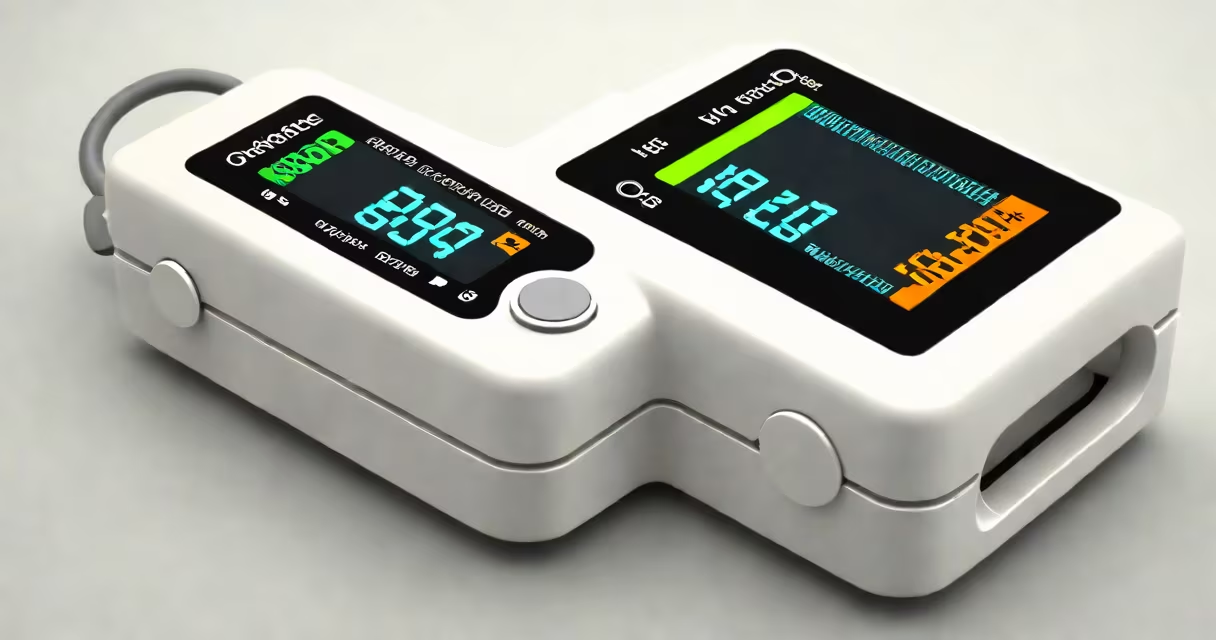
A normal rate oximeter is a handheld device that non-invasively measures arterial oxygen saturation (SpO2) and pulse rate using light absorption through the fingertip. It delivers real-time values in under 10 seconds and is widely used in clinical and home settings.
These devices work by emitting red and infrared light through the skin. Oxygenated hemoglobin absorbs more infrared light, while deoxygenated hemoglobin absorbs more red light. The sensor calculates the ratio of absorbed light to estimate oxygen saturation and counts the pulsations to determine heart rate.
For most healthy adults, a normal rate oximeter displays SpO2 between 95% and 100%, and a resting pulse rate between 60 and 100 beats per minute. Values below 92% indicate hypoxemia and require medical evaluation. Pulse rates above 100 bpm may signal tachycardia, especially if sustained.
Normal rate oximeters use photoplethysmography (PPG), a technique that detects changes in blood volume in capillaries. A small LED emits light at two wavelengths-660 nm (red) and 940 nm (infrared)-into the tissue. A photodiode on the opposite side captures the transmitted light.
Oxygen-rich blood absorbs more infrared light and less red light. The device computes the ratio of red to infrared absorption, which correlates directly to SpO2. This ratio is then converted into a percentage displayed on the screen.
Pulse rate is derived from the rhythmic fluctuations in light absorption caused by arterial blood flow. Each pulse causes a slight increase in blood volume, which increases light absorption. The device counts these peaks per minute to calculate heart rate.
Most consumer-grade normal rate oximeters include a finger clip sensor, a digital display, and a battery compartment. They typically weigh under 50 grams and operate on two AAA batteries.
Key components include:
Some models include additional features such as memory storage, low battery alerts, and audio alarms for abnormal readings. However, these extras do not improve accuracy beyond standard models.
Normal rate oximeters fall into two categories: consumer-grade and medical-grade. Consumer devices are FDA-cleared for home use, while medical-grade units are used in hospitals and require calibration.
| Type | Accuracy Range | Use Case | Regulatory Status |
|---|---|---|---|
| Consumer-grade | ±2% SpO2 at 90-100% | Home monitoring, fitness tracking | FDA-cleared (Class II) |
| Medical-grade | ±1% SpO2 at 90-100% | Critical care, surgery, emergency rooms | CE marked, FDA-approved |
According to the American Society for Testing and Materials (ASTM), a valid oximeter must maintain accuracy within ±2% of reference values during controlled testing. Devices failing this threshold are not approved for clinical use.
One common misconception is that oximeters measure oxygen concentration in the air. They do not. They measure oxygen saturation in arterial blood-how much of the hemoglobin is carrying oxygen. This is distinct from ambient oxygen levels.
Normal rate oximeters are used in homes, clinics, and emergency departments. They support early detection of respiratory issues, monitor patients during sleep apnea treatment, and track recovery after surgery.
During the COVID-19 pandemic, many people used oximeters at home to detect silent hypoxia-a condition where blood oxygen drops without noticeable symptoms. The CDC reported that individuals with SpO2 below 92% were more likely to require hospitalization.
For athletes, normal rate oximeters help assess performance under altitude stress. A study published in the Journal of Sports Medicine found that SpO2 dropped by an average of 4% in runners at elevations above 2,500 meters. Monitoring with a normal rate oximeter helped adjust training intensity accordingly.
Many users assume that a reading of 98% is "perfect." While this is within normal limits, it doesn't guarantee health. A person with chronic lung disease may maintain 98% SpO2 at rest but drop to 88% during exertion.
Another frequent error is placing the device on cold fingers. Poor circulation reduces signal strength and leads to inaccurate readings. The National Institutes of Health (NIH) advises warming the hand before measurement and avoiding nail polish, which can interfere with light transmission.
One non-obvious fact: pulse oximeters can give false high readings in cases of carbon monoxide poisoning. Hemoglobin binds to carbon monoxide similarly to oxygen, making it appear saturated. A normal rate oximeter may show 98% SpO2 while the patient is critically ill. This is why CO poisoning requires specific testing via co-oximetry.
In 2022, a 67-year-old man with COPD used his normal rate oximeter daily. His baseline SpO2 was 91%. One morning, it dropped to 87% with a pulse rate of 112 bpm. He called his doctor, who ordered a chest X-ray and blood gas analysis. The results confirmed a pulmonary embolism. Early detection prevented hospitalization.
This case illustrates that consistent monitoring matters more than isolated readings. A single value below 92% warrants attention, but trends over time provide stronger insight.
When interpreting results, compare your current reading to your personal baseline. A sudden drop-even if still within the "normal" range-is a red flag.
Consult a healthcare provider if:
Normal rate oximeters are tools-not diagnostics. They support informed decisions but don't replace professional evaluation.
Always verify readings with a healthcare provider when symptoms persist. A normal rate oximeter gives numbers-but only a clinician interprets them in context.