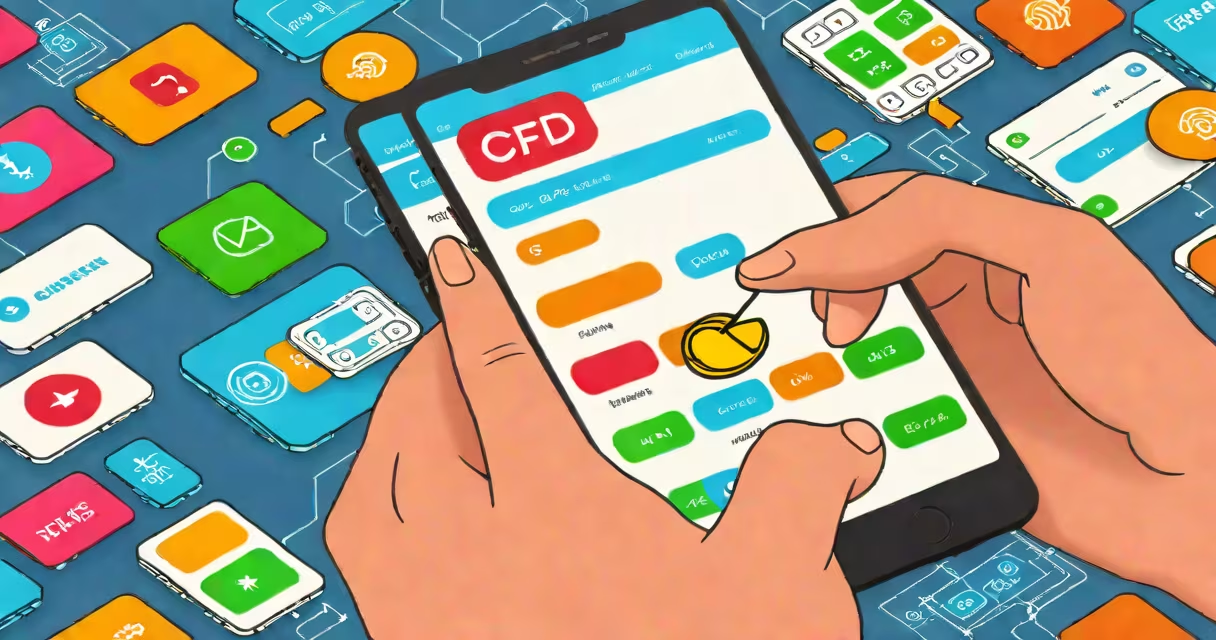
Online cfd trading involves speculating on the price movement of financial assets like stocks, indices, commodities, and currencies using contracts for difference, which settle the price difference without transferring ownership of the underlying asset.
Cfds are derivative instruments traded electronically through regulated brokers. Traders open positions based on whether they believe an asset's price will rise or fall. Profits or losses are calculated from the difference between the entry and exit prices, multiplied by the position size. This structure allows access to global markets with small capital outlays, but it also amplifies risk due to use.
For example, a trader opens a long position on a CFD for Tesla stock at $200 per share. They control 100 shares with a margin deposit of $5,000. If the price rises to $210, the profit is $1,000 ($10 × 100 shares). If it drops to $190, the loss is $1,000. The broker deducts or adds this amount from the account balance. No shares change hands-only the cash difference is settled.
When a trader places a cfd trade, they agree to exchange the difference in the asset's price from the time the position opens to when it closes. The broker acts as counterparty. Positions can be held overnight, but interest charges apply based on the direction of the trade and prevailing rates.
Trading occurs on platforms like MetaTrader 4, cTrader, or proprietary apps offered by brokers such as Interactive Brokers, Saxo Bank, and IG. These platforms display real-time bid and ask prices, allow stop-loss and take-profit orders, and show margin requirements dynamically. Users can trade across multiple asset classes from a single interface.
Regulatory oversight varies by jurisdiction. In the UK, the Financial Conduct Authority (FCA) requires brokers to hold client funds in segregated accounts and disclose use limits. In the EU, MiFID II rules govern transparency and reporting. In the US, cfd trading is restricted to qualified investors under SEC rules, though some offshore brokers offer access.
Cfds are available on many underlying assets. The most common categories include:
| Type | Examples | Typical Use | Use Case |
|---|---|---|---|
| Stock CFDs | TSLA, AAPL, AMZN | 10:1 to 20:1 | Speculating on earnings reports or news events |
| Index CFDs | DAX, S&P 500, FTSE 100 | 10:1 to 30:1 | Trading macroeconomic trends or market sentiment shifts |
| Commodity CFDs | Gold, crude oil, natural gas | 10:1 to 25:1 | Capitalizing on supply disruptions or geopolitical tensions |
| Currency CFDs | EUR/USD, GBP/JPY, AUD/CAD | 10:1 to 50:1 | Trading central bank policy changes or economic data releases |
Each instrument carries different volatility profiles. For instance, gold CFDs often move less than 1% daily, while forex pairs like USD/JPY can swing 0.5% in a single session. Traders adjust position size accordingly to manage risk.
A non-obvious distinction: cfd prices are based on the spot market, not futures. This means they reflect current value, not a delivery date. A cfd on Brent crude oil tracks the physical benchmark price, not a contract expiring in three months. This makes cfd pricing more aligned with real-time supply-demand dynamics.
Many assume cfd trading is equivalent to buying stocks. It is not. Ownership rights do not transfer. You don't receive dividends, voting rights, or corporate actions. If a company splits its stock, cfd holders see no adjustment unless the broker offers a cash equivalent.
Another misconception is that cfd trading is inherently high-risk. While use increases exposure, proper risk management tools-like stop-loss orders and position sizing-can limit downside. According to a 2022 FCA report, 76% of retail cfd accounts lost money over a 12-month period, primarily due to over-using and emotional decision-making.
I once tested a strategy using 20:1 use on a 1% daily move in the S&P 500 index cfd. Over 10 days, a 2% gain compounded to a 21% return. But a 1% drop led to a 20% loss in equity. The math shows how quickly use erodes capital. That's why many professional traders cap use at 5:1 even when allowed higher levels.
Traders use cfd platforms for speed, low barriers to entry, and flexibility. With as little as $100, someone can start trading. No brokerage account is needed-just a funded demo or live account with a licensed provider.
CFDs enable short-selling without borrowing shares. A trader who believes the euro will weaken against the dollar can sell EUR/USD CFDs directly. The market moves against them if the euro strengthens, but they profit if it weakens. This eliminates the need for complex borrow mechanisms.
Online cfd trading is not a passive investment vehicle. It demands constant attention, emotional control, and adherence to a written plan. Success comes from consistent execution, not luck.