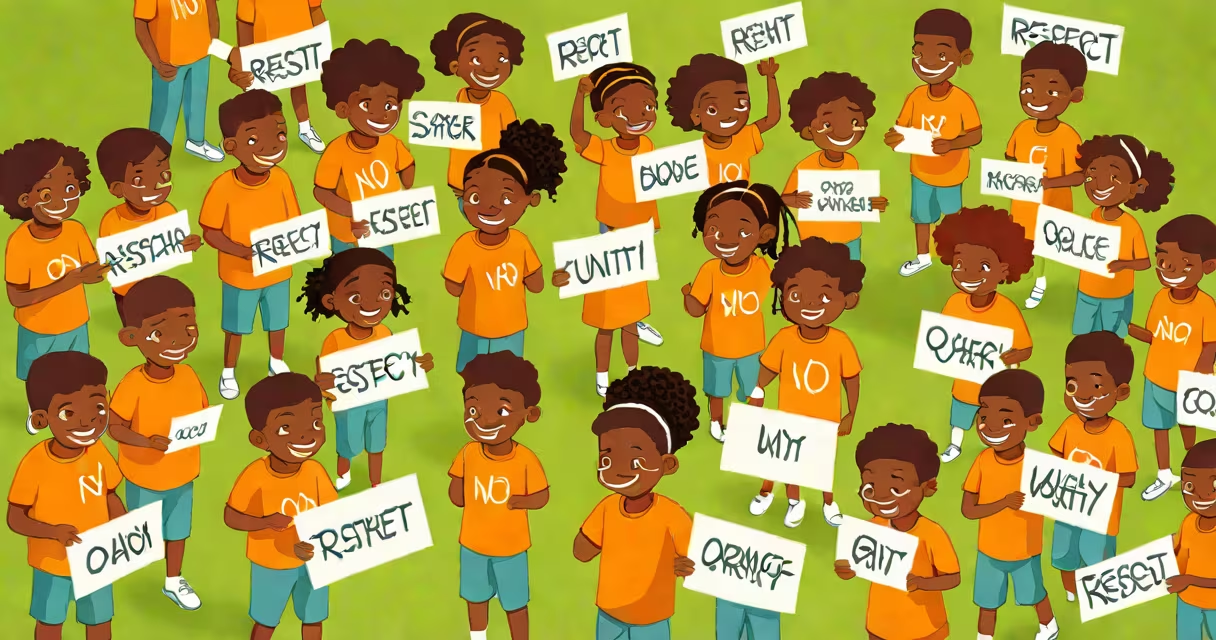
Orange Shirt Day activities for kids are educational and expressive exercises held annually on September 30 to honor the legacy of residential schools and promote healing through awareness. These activities engage children in storytelling, art, and community dialogue, fostering understanding of Indigenous history and reconciliation.
Orange Shirt Day originated from the story of Phyllis Webstad, a residential school survivor who wore a new orange shirt on her first day at a Canadian Indian Residential School-only to have it taken from her. The color orange symbolizes the loss of identity and culture experienced by Indigenous children in these institutions. Schools, youth groups, and communities across Canada and beyond observe the day with age-appropriate activities designed to teach empathy, respect, and historical truth.
Activities are structured to be developmentally appropriate, with younger children focusing on visual expression and symbolic meaning, while older students explore historical context and social responsibility. The goal is not to overwhelm but to create space for reflection, conversation, and action.
These activities function as experiential learning tools. They begin with a brief introduction to the origins of Orange Shirt Day, often using a child-friendly version of Phyllis Webstad's story. Teachers or facilitators then guide participants through interactive tasks that reinforce emotional and cognitive engagement.
For example, a typical session might start with reading "The Orange Shirt Story" by Phyllis Webstad, available through the National Centre for Truth and Reconciliation. Afterward, children are asked to draw or craft their own orange shirts, adding symbols representing what they value-family, language, land, or joy. This act transforms abstract concepts into tangible personal meaning.
Some schools extend the day with a "Wear Orange" ceremony, where students and staff wear orange clothing. A moment of silence follows, honoring the children who were taken from their families. This ritual builds collective presence and emotional resonance without requiring complex historical analysis.
Activities vary by age group and setting. Below is a breakdown of common formats and their educational goals:
| Age Group | Activity Type | Purpose |
|---|---|---|
| Kindergarten - Grade 3 | Art project: Draw a personal orange shirt with symbols of belonging | Build emotional connection to identity and inclusion |
| Grades 4-6 | Story circle: Share stories of family traditions or cultural practices | Encourage appreciation of diversity and personal heritage |
| Grades 7-9 | Group discussion: What does "reconciliation" mean to you? | Introduce complex ideas through relatable language |
| High school | Community action project: Create a mural or petition for local change | Move from awareness to advocacy |
Each activity serves a dual purpose: to educate and to affirm. Children aren't asked to memorize dates or statistics. Instead, they reflect on feelings, values, and relationships-skills that support long-term empathy and civic engagement.
Orange Shirt Day activities for kids are most commonly implemented in schools, after-school programs, and youth centers across Canada. They are also adopted by libraries, museums, and community organizations during National Indigenous History Month and other awareness periods.
The Canadian government officially recognizes Orange Shirt Day through the National Day for Truth and Reconciliation. According to the Government of Canada, this day "honours the children who did not return home from residential schools and supports ongoing efforts toward reconciliation."
Outside Canada, similar initiatives exist. For example, the United States has seen growing interest in Indigenous education, with schools in states like California and Oregon hosting Orange Shirt Day events in collaboration with local tribes. These efforts are informed by resources from the National Congress of American Indians and the Native American Rights Fund.
A frequent misunderstanding is that Orange Shirt Day is solely about sadness or guilt. That's incorrect. While the day acknowledges painful history, its core intent is healing and hope. As the National Centre for Truth and Reconciliation states, "Reconciliation is not a single event-it is a process of building respectful relationships based on mutual understanding."
Another misconception is that only Indigenous children or educators can lead these activities. In reality, inclusive participation is central. Non-Indigenous children benefit just as much from learning about systemic harm and solidarity. Research from the University of British Columbia shows that early exposure to anti-racist education improves intergroup attitudes in children as young as six.
These activities are not performative. They require follow-up. A school that holds a single art project without ongoing curriculum integration risks reducing the day to a token gesture. Effective implementation includes sustained learning-such as incorporating Indigenous perspectives into science, math, and literature lessons throughout the year.
In 2023, a public elementary school in Vancouver organized a full-day Orange Shirt Day event. The schedule included:
Afterward, teachers reported increased student engagement in class discussions about fairness and kindness. One grade 5 student wrote, "Now I know why some people don't feel safe at school. I want to help make it better."
This example illustrates how structured, low-pressure activities can lead to meaningful shifts in behavior and mindset.
When planning Orange Shirt Day activities for kids, avoid generic templates. Use materials from trusted sources like the National Centre for Truth and Reconciliation or the Assembly of First Nations. Always involve Indigenous voices when possible. If a school lacks access to community partners, the National Centre offers free lesson plans and video resources tailored to different grade levels.
As a former teacher, I once led a Grade 4 class through a shirt-decoration activity. One boy, who had never spoken in group settings, quietly handed me his shirt with a drawing of a red maple leaf and the words "My family is strong." That moment reminded me that learning isn't always loud-it can be quiet, personal, and useful.
Orange Shirt Day activities for kids are not just about remembering the past. They're about shaping a future where every child feels seen, valued, and safe. When done with care, these activities become living lessons in dignity, justice, and shared humanity.