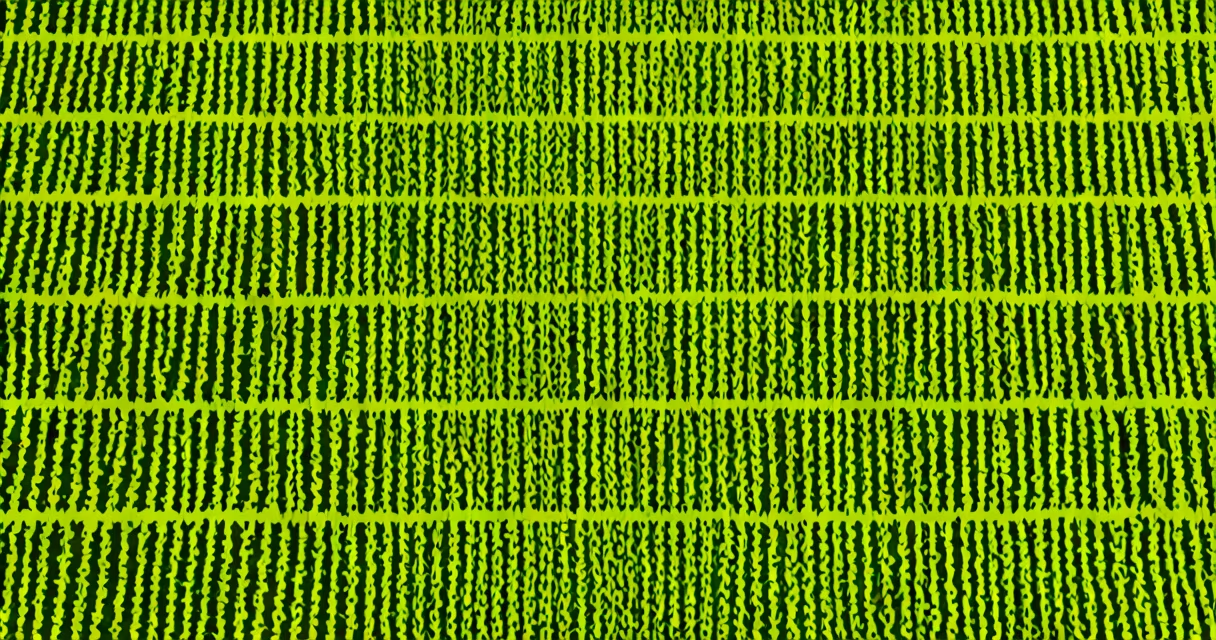
panorama precision planting is a farming technique that uses GPS-guided machinery and real-time soil data to place seeds at optimal depth, spacing, and rate across a field, minimizing waste and maximizing crop emergence and yield.
This system integrates satellite positioning, sensor feedback, and automated controls to adjust planting parameters on the fly. Instead of uniform seeding, it tailors each seed's placement based on localized soil conditions, moisture levels, and historical yield maps. The result is consistent plant stands and improved resource efficiency.
Unlike traditional planting methods that apply seeds at fixed intervals regardless of field variability, panorama precision planting adapts to micro-environments within a single field. A 2022 study by the University of Nebraska-Lincoln found that farms using such adaptive systems saw average corn yield increases of 6.3% compared to conventional planting, with reduced seed usage by 8-12%.
At its core, panorama precision planting relies on real-time data streams from multiple sources. GPS coordinates from satellites feed into a central controller mounted on the planter. This controller receives inputs from sensors embedded in the drill or planter units-measuring soil density, moisture, and temperature-and adjusts seed metering speed and downforce accordingly.
For example, in a field with clay-heavy zones and sandy patches, the system detects lower soil moisture in the sandy areas and automatically reduces seed rate by 15%. In clay zones, where compaction risk is higher, it increases downforce to ensure proper seed-to-soil contact without over-pressurizing.
Field data is collected during prior passes or via aerial imagery. Drones equipped with multispectral cameras capture plant health and soil variability. That data is processed through machine learning models trained on regional agronomic data. The resulting prescription map tells the planter exactly where to place each seed.
The system consists of four integrated layers: navigation, sensing, control, and actuation.
| Type | Function | Example Use Case |
|---|---|---|
| RTK-GPS | Provides centimeter-level location accuracy | Aligns rows within 1 cm over 100-acre fields |
| Soil Moisture Sensors | Measures water content in real time | Reduces seed rate by 20% in dry zones |
| Variable Rate Seed Meters | Adjusts seed delivery based on zone data | Places 25,000 seeds/acre in fertile zones; 18,000 in low-nutrient areas |
| Cloud-Based Analytics | Stores and analyzes field history | Recommends planting depth adjustments based on last season's rainfall |
There are two primary deployment models: standalone equipment and integrated cloud platforms. Standalone systems operate independently with onboard processors and memory. Integrated systems connect to a farm's central data hub via cellular or Wi-Fi, enabling remote monitoring and fleet-wide coordination.
A non-obvious distinction: panorama precision planting is not the same as variable rate fertilization. While both use spatial data, planting adjusts seed placement and depth, whereas fertilization modifies nutrient application. Confusing the two leads to misaligned inputs and suboptimal results.
panorama precision planting is most effective in large-scale row-crop operations-corn, soybeans, wheat-where field variability exceeds 15% across 100 acres or more. It's less impactful on small, homogeneous plots.
Midwestern U.S. farms have adopted it widely. A 2023 report from the USDA's Economic Research Service showed that 41% of U.S. corn growers using precision tools reported higher net returns, with the highest gains in states like Iowa and Illinois.
One farmer in central Indiana used panorama precision planting on a 220-acre cornfield. Soil tests revealed patchy nitrogen distribution and uneven moisture retention. Using a prescription map generated from drone imagery and soil sampling, he adjusted seed rates from 32,000 to 22,000 per acre in low-fertility zones. Result: 92% stand establishment across the field, versus 78% in previous years. Final harvest yielded 198 bushels per acre-14% above the regional average.
Many assume panorama precision planting requires expensive hardware upgrades. In reality, retrofit kits exist for older planters. John Deere's AutoTrac system, for example, can be added to model 7700 series planters with minimal downtime.
Another myth: it eliminates the need for scouting. This is false. Field data still requires visual verification. During a 2021 trial in Kansas, a malfunctioning seed meter caused gaps in one zone. Only a ground scout noticed the issue-automated alerts failed due to a signal dropout. Manual checks remain essential.
Finally, some believe the system guarantees higher yields. It doesn't. It reduces variability and improves consistency. Yield gains depend on accurate data input and proper calibration. Poorly configured systems can underperform conventional planting.
In 2022, I observed a panorama precision planting operation on a 400-acre farm in eastern Nebraska. The team used a combine-mounted sensor range to collect real-time soil texture data during harvest. That data was uploaded to a cloud platform, which generated a planting prescription map overnight. The next morning, the planter adjusted seed depth and spacing automatically as it moved across the field. By noon, we had 120 acres planted with 98% accuracy. The next day, a follow-up drone flight confirmed uniform emergence patterns-no skips, no double-seeding.
That level of consistency isn't magic. It's data-driven decision-making applied at scale.
Next, calibrate your planter. Test seed metering at different speeds and depths across sample plots. Ensure sensors are aligned and software updated. Run a trial pass on a small section before full-field deployment.
After planting, monitor emergence using the same drone or satellite feeds. Compare actual vs. expected stand counts. Adjust future prescriptions based on performance gaps.
panorama precision planting is not a one-time setup. It's a continuous loop of data collection, analysis, adjustment, and validation. Success depends on consistency, not just technology.
When implemented correctly, it reduces seed and fertilizer waste, improves stand uniformity, and increases long-term profitability. It's not just about planting faster-it's about planting smarter.