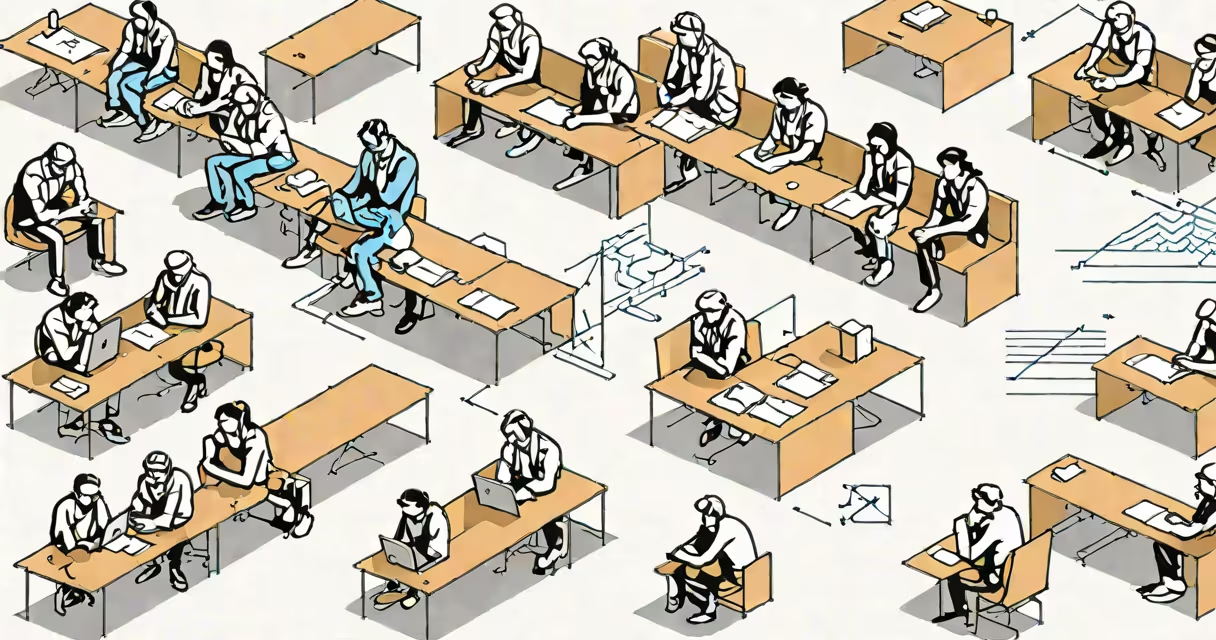
Patience meaning in English is the capacity to endure delay, difficulty, or adversity without becoming annoyed or upset. It involves maintaining composure and focus when outcomes are uncertain or progress is slow.
Patience is not passive waiting. It's an active choice to stay centered, even when frustration builds. It appears in everyday situations - from traffic jams to project deadlines - and in deeper challenges like grief, recovery, or learning complex skills.
According to the Oxford English Dictionary, patience is "the capacity to accept or tolerate delay, trouble, or suffering without becoming annoyed or anxious." This definition emphasizes mental control, not just physical stillness. You can be sitting quietly but mentally agitated - that's not patience.
Patience operates through cognitive and emotional regulation. When faced with a delay, the brain processes the stress signal, but a patient person suppresses the urge to react impulsively. They pause, assess, and respond deliberately.
This process is measurable. A 2019 study published in *Frontiers in Psychology* found that individuals who scored higher on patience-related tasks showed lower cortisol levels during stressful waiting periods. Lower cortisol means reduced physiological stress, which supports better decision-making under pressure.
For example, imagine a software developer debugging a critical error that takes hours to trace. Frustration mounts. A patient developer pauses, reviews logs systematically, and avoids rushing into changes. This restraint prevents introducing new bugs and leads to faster resolution.
Patience isn't a single trait. It shows up in different forms depending on context:
| Type | When It's Used | Example |
|---|---|---|
| Emotional patience | Dealing with difficult people | Listening to a colleague vent without interrupting |
| Procedural patience | Learning a skill | Practicing piano scales daily despite slow progress |
| Situational patience | Waiting for results | Waiting weeks for a job offer after interviews |
| Existential patience | Long-term personal growth | Working through trauma over months, not days |
Each form requires different mental strategies. Emotional patience often relies on empathy and perspective-taking. Procedural patience depends on consistent effort and tolerance for repetition. Situational patience involves accepting uncertainty - a key difference from impatience, which demands immediate control.
People often mistake patience for passivity or resignation. But patience is not giving up. It's not saying "I'll wait forever" - it's saying "I'll wait with purpose."
A common error is equating patience with silence. You can be silent and angry. True patience includes awareness of your internal state and the choice to act constructively. As psychologist Daniel Goleman noted in *Emotional Intelligence*, "Patience is not the absence of emotion, but the mastery of it."
Another misunderstanding is thinking patience is only useful in personal life. It's important in professional settings too. A 2021 Harvard Business Review analysis found that teams led by patient managers reported 30% fewer conflict escalations and 25% higher task completion rates compared to those led by impatient leaders.
Consider a teacher managing a classroom of 25 students. One student repeatedly disrupts the lesson. An impatient teacher might reprimand them immediately, escalating tension. A patient teacher uses the "10-minute rule": they wait 10 minutes after the disruption to observe patterns before intervening.
During that time, the teacher notes: the student is distracted by a noise outside, not being defiant. They adjust the seating, address the noise, and later discuss behavior calmly. The result: fewer disruptions, stronger trust, and improved engagement.
This isn't about ignoring problems. It's about gathering data before acting. That's the core of patience - response based on insight, not impulse.
In a culture that values speed - instant messaging, same-day delivery, rapid feedback - patience is increasingly rare. Yet research from the American Psychological Association shows that people who practice patience report higher life satisfaction and lower burnout rates.
One study tracked 1,200 adults over five years. Those who rated themselves high in patience were 40% less likely to report chronic stress symptoms. They also had better long-term health markers, including lower blood pressure and reduced risk of heart disease.
Patience isn't a soft skill. It's a survival tool in a high-speed world. It allows you to think when others panic, to lead when others react, and to grow when others give up.
When you understand patience meaning in English, you're not just learning a word - you're gaining a structure for resilience. It's not about waiting longer. It's about waiting better.