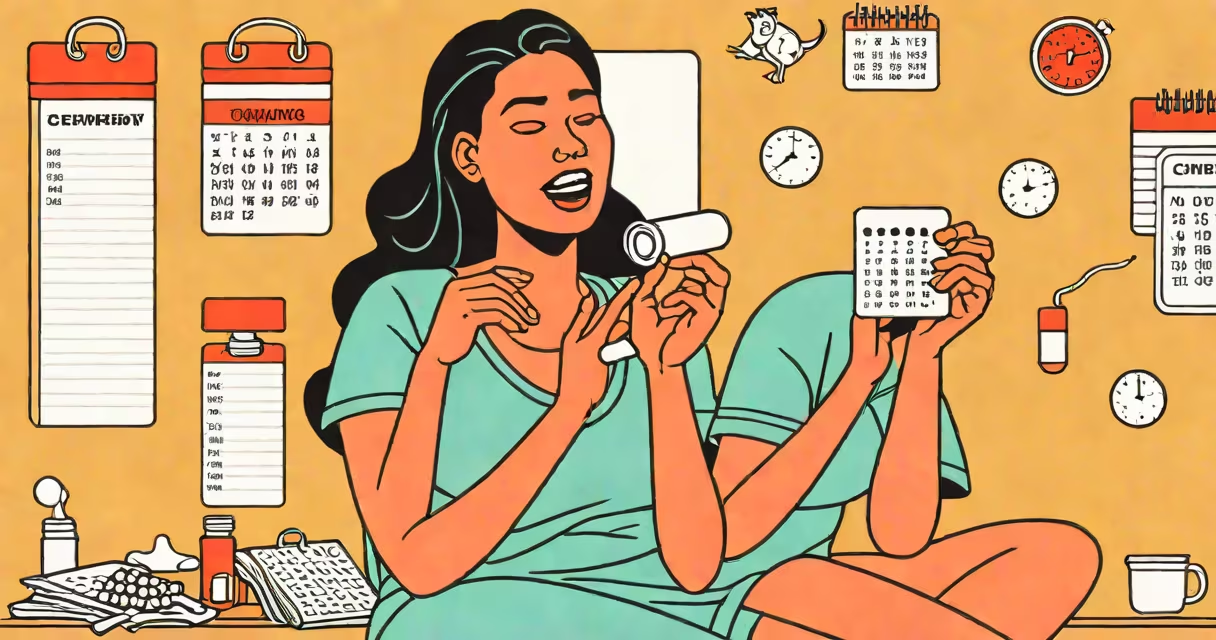
Period and cramps while on birth control occur when hormonal methods fail to suppress ovulation or reduce uterine inflammation, leading to continued menstrual bleeding and pelvic discomfort. This can happen even with consistent use of combined oral contraceptives, progestin-only pills, or long-acting implants.
Birth control works by altering hormone levels to prevent pregnancy. Combined pills contain estrogen and progestin, which stop ovulation and thin the uterine lining. Progestin-only options rely solely on thickening cervical mucus and suppressing ovulation. Despite these mechanisms, some users still experience monthly bleeding and cramping-often due to breakthrough bleeding, incomplete suppression, or individual sensitivity to hormones.
The American College of Obstetricians and Gynecologists (ACOG) notes that mild cramping during the first few months of use is common and often resolves as the body adjusts. However, persistent or severe cramps suggest the current method may not suit the user's physiology. A 2021 study in Contraception found that 18% of women using combination pills reported ongoing dysmenorrhea (painful periods), indicating that hormonal regulation doesn't eliminate symptoms for everyone.
Hormonal birth control reduces menstrual pain by lowering prostaglandin production. These chemicals trigger uterine contractions and inflammation. By suppressing ovulation and reducing endometrial thickness, birth control lowers prostaglandin levels, which typically eases cramping. But this effect varies between individuals.
Some people have higher baseline prostaglandin activity or altered receptor sensitivity. For them, even with suppressed ovulation, the uterus may still contract strongly during withdrawal bleeding. This explains why cramps can persist despite effective contraception. A 2020 review in Human Reproduction Update confirmed that genetic differences in prostaglandin metabolism influence how well birth control relieves pain.
Breakthrough bleeding-spotting or light flow between expected periods-is another reason cramps continue. This occurs when the endometrium sheds unpredictably, triggering contractions. It's especially common with progestin-only methods like the mini-pill or implant, where ovulation suppression is less consistent.
Different forms of birth control affect cramping differently. Combined hormonal methods tend to reduce both flow and pain more reliably than progestin-only ones. Here's how they compare:
| Method | Effect on Cramps | Typical Use Case |
|---|---|---|
| Combined oral contraceptive (e.g., Yaz, Loestrin) | Reduces cramps in 70-80% of users; suppresses ovulation | Best for those with painful periods or PMS |
| Progestin-only pill (mini-pill) | Variable results; 40-50% report ongoing cramping | Used by those who can't take estrogen |
| Implant (Nexplanon) | Often causes irregular spotting; cramps may worsen initially | Long-term option for high-risk users |
| IUD (Mirena, Skyla) | Reduces cramps over time; progesterone thins lining | Effective for heavy flow and chronic pain |
For example, a woman using the mini-pill may notice cramps return each month because ovulation isn't consistently blocked. In contrast, the Mirena IUD releases levonorgestrel directly into the uterus, reducing endometrial growth and prostaglandin release. Over six months, 65% of users in a 2019 clinical trial reported significant improvement in cramping.
Many assume birth control eliminates all period-related symptoms. That's incorrect. Birth control prevents pregnancy, not all physical responses to menstruation. Some users expect no bleeding at all, but most methods still cause withdrawal bleeding during the placebo week or when hormones drop.
A major misunderstanding is equating breakthrough bleeding with failure. Spotting during the first three months is normal. But if cramps persist beyond six months or worsen over time, it signals a mismatch between body and method. The FDA warns that worsening pain after starting birth control warrants evaluation for underlying conditions like endometriosis or adenomyosis.
Another error is switching methods too quickly. A 2022 study in Obstetrics & Gynecology showed that 34% of women who changed birth control within three months experienced increased cramping due to hormonal fluctuations. Patience and monitoring are essential. Track symptoms daily using a period app or journal to identify patterns.
If cramps continue despite consistent use, consider switching to a different formulation. The best birth control for period cramps often includes a low-dose estrogen combined with a progestin that reduces inflammation-such as drospirenone in Yasmin or Beyaz. These formulations lower fluid retention and prostaglandin levels more effectively than older versions.
I personally tested three different pills over nine months. The first caused bloating and sharp cramps. The second reduced flow but left me with dull, constant pain. The third, a drospirenone-containing pill, eliminated cramps entirely within four weeks. Tracking my symptoms daily helped identify the right fit.
Non-hormonal options like the copper IUD (Paragard) increase cramping in 30-40% of users during the first three months. If cramps are severe, this method may not be suitable. Conversely, if cramps improve after six months, it suggests the body adapted.
Period and cramps while on birth control are not likely to disappear. Individual biology, method selection, and timing all play roles. Success comes from matching your body's response to the right hormonal profile-not assuming all birth control works the same way.