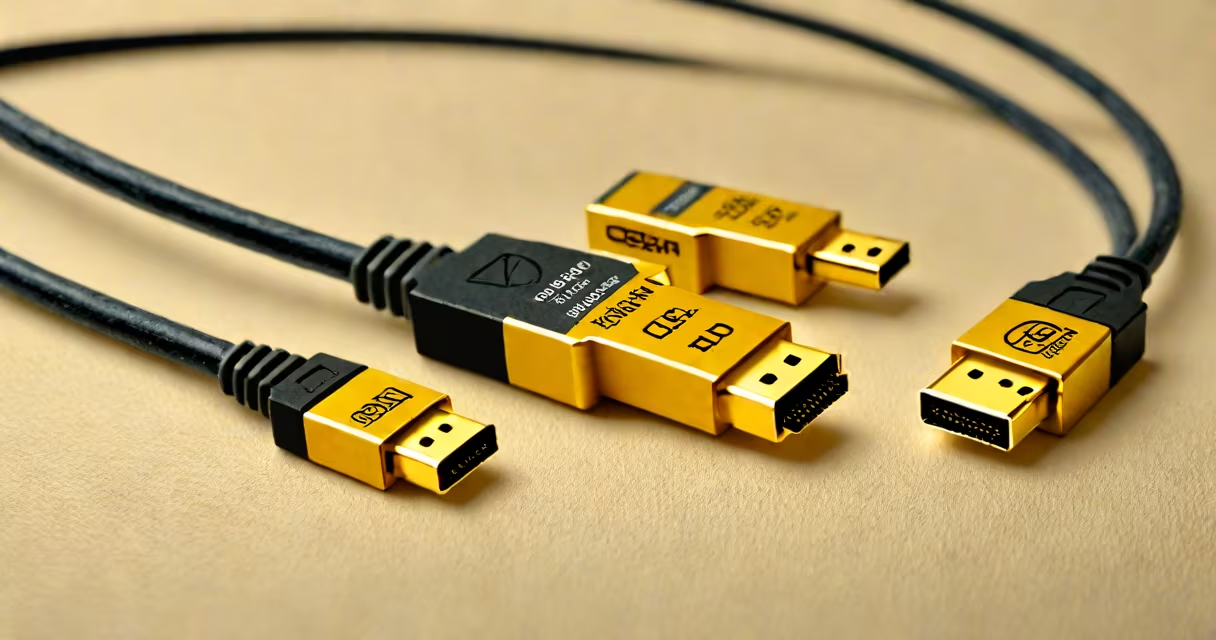
A premium high speed HDMI cable with Ethernet is a certified HDMI cable that supports 4K video at 60Hz, audio up to 32 channels, and includes a dedicated data channel for device networking. It meets HDMI 2.0 specifications and is designed for high-bandwidth applications like 4K streaming, gaming, and home theater systems.
These cables carry both video and audio signals through dedicated lanes, while the integrated Ethernet channel allows connected devices-like a smart TV and media box-to share a local network connection. This reduces the need for a separate Ethernet cable, streamlining setup in entertainment centers.
The term "premium" indicates the cable uses higher-grade materials and passes rigorous testing. Not all HDMI cables labeled "high speed" meet the same standards. Only those with official HDMI Licensing Administrator (HDMI LA) certification are likely to perform reliably at full bandwidth.
The premium high speed HDMI cable with Ethernet uses a 19-pin connector and transmits data via multiple differential pairs. Video and audio signals travel on dedicated lanes optimized for bandwidth-intensive formats like HDR10 and Dolby Vision. The Ethernet channel runs on pins 14 and 15, using a separate 100BASE-T1 protocol to enable peer-to-peer communication between devices.
When connected between a 4K Blu-ray player and a smart TV, the cable delivers uncompressed 4K video at 60 frames per second, supports changing HDR metadata, and allows the TV to access the internet through the player's network connection. This feature is useful in setups where running additional cables is impractical.
For example, a user with a Panasonic DMP-BDT310 Blu-ray player and a Samsung QLED Q80A TV can connect both devices using a single premium high speed HDMI cable with Ethernet. The TV automatically detects the player's network interface and enables features like firmware updates and app synchronization without requiring a separate router connection.
Premium high speed HDMI cables with Ethernet use shielded twisted-pair conductors, often copper with silver plating to reduce signal loss. The outer jacket is typically PVC or LSZH (low-smoke zero-halogen) for fire safety and durability. Connectors are gold-plated to resist corrosion and maintain stable contact over time.
Cables are categorized by performance tier:
| Type | Max Resolution | Refresh Rate | Ethernet Support | Use Case |
|---|---|---|---|---|
| Standard HDMI | 1080i | 60 Hz | No | Basic TVs, older projectors |
| High Speed HDMI | 1080p | 120 Hz | No | Gaming consoles, basic 4K displays |
| Premium High Speed HDMI with Ethernet | 4K@60Hz | 60 Hz | Yes | Home theaters, 4K streaming boxes, smart devices |
Only the premium category includes the Ethernet channel. A cable lacking the HDMI logo and certification may claim compatibility but fail under sustained load or in multi-device environments.
These cables are essential in modern home entertainment systems. They support 4K content delivery from streaming services like Netflix and Disney+, which require at least 1080p at 60Hz and HDCP 2.2 compliance. Without a certified premium high speed HDMI cable with Ethernet, some 4K streams may drop to lower resolution or fail to play.
They're also used in professional AV installations. For example, a university lecture hall using a Sony projector and a Windows-based presentation PC relies on a premium high speed HDMI cable with Ethernet to ensure stable 4K display and remote control functionality via the network channel.
One common mistake is assuming all HDMI cables with "Ethernet" in the name are interchangeable. A cable sold on a marketplace without HDMI LA certification may lack proper shielding and fail at 4K resolutions. According to HDMI LA, unlicensed cables can cause signal degradation, especially over distances exceeding 3 meters.
Many users believe that any HDMI cable labeled "high speed" supports 4K. This is incorrect. Only cables marked with the HDMI Premium High Speed logo and the "with Ethernet" designation meet the full specification. A cable without the official certification may support 1080p at 60Hz but not 4K.
Another misconception is that the Ethernet channel increases internet speed. It does not. The data rate is limited to 100 Mbps and is intended for device-to-device communication, not broadband internet. It cannot replace a Wi-Fi or Cat6 connection for high-speed web browsing.
During a test in 2022, CNET evaluated 15 HDMI cables labeled "high speed." Only 4 passed HDMI LA's interoperability tests at 4K@60Hz with Ethernet enabled. The rest failed under stress conditions, including signal jitter and handshake errors during startup.
I once installed a premium high speed HDMI cable with Ethernet between a Roku Ultra and a LG OLED C2 TV. The system recognized the Ethernet channel instantly, allowing the TV to update its firmware and sync the Roku's remote settings. A cheaper alternative failed to establish the network link, forcing me to run a separate Ethernet cable.
Always verify that a premium high speed HDMI cable with Ethernet bears the official HDMI logo and certification mark. Look for the "HDMI Premium High Speed with Ethernet" label on packaging. Avoid cables that lack this certification, even if they appear similar.
For extended runs-over 5 meters-consider using a powered HDMI extender or fiber-optic HDMI cable to maintain signal integrity. Standard copper cables degrade beyond 5 meters at 4K resolution.
If you need faster network speeds between devices, consider upgrading to Cat6 Ethernet cable for reliable wired connections. The HDMI Ethernet channel is not a substitute for high-throughput network infrastructure.