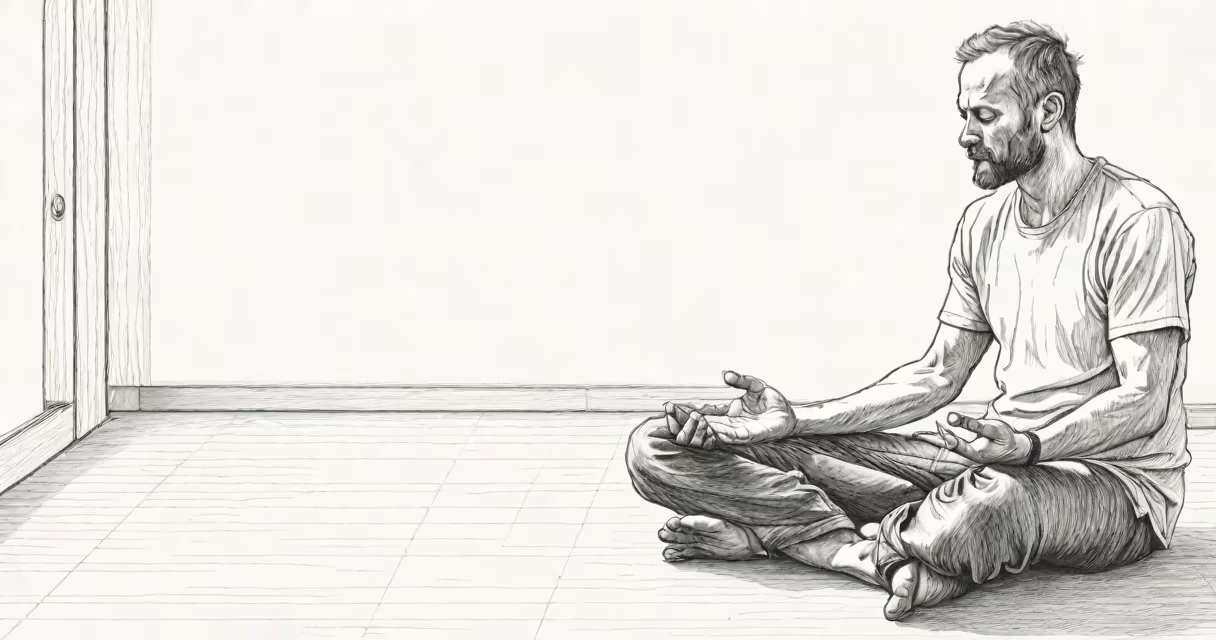
Radical acceptance meditation is a mindfulness practice that involves fully acknowledging current reality-especially painful or unwanted experiences-without resistance, judgment, or attempts to change it. It's rooted in Dialectical Behavior Therapy (DBT) and focuses on accepting what cannot be changed to reduce emotional distress.
This technique isn't about passively enduring hardship. It's about stopping the internal struggle with what is happening. When you stop fighting reality, mental energy shifts from resistance to coping. The goal isn't to like difficult situations, but to stop making them worse through emotional reaction.
For example, someone who loses their job may initially react with anger, shame, or fear. Radical acceptance meditation doesn't deny those feelings. Instead, it guides the mind to pause and say: "I am unemployed. This is happening. I don't have to like it, but I can accept it." That shift reduces the secondary suffering caused by denial or blame.
The practice begins with focused attention on the breath or bodily sensations. Once stabilized, the meditator brings awareness to a specific stressor-such as chronic pain, grief, or conflict-and consciously acknowledges it as real and unchangeable in the present moment.
Research shows that this kind of cognitive reframing reduces activity in the amygdala, the brain's threat center. A 2018 study published in *Frontiers in Psychology* found that participants who practiced acceptance-based mindfulness reported lower levels of emotional reactivity compared to control groups. The effect was strongest when participants engaged in daily sessions lasting 15 minutes or longer.
Acceptance doesn't mean resignation. It means ceasing to waste energy on wishing things were different. As psychologist Marsha Linehan, founder of DBT, wrote: "You can't change what happened. But you can change how you respond." Radical acceptance meditation trains that response.
While the core principle remains consistent, practitioners often use variations based on context and goals. These include:
| Type | Focus | Best For |
|---|---|---|
| Body Scan Acceptance | Physical sensations, including discomfort or pain | Chronic illness, injury recovery |
| Emotional Labeling | Identifying and naming emotions without judgment | Anxiety, depression, trauma triggers |
| Situational Acceptance | External events beyond personal control | Loss, failure, relationship breakdowns |
| Thought Acceptance | Recurring negative thoughts | Obsessive thinking, rumination |
Each type uses the same underlying mechanism: noticing the experience, naming it ("This is frustration"), and stating, "I accept this is happening now." Over time, this reduces the urge to suppress or escape the feeling.
A common mistake is confusing radical acceptance with passive resignation. They're not the same. Resignation says, "Nothing matters anymore." Radical acceptance says, "This is real, and now I can act." The difference lies in intention: one gives up, the other clears space for action.
Radical acceptance meditation is most effective in high-stress contexts where changing outcomes is impossible. It's widely used in clinical settings for treating borderline personality disorder, PTSD, and chronic pain. The National Institute of Mental Health (NIMH) recognizes DBT-including radical acceptance-as an evidence-based treatment for emotional dysregulation.
In everyday life, it applies to moments like waiting in traffic, receiving bad news, or dealing with a partner's unchangeable habits. You can't make the car in front move faster, but you can stop fuming about it. That shift frees mental bandwidth for problem-solving or self-care.
I've seen it work in real time during a workshop with veterans experiencing combat-related trauma. One man described a recurring nightmare about losing his unit. After five days of guided radical acceptance practice, he reported fewer nightmares and less anxiety during daytime hours. He didn't "fix" the memory-but he stopped being ruled by it.
Many people assume radical acceptance means giving up or agreeing with harmful behavior. That's incorrect. Accepting that something exists doesn't mean endorsing it. You can accept that your boss is unfair while still deciding to seek a new role.
Another myth is that it requires hours of daily practice. While consistency helps, even 5-minute sessions can build tolerance. A 2021 randomized controlled trial in *Mindfulness* journal showed that participants who practiced radical acceptance for just 7 minutes a day over four weeks had measurable improvements in emotional regulation, measured via self-report and cortisol levels.
Finally, some think it's only for people in crisis. Not true. It's useful for anyone facing uncertainty-students awaiting exam results, parents going through teenage rebellion, or professionals managing workload spikes. The skill becomes sharper with repetition.
One non-obvious point: radical acceptance is not a one-time decision. It's a repeated choice. You don't "achieve" it and move on. Each moment of difficulty calls for a fresh act of acceptance. Like muscle training, it strengthens over time.
Begin with a simple exercise: sit quietly for 5 minutes. Focus on your breath. When a thought or feeling arises-"I hate this," "Why is this happening?"-pause. Acknowledge it: "This is frustration." Then say silently: "I accept that I feel this way right now." Return to the breath.
Repeat this cycle. Don't judge the quality of your focus. The practice isn't about perfection. It's about returning to acceptance each time you notice resistance.
Over time, you'll notice less internal conflict. Pain doesn't vanish-but your relationship to it changes. You stop fighting reality and start living within it.