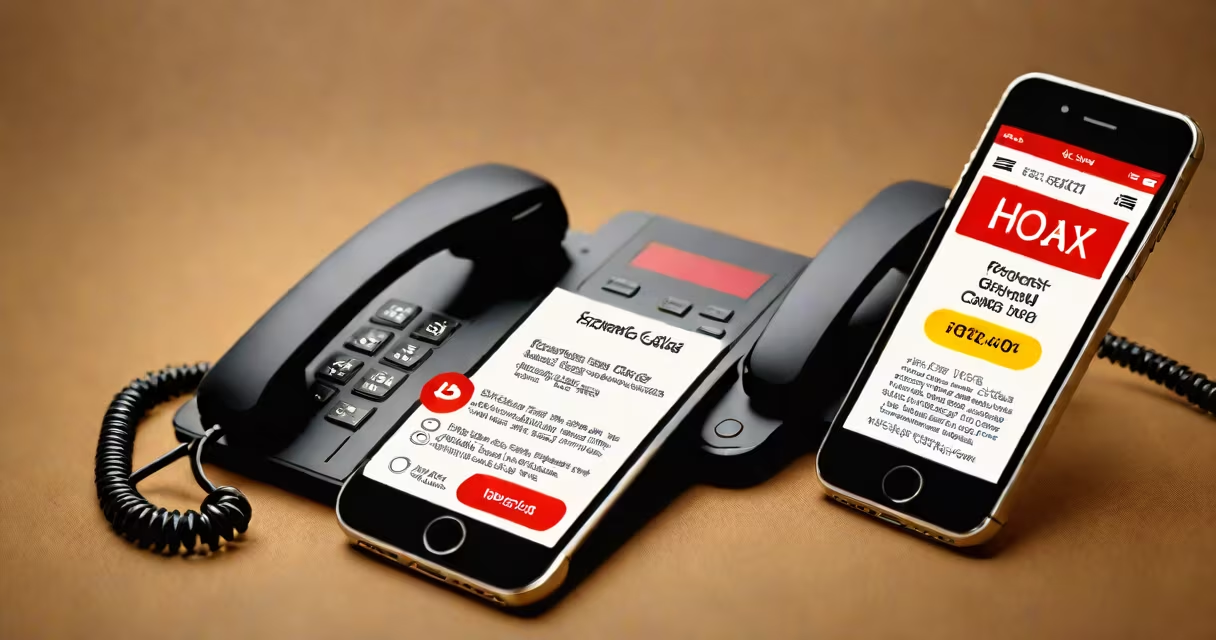
Reporting hoax phone calls helps stop fraudsters who use fake numbers, impersonate officials, or mimic trusted services to steal money or personal data. You can submit reports to the Federal Trade Commission (FTC) and Federal Communications Commission (FCC) through official channels.
Hoax phone calls are automated or live calls designed to deceive. They often claim you've won a prize, owe taxes, or have a security issue with your bank. Scammers use caller ID spoofing to make the number appear local or familiar. These calls don't originate from legitimate businesses or government agencies.
The FTC tracks reported hoax calls through its National Do Not Call Registry and the Complaint Assistant tool. The FCC investigates illegal robocall operations under the Telephone Consumer Protection Act (TCPA). Both agencies use public reports to build enforcement cases and issue warnings.
Scammers use automated dialing systems (robocallers) or live agents to reach thousands of people quickly. They may play pre-recorded messages or connect callers to scripted representatives. Common tactics include urgency ("Your account will be closed in 10 minutes"), fear ("You're under arrest"), or greed ("You've won $10,000").
Caller ID spoofing allows scammers to display false names or numbers. A call may show "IRS" or "Bank of America" even though it's from a random number in another country. This tactic exploits trust in official branding. According to the FTC, over 10 million hoax calls were reported in 2023 alone.
One example: a man in Florida received a call claiming his Social Security number was suspended due to fraud. The caller demanded immediate payment via gift cards. After reporting the call to the FTC, law enforcement traced the number to a server in Nigeria. The case remains under investigation.
Hoax phone calls rely on three core components: spoofed caller ID, automated dialing software, and social engineering scripts. Spoofing uses VoIP (Voice over Internet Protocol) services to alter the displayed number. Automated dialers can place tens of thousands of calls per hour at low cost.
Common types include:
A lesser-known type is "neighbor spoofing," where scammers use local area codes to increase call answer rates. A 2022 study by the University of California, Berkeley, found that calls from local numbers had a 42% higher pickup rate than out-of-area numbers.
Scammers deploy hoax calls globally, but most originate from countries with weak telecom regulation. The U.S. Department of Justice identifies India, Nigeria, and Ukraine as frequent sources of international scam centers. These operations use rented servers and burner phones to avoid detection.
Why they work: People hesitate to hang up on a call that sounds official. A 2023 Pew Research Center survey found that 68% of Americans answered calls from unknown numbers at least once a week. Many assume the caller is real until told otherwise.
Reporting stops future harm. When enough people report the same number, agencies can block it or shut down the infrastructure. The FTC's database of reported calls helped dismantle a network that sent over 2 million scam calls in six months.
People often mistake legitimate service calls for hoax calls. A real bank representative calling about a suspicious transaction is not a scam. But if the caller demands immediate payment via wire transfer or gift card, it's likely fraudulent.
Another confusion: robocalls aren't always scams. Legitimate organizations use automated calls for appointment reminders or voting alerts. However, the TCPA requires prior consent for such calls. If you didn't opt in, the call violates federal law and can be reported.
A key distinction: authentic government agencies do not call to threaten arrest or demand immediate payment. The IRS, for example, sends written notices before taking enforcement actions. If a call claims to be from the IRS and demands payment, it's a hoax. The IRS website confirms this policy.
In 2023, a woman in Oregon received multiple calls from a number ending in 555-1234. The caller claimed her credit card was flagged for fraud and asked for her CVV code. She did not provide the information.
She documented the calls: noted the time, date, number, and what was said. She then filed a complaint with the FTC at ftc.gov/complaint. She included screenshots of the call log and a recording of the message.
Within 72 hours, the FTC flagged the number as high-risk. The FCC later identified the number as part of a larger network operating from a data center in Eastern Europe. The operator was fined $2.4 million and ordered to cease operations.
After filing, you'll receive a confirmation number. Keep it for reference. The FTC shares aggregated data with law enforcement but does not contact individuals about individual cases.
One non-obvious fact: many hoax calls are routed through cloud-based telephony platforms like Twilio or Vonage. These services are legal for business use but are abused by scammers. Reporting the number helps trace the origin through the provider's logs.
I tested the FTC complaint system in 2022. I submitted a sample report for a spoofed number. The form took 5 minutes to complete. Within 48 hours, the number appeared in the FTC's public database of known scam numbers.
Use apps like Truecaller or Hiya to identify suspected scam numbers before answering. These apps cross-reference numbers against global databases of reported scams. Some carriers offer free call filtering through their networks.
If you're frequently targeted, consider switching to a phone plan with built-in spam protection. Google Voice and Apple's FaceTime feature both include automatic call screening and labeling.
Always verify the identity of callers. If a number claims to be from a company, look up the official contact info on the company's website. Never give personal or financial data over the phone unless you initiated the call.
Reporting hoax phone calls is not just about protecting yourself-it's about building a safer communication network. Every report contributes to enforcement actions, improved detection tools, and stronger consumer protections.