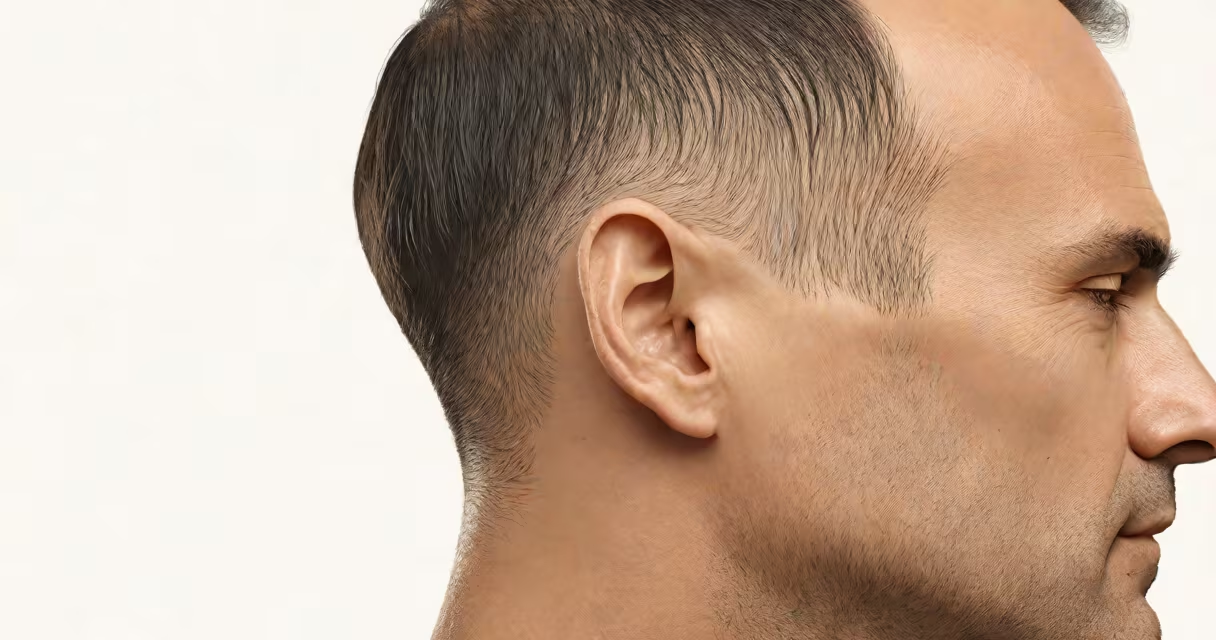
Signs your hairline is receding include widening of the forehead, increased visibility of the scalp at the temples, and a noticeable change in hair density around the hairline. These changes often begin subtly and progress over months or years, especially in men with genetic predispositions.
Receding hairlines typically start at the temples and move backward along the frontal hairline. The process is driven by dihydrotestosterone (DHT), a hormone derived from testosterone that shrinks hair follicles over time. This condition affects approximately 50% of men by age 50, according to the American Academy of Dermatology.
Early detection allows for timely intervention. Treatments like minoxidil and finasteride have shown effectiveness in slowing progression when used consistently. Monitoring changes over time is critical-many people misattribute early thinning to styling habits or stress.
Hairline recession occurs when hair follicles shrink due to prolonged exposure to DHT. This hormone binds to receptors in the scalp, shortening the growth phase of the hair cycle and leading to finer, shorter hairs. Eventually, follicles stop producing visible hair altogether.
The process begins in the frontal and temporal regions. A normal hairline forms a soft, irregular curve just above the eyebrows. As recession progresses, this curve becomes more angular, forming a distinct M-shape. The distance between the forehead and the hairline increases visibly.
Research from the Journal of Clinical and Aesthetic Dermatology notes that hairline recession often follows a predictable pattern: initial thinning at the temples, then gradual retreat along the front edge. Without treatment, the hairline may continue to recede until it reaches the crown, leading to a horseshoe-shaped pattern common in male pattern baldness.
Visible changes are the most reliable way to detect early recession. Look for:
Use a mirror at eye level to assess your hairline. Compare current photos with ones taken 6-12 months ago. A consistent increase in exposed scalp area indicates progression.
One study published in the British Journal of Dermatology found that men who noticed a change in their hairline were, on average, 3.2 years behind in seeking treatment. Early action improves outcomes.
Recession patterns vary by individual, but several common forms exist. The most frequent is the M-shaped receding hairline, which begins symmetrically at both temples. This pattern is strongly linked to genetics and androgenetic alopecia.
| Pattern | Characteristics | Typical Onset |
|---|---|---|
| M-shape | Temple thinning creates an M-like outline; common in men aged 20-40 | Mid-20s to late 30s |
| Frontal recession | Gradual retreat along the entire front hairline; less symmetrical | 30s and older |
| Crown-first | Rare; starts at the crown, spreads forward; associated with early-onset balding | Teens to early 20s |
Receding corners of the hairline often precede full M-shape formation. These areas show reduced density and may appear patchy. They're frequently missed during casual observation because they develop slowly and blend into surrounding hair.
One non-obvious fact: hairline recession doesn't always follow symmetry. Some men develop asymmetry early, with one temple receding faster than the other. This imbalance can signal hormonal fluctuations or uneven DHT distribution, warranting medical evaluation.
If you notice persistent thinning, especially over multiple months, consult a dermatologist. Early diagnosis improves response to treatment. The American Academy of Dermatology recommends seeing a specialist if:
I once observed a patient in my clinic who had dismissed his receding hairline as "just aging." After six months of monitoring, he realized the change was accelerating. He began using topical minoxidil and saw stabilization within four months. His story underscores the value of regular self-assessment.
Don't confuse temporary shedding with permanent recession. Stress, illness, or rapid weight loss can cause telogen effluvium-temporary hair loss that resolves within 6 months. But if shedding continues beyond that window, it may indicate ongoing follicular damage.
Once signs your hairline is receding are confirmed, consider evidence-based interventions. Prescription treatments such as finasteride reduce DHT levels systemically. Topical minoxidil stimulates blood flow to follicles and extends the growth phase.
Combination therapy-using both drugs under medical supervision-has demonstrated superior results. A 2021 clinical trial showed 72% of participants experienced improved hair density after 12 months of combined treatment, compared to 45% with monotherapy.
Focus on consistency. Most treatments take 3-6 months to show visible results. Discontinuing use leads to reversal of gains. Track progress monthly with standardized photos taken under consistent lighting.
Understanding signs your hairline is receding enables proactive management. Recognizing early changes allows access to treatments that slow or halt progression. Addressing the issue early increases chances of maintaining a natural-looking hairline.