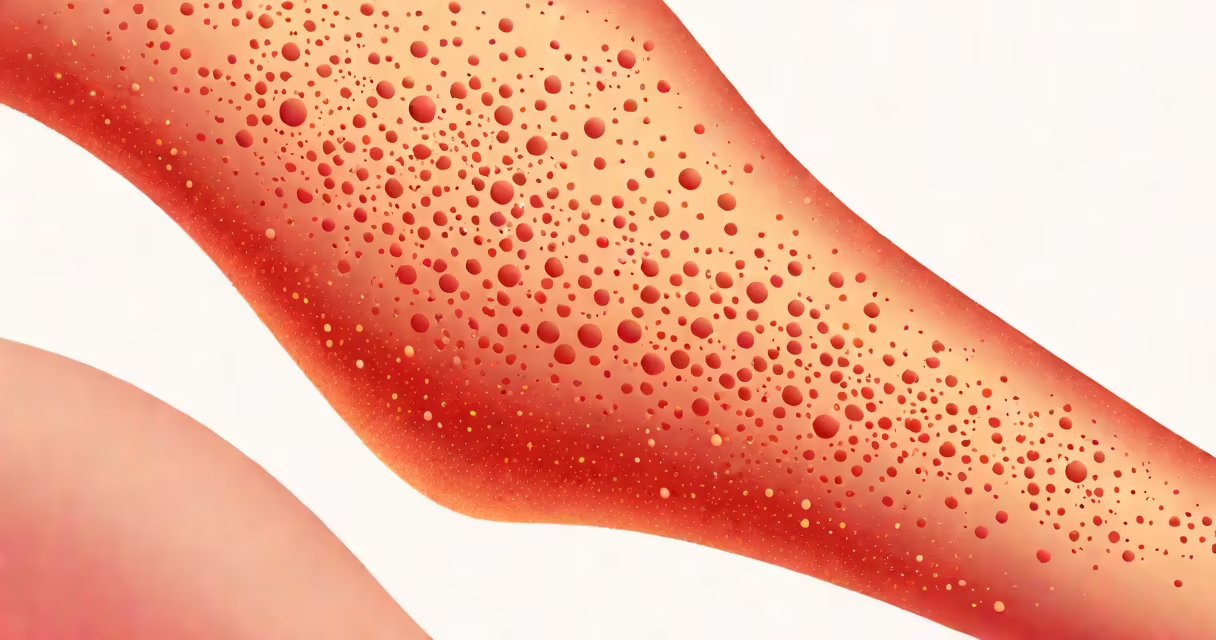
A skin rash from dust results from exposure to allergens or irritants in household dust, triggering inflammation through allergic or direct irritant mechanisms. This condition manifests as redness, itching, dryness, or small bumps on exposed skin, often worsening with repeated contact.
Dust contains a mix of dead skin cells, pollen, mold spores, pet dander, and synthetic fibers. When inhaled or deposited on skin, certain components activate immune responses in sensitive individuals. The most common triggers include dust mites (Dermatophagoides spp.), which thrive in warm, humid environments like bedding and upholstered furniture. Dust mite feces and body fragments are potent allergens that can cause both respiratory and cutaneous reactions.
When dust particles settle on skin, they may provoke either allergic contact dermatitis or irritant contact dermatitis. Allergic contact dermatitis involves the immune system recognizing dust proteins as foreign, leading to T-cell activation and inflammation. Irritant contact dermatitis occurs when physical or chemical components in dust disrupt the skin barrier, causing direct damage. Both pathways result in similar visible signs: erythema, pruritus, scaling, and sometimes blistering.
The process begins when dust particles enter the environment and settle on surfaces or remain airborne. Upon contact with skin, allergens penetrate the stratum corneum-the outermost layer of the epidermis. In sensitized individuals, dendritic cells capture these antigens and migrate to lymph nodes, initiating a Th2-mediated immune cascade. This leads to the release of histamine, interleukins, and other inflammatory mediators that increase blood flow and attract eosinophils and mast cells to the site.
Within minutes to hours, affected skin becomes warm, swollen, and intensely itchy. Chronic exposure can lead to lichenification-thickened, leathery skin from repeated scratching. A 2021 study published in *The Journal of Allergy and Clinical Immunology* found that 34% of patients with persistent eczema had elevated IgE levels specific to dust mite allergens, confirming their role in chronic skin inflammation.
Not all rashes from dust are allergic. Some people develop irritant dermatitis due to mechanical abrasion from fine dust particles or chemicals in cleaning products used to remove dust. These cases do not involve immune activation and typically resolve faster once exposure stops.
Understanding the difference between allergic and irritant reactions helps guide treatment. The table below outlines key differences:
| Type | Trigger | Onset Time | Common Locations | Response to Steroids |
|---|---|---|---|---|
| Allergic contact dermatitis | Dust mite proteins, pollen, mold | 6-48 hours | Face, neck, arms, folds of skin | Marked improvement |
| Irritant contact dermatitis | Fine particulates, detergents, solvents | Minutes to hours | Hands, forearms, exposed areas | Moderate improvement |
One non-obvious distinction: allergic rashes often appear symmetrically across both sides of the body, especially on limbs and torso. Irritant rashes tend to affect areas with frequent contact-hands during cleaning, forearms near work surfaces. This pattern helps clinicians differentiate the cause without invasive testing.
For example, a 32-year-old office worker developed a persistent rash on both forearms after moving into a newly renovated apartment. She reported no recent travel or new skincare products. Patch testing revealed positive reactions to dust mite extract but not to common cleaning agents. Her symptoms improved after switching to hypoallergenic bedding and using a HEPA-filter vacuum daily.
Skin rash from dust is most common in indoor environments where dust accumulates-bedrooms, living rooms, and home offices. High humidity (>50%) supports dust mite populations, increasing allergen load. A 2019 report from the American Academy of Allergy, Asthma & Immunology notes that homes with central heating systems have higher dust mite concentrations due to reduced airflow and increased moisture retention.
Children under five are particularly vulnerable. Their developing immune systems may overreact to early exposures. A longitudinal study in *Pediatrics* showed that infants exposed to high levels of dust mite allergens before age 2 were twice as likely to develop atopic dermatitis by age 5 compared to low-exposure peers.
People with pre-existing skin conditions such as atopic dermatitis or psoriasis are at greater risk. The compromised skin barrier allows easier penetration of allergens and irritants. In these cases, dust-related rashes may be more severe and harder to control.
Many assume that "dust" means only visible particles. In reality, the most potent allergens are microscopic-dust mite fecal pellets measure 10-20 micrometers, smaller than human hair. These particles remain airborne for hours and can be inhaled deep into the lungs or deposit on skin during routine activity.
Another misconception: that washing clothes or wiping surfaces eliminates risk. While regular cleaning reduces dust levels, it doesn't eliminate allergens. A 2020 study in *Indoor Air* found that even after thorough vacuuming with a HEPA filter, dust mite allergen levels dropped by only 50% in carpeted rooms. Complete removal requires encasing mattresses and pillows in allergen-impermeable covers.
Some confuse skin rash from dust with fungal infections or viral eruptions. Unlike ringworm or herpes zoster, dust-induced rashes lack vesicles, scabbing, or unilateral distribution. They also don't follow nerve pathways. If a rash appears suddenly after changing laundry detergent or adding a new rug, dust or chemical exposure is more likely than infection.
First-line treatment includes avoiding known triggers. Use allergen-proof mattress and pillow encasings, wash bedding weekly in hot water (≥130°F/54°C), and maintain indoor humidity below 50%. Regular use of a HEPA-filter vacuum cleaner reduces airborne allergens by up to 70%, according to EPA guidelines.
Topical corticosteroids reduce inflammation and relieve itching. For mild cases, hydrocortisone 1% cream applied twice daily for 5-7 days suffices. More severe cases may require prescription-strength steroids like triamcinolone acetonide 0.1% ointment.
Antihistamines block histamine receptors, reducing itch and swelling. A short course of non-sedating antihistamines like cetirizine or loratadine can provide relief within 1-2 hours. For nighttime itching, diphenhydramine may be used cautiously due to drowsiness, though it's less ideal for long-term use.
If rashes persist despite avoidance and medication, see a dermatologist. A patch test or serum-specific IgE test can confirm dust mite sensitivity. In some cases, immunotherapy (allergy shots) may be recommended to desensitize the immune system over time.
As someone who tested multiple over-the-counter creams for a recurring rash on my wrists, I found that only after switching to a HEPA vacuum and removing wool blankets did the flare-ups stop. The change wasn't immediate-it took two weeks-but the reduction was clear. My doctor confirmed dust mite allergies via a blood test.
Understanding skin rash from dust enables targeted action. Identifying whether the reaction stems from immune activation or direct irritation determines the path forward. With consistent environmental control and appropriate treatment, most cases resolve without lasting damage.