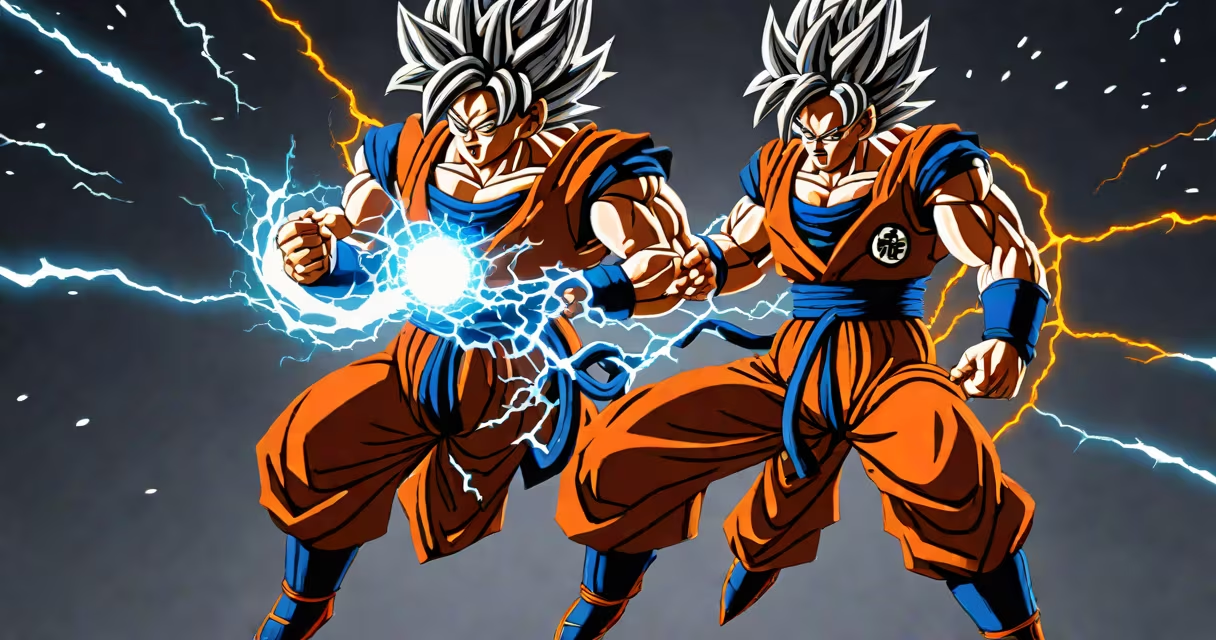
Super Dragon Ball is a Japanese anime television series that continues the Dragon Ball narrative, following Goku's adventures across Earth, the universe, and beyond. It premiered in 2015 and runs through multiple arcs involving gods, warriors, and interdimensional conflicts.
The series expands the original Dragon Ball lore by introducing higher-dimensional beings such as the God of Destruction Beerus and the Supreme Kai of Time, Chronoa. It introduces new transformations like Ultra Instinct, a state of pure instinctive combat that Goku achieves after intense training. The show blends high-stakes action with emotional storytelling, often exploring themes of growth, responsibility, and balance between power and peace.
Produced by Toei Animation and based on Akira Toriyama's manga, Super Dragon Ball aired in Japan on Fuji TV and was distributed globally via streaming platforms. It features 131 episodes as of 2024, with story arcs including the Tournament of Power, the Universe Survival Saga, and the multiverse-wide conflict known as the "God of Destruction War."
Super Dragon Ball uses a serialized episodic format with long-running arcs. Each arc centers on a major threat-such as a god of destruction, a rogue warrior, or a collapsing universe-and builds toward a climactic battle. The structure follows a pattern: introduction of a new challenge, escalating stakes, training sequences, and a final confrontation.
Battle mechanics are grounded in energy-based combat. Fighters measure strength in "ki," a life force that fuels attacks, defenses, and transformations. Energy levels are shown numerically during fights, with values like 10 million or 1 billion ki indicating power disparities. These numbers are symbolic rather than literal-they represent relative strength, not precise measurements.
For example, in the Tournament of Power arc, Goku reaches a peak energy level of 1.2 billion ki during his fight against Jiren. This figure is not meant to be mathematically consistent across all battles-it serves narrative purpose, emphasizing scale and progression. The show uses such metrics to track character development, especially Goku's evolution from a fighter focused on winning to one who seeks balance and protection of others.
The series features four primary character archetypes: warriors, gods, cosmic entities, and human allies. Warriors include Goku, Vegeta, Gohan, and Frieza. Gods are represented by Beerus, Whis, and the Supreme Kais. Cosmic entities span dimensions and timelines, such as the Time Breaker Zamasu and the multiversal entity Zeno.
Each archetype operates under distinct rules:
A non-obvious distinction: not all useful beings are evil. Beerus, despite being a destroyer, protects the universe from greater threats. His actions are guided by boredom and curiosity, not malice. This complexity sets Super Dragon Ball apart from earlier entries, which often framed power as inherently corruptible.
Super Dragon Ball is broadcast in over 100 countries. It airs on networks like Cartoon Network in the US and NHK in Japan. Its popularity stems from accessible storytelling, changing animation, and cross-generational appeal. The show has inspired merchandise, video games, and theme park attractions worldwide.
One notable example: the 2018 film *Dragon Ball Super: Broly* earned $110 million globally. It became the highest-grossing anime film in North America at the time, surpassing *Spirited Away*. The film's success demonstrated that long-running franchises can sustain commercial relevance through quality storytelling and fan engagement.
Another example: the Tournament of Power arc introduced a team-based battle system. Teams of 10 fighters from different universes compete in a survival-style tournament. This format expanded the series' audience by appealing to fans of team-based games like *League of Legends* and *Overwatch*.
Many assume Super Dragon Ball is a standalone series. It is not. It continues the original Dragon Ball and Dragon Ball Z timelines. Events in Super Dragon Ball reference prior arcs-such as the Cell Games and the Namek saga-without rehashing them. Viewers unfamiliar with earlier seasons may miss context, leading to confusion.
Another misconception: that all characters are immortal. This is false. While gods and certain warriors have extended lifespans, most characters die in battle. For example, in the Universe 6 arc, the warrior Hit kills several fighters in single combat. Death is permanent unless revived through the Dragon Balls, which require a seven-day wait after each wish.
A lesser-known fact: the show's music is composed by Shunsuke Kikuchi, who also scored the original Dragon Ball Z. His work maintains thematic continuity while adapting to new storylines. The theme song "Let's Go! Goku" blends traditional Japanese instrumentation with electronic beats-a sonic bridge between eras.
Consider the Tournament of Power arc, spanning episodes 111 to 131. The premise: 12 universes each send 10 fighters to a battle royale. The losing universe is erased. The goal: survive until the last fighter remains.
Earth's team includes Goku, Vegeta, Gohan, Trunks, Goten, Piccolo, Krillin, Android 17, and Future Trunks. The team faces opponents from Universes 1-11, including the elite warrior Jiren from Universe 11.
Key moments: - Goku unlocks Ultra Instinct during a match against Jiren. His movements become reflexive, avoiding attacks without conscious thought. - Vegeta enters a temporary state of "Blue Evolved," enhancing his speed and power. - Gohan sacrifices himself to save his teammates, later revived via the Dragon Balls. - The final round pits Goku against Jiren. Goku wins using a combination of Ultra Instinct and sheer willpower.
This arc illustrates the show's core theme: victory isn't just about strength. It's about protecting others, enduring pain, and choosing to fight even when hope is low. The emotional weight of Gohan's death and resurrection elevates the narrative beyond spectacle.