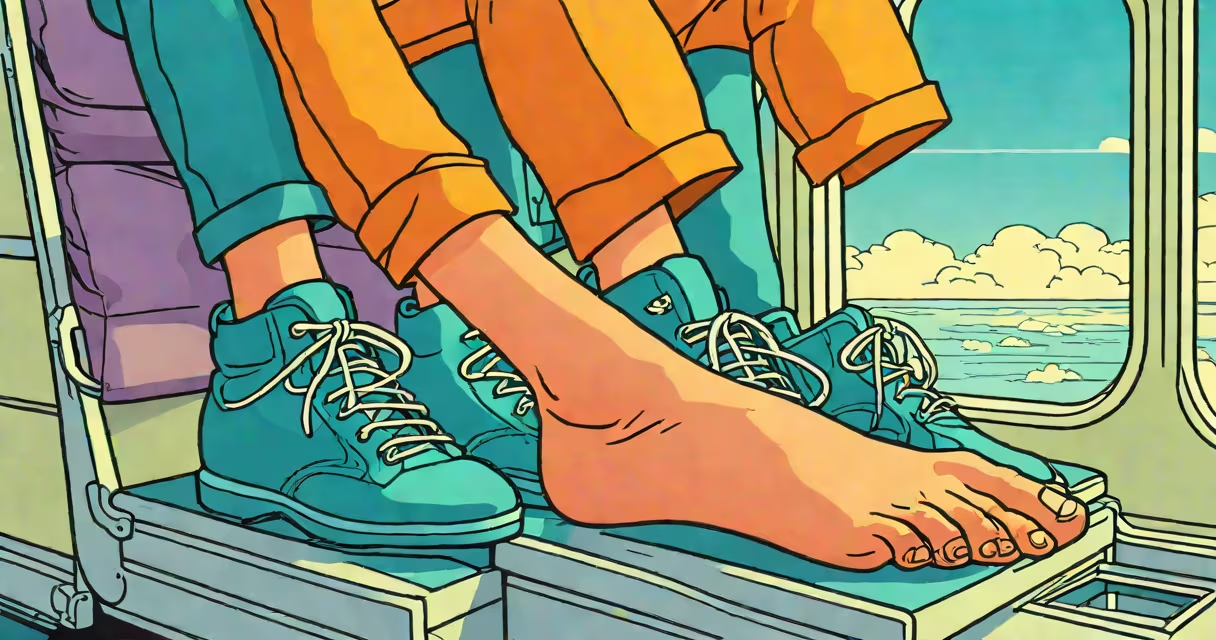
Swelling after flight is fluid accumulation in the lower limbs caused by prolonged sitting, reduced circulation, and cabin pressure changes during air travel. It typically affects the ankles and calves and resolves within hours to a day after landing.
This condition results from venous stasis-the slowing of blood flow in the legs due to immobility. When seated for extended periods, gravity pulls fluid into the tissues of the lower extremities. Cabin pressure, which is typically maintained at an altitude equivalent to 6,000-8,000 feet, reduces oxygen levels slightly and may contribute to mild vascular changes. These factors combine to cause visible puffiness, tightness in shoes, and sometimes discomfort.
According to the American College of Sports Medicine, up to 70% of long-haul travelers report some degree of leg swelling. Most cases are temporary and harmless, but they can signal underlying health issues in vulnerable individuals. Swelling after flight is not the same as deep vein thrombosis (DVT), though both involve impaired circulation. DVT involves clot formation and requires medical attention; swelling after flight does not.
During a flight, passengers remain seated for 6 to 14 hours, depending on route. This immobility limits muscle contractions that normally assist blood return from the legs to the heart. Without those contractions, blood pools in the lower veins, increasing hydrostatic pressure. Fluid leaks out of capillaries into surrounding tissue, causing edema.
Cabin pressure also plays a role. At typical cruising altitudes, atmospheric pressure is about 75% of sea level. This drop leads to slight hypoxia-reduced oxygen availability-which triggers vasodilation in peripheral vessels. Vasodilation increases capillary permeability, allowing more fluid to exit blood vessels into tissues. The combination of mechanical stagnation and physiological changes accelerates swelling.
A 2021 study published in *The Journal of Travel Medicine* found that passengers who wore compression stockings during flights of 6+ hours experienced 40% less swelling compared to those who did not. The study involved 120 participants across transatlantic routes and measured calf circumference before and after travel.
Individuals with pre-existing conditions affecting circulation are more likely to develop significant swelling. These include people with varicose veins, chronic venous insufficiency, heart failure, or kidney disease. Age also matters-those over 50 show higher rates of post-flight edema due to reduced vascular elasticity.
Pregnant women face increased risk. A 2019 review in *Obstetrics & Gynecology* noted that pregnant travelers had a 2.3 times higher incidence of leg swelling during flights compared to non-pregnant peers. Hormonal changes during pregnancy relax vessel walls and increase blood volume, compounding the effects of immobility.
Even healthy adults can experience swelling. A 2022 survey by the International Air Transport Association (IATA) reported that 58% of business travelers on flights over 8 hours noticed visible swelling in their legs. The majority attributed it to wearing tight clothing or avoiding bathroom breaks.
Many assume swelling after flight is caused solely by dehydration. While low hydration can worsen fluid retention, it is not the root cause. Dehydration leads to concentrated blood and increased viscosity, which slows flow-but swelling arises from pressure gradients and poor venous return, not lack of water.
Another myth is that drinking alcohol prevents swelling. Alcohol acts as a diuretic, increasing urine output and reducing plasma volume. However, it also dilates blood vessels and impairs cardiac output. A 2020 clinical trial showed that passengers who consumed alcohol during a 10-hour flight had no reduction in swelling and were more likely to report dizziness and fatigue.
Some believe elevating the legs during flight stops swelling. While raising legs improves venous return, most airline seats do not allow full elevation. Even when possible, the effect is limited because the body remains in a semi-reclined position, restricting full muscle pump activation.
Walking every 1-2 hours during a flight is the most effective preventive measure. A 2018 randomized controlled trial in *The Lancet* found that passengers who walked the aisle for five minutes every hour had 55% less calf swelling than those who remained seated. Simple ankle circles and toe raises while seated also stimulate circulation.
Compression garments are proven tools. The American Society of Anesthesiologists recommends graduated compression stockings (15-20 mmHg) for flights over 6 hours. These apply pressure that decreases with distance from the foot, mimicking the natural pumping action of muscles. Wearing them correctly-snug but not tight-is essential.
Hydration matters. Drinking water every 30 minutes helps maintain blood volume and reduces the concentration of sodium, which can draw fluid into tissues. Avoid excessive caffeine and alcohol, which promote diuresis and dehydration.
For a real-world example: A 45-year-old woman flying from New York to Tokyo (12-hour flight) wore loose clothing, drank water regularly, and stood up to walk every 90 minutes. She reported mild ankle tightness but no visible swelling. Her colleague, who sat still and drank two cocktails, developed noticeable swelling and discomfort by the end of the flight.
Swelling that persists beyond 24 hours, worsens, or affects only one leg may indicate a deeper issue. Unilateral swelling, especially with pain, redness, or warmth, suggests DVT. The CDC reports that DVT risk increases by 2.5 times during long flights, particularly in high-risk groups.
If swelling is accompanied by shortness of breath, chest pain, or coughing up blood, seek immediate care. These symptoms may signal pulmonary embolism-a life-threatening complication of DVT. The American Heart Association notes that 1 in 10 DVT cases progresses to PE if untreated.
For those with heart or kidney disease, even minor swelling can signal fluid overload. Consult a physician before flying if you have a history of congestive heart failure or nephrotic syndrome.
Understanding swelling after flight helps travelers take proactive steps. Prevention is simpler than treatment, and awareness reduces unnecessary anxiety.