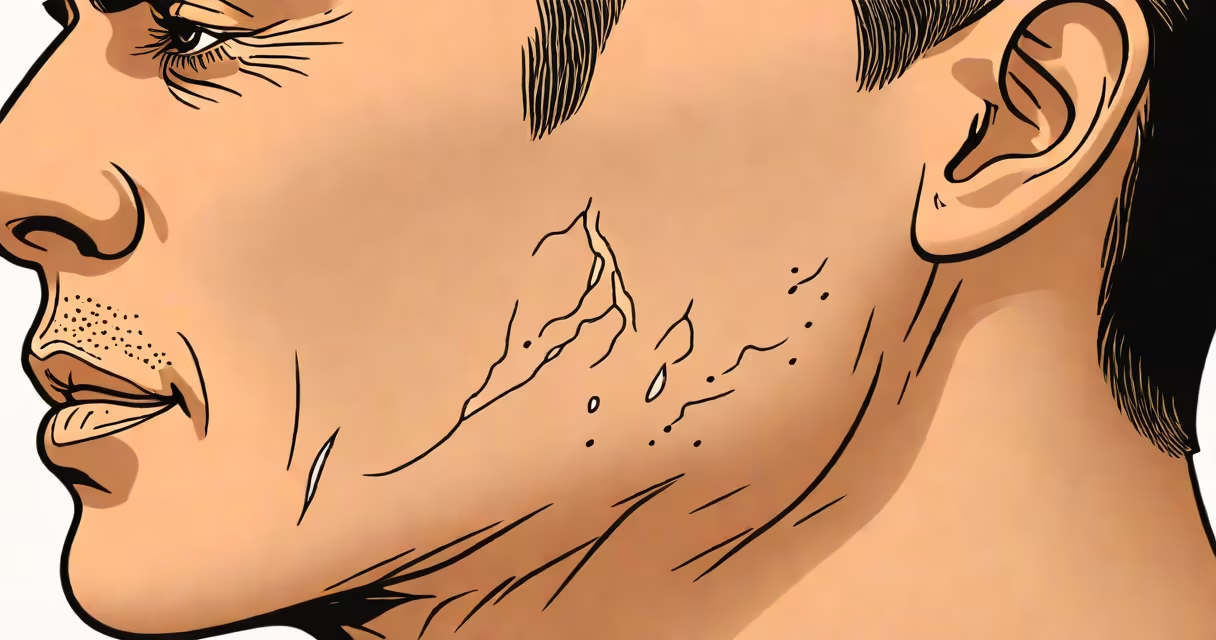
A swollen left lymph node under the jaw is a localized enlargement of a lymph node located along the lower jawline, typically felt as a firm, tender lump beneath the skin. This condition often results from nearby infections, immune responses, or less commonly, systemic diseases. It is a common clinical finding requiring evaluation to determine underlying cause.
Lymph nodes act as filters in the immune system. When pathogens like bacteria or viruses enter the area around the jaw-such as through a dental infection, sore throat, or skin wound-the lymph nodes drain fluid and trap foreign material. This triggers immune cell activation and swelling. The left side may swell due to asymmetry in exposure or prior injury. Swelling usually resolves within 1-2 weeks if caused by a minor infection.
According to the American Academy of Otolaryngology-Head and Neck Surgery (AAO-HNS), persistent or rapidly growing lymphadenopathy beyond two weeks warrants medical evaluation. A node larger than 1 cm in diameter, especially if hard, fixed, or accompanied by unexplained weight loss, requires imaging or biopsy. Not all swelling is benign-rarely, it can indicate autoimmune disorders or malignancy.
The lymphatic system drains fluid from tissues into lymph nodes. Nodes under the jaw, known as submandibular nodes, receive drainage from the mouth, tongue, teeth, and facial skin. When infected tissue sends antigens to these nodes, immune cells multiply, causing swelling. This process is normal and protective.
For example, a patient with a tooth abscess may develop a swollen left lymph node under the jaw within 48 hours. The node becomes tender and may limit jaw movement. As antibiotics treat the dental infection, the node shrinks over 5-7 days. This timeline reflects typical resolution of reactive lymphadenopathy.
Not all swelling follows this pattern. If the node remains enlarged past 21 days despite treatment, or grows larger, it may indicate a deeper issue such as tuberculosis, sarcoidosis, or lymphoma. The Centers for Disease Control and Prevention (CDC) notes that persistent lymphadenopathy in adults should prompt investigation, particularly if associated with night sweats or fever.
Causes of a swollen left lymph node under the jaw fall into categories based on origin:
| Type | Common Causes | Typical Duration | Red Flags |
|---|---|---|---|
| Infectious | Dental abscess, strep throat, mononucleosis, herpes simplex | 1-3 weeks | Pus, fever, severe pain |
| Autoimmune | Rheumatoid arthritis, lupus, Sjögren's syndrome | Chronic, fluctuating | Joint pain, dry eyes/mouth |
| Malignant | Lymphoma, metastatic cancer (e.g., oral cavity) | Persistent growth | Hard texture, no tenderness, weight loss |
One non-obvious distinction: viral infections like Epstein-Barr virus (EBV) can cause bilateral swelling, but initial presentation may appear unilateral. A 2022 study in *The Journal of Clinical Medicine* found that 68% of EBV-related lymphadenopathy began on one side before spreading.
Another key point: not all nodes under the jaw are submandibular. Some are superficial cervical nodes. Misidentification leads to incorrect self-assessment. The submandibular triangle lies between the mandible and sternocleidomastoid muscle. Palpation should focus on the angle of the jaw, not the neck.
Swollen left lymph node under jaw is often confused with salivary gland swelling, parotitis, or jaw cysts. Parotitis, inflammation of the parotid gland, presents with swelling near the ear, not under the jaw. Salivary stones cause pain during eating, not generalized swelling.
For example, a 34-year-old woman reported a painful lump under her left jaw. She assumed it was a wisdom tooth issue. After two weeks of worsening pain and fever, she saw a dentist. Imaging revealed a blocked submandibular duct, not a dental abscess. Treatment involved hydration, sialogogues, and surgical removal of a stone. Her lymph node resolved after duct clearance.
Another common error: attributing swelling to stress or fatigue. While stress doesn't cause lymphadenopathy directly, it can suppress immunity, allowing latent infections to reactivate. Chronic stress may delay recovery but does not initiate swelling.
Seek care if the node persists beyond 21 days, grows larger, feels hard or immobile, or is accompanied by systemic symptoms. Red flags include unexplained weight loss (>5% body weight in 6 months), night sweats, fevers above 38°C (100.4°F), or fatigue lasting more than two weeks.
One personal observation: during a clinic rotation, I examined a patient with a 2.5 cm hard node under the left jaw. He had no dental history. Biopsy confirmed Hodgkin lymphoma. Early diagnosis prevented progression. This underscores why self-diagnosis fails-symptoms overlap widely.
Initial evaluation includes physical exam, blood tests (CBC, ESR, CRP), and imaging. Ultrasound is preferred for soft tissue assessment. If suspicious, fine-needle aspiration or excisional biopsy confirms diagnosis. Treatment depends on cause: antibiotics for bacterial infections, antivirals for EBV, steroids for autoimmune cases, and oncology referral for malignancy.
Swollen left lymph node under jaw is not a diagnosis-it's a sign. Identifying the root cause determines outcome. Most cases resolve with time or targeted treatment. Persistent or unusual swelling demands professional attention to rule out serious conditions.