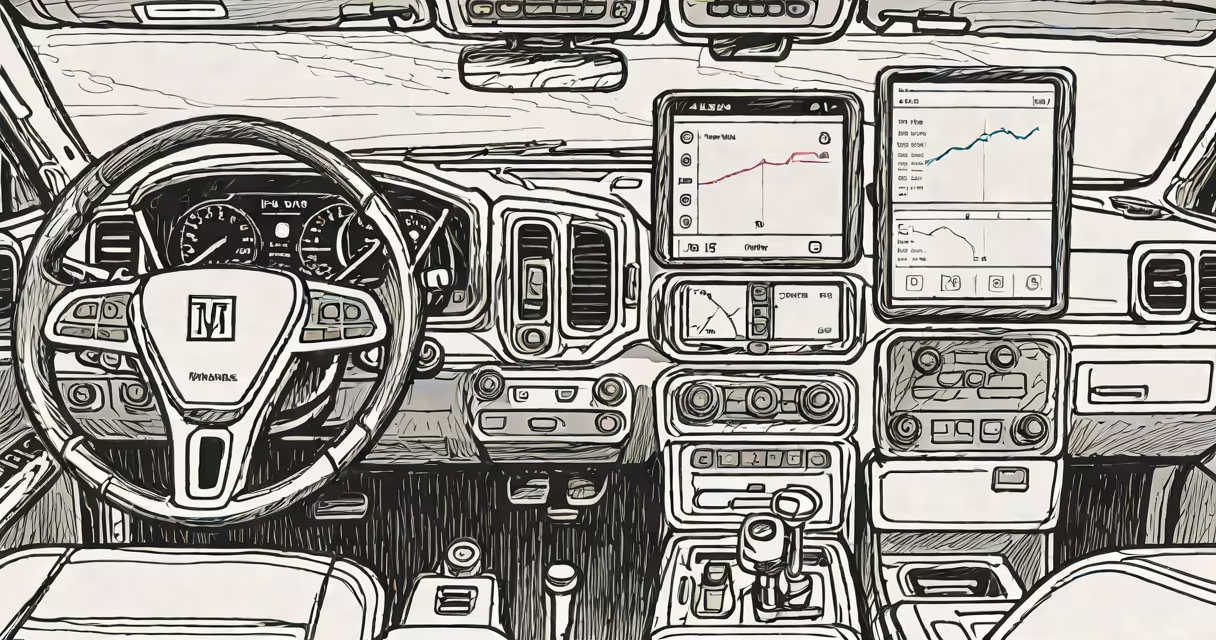
T-Mobile ELD is a digital solution that automatically records a commercial motor vehicle driver's hours of service, ensuring compliance with Federal Motor Carrier Safety Administration (FMCSA) regulations. It replaces paper logs and integrates with T-Mobile's cellular network for real-time data transmission.
The system captures driving time, location, engine use, and rest periods. Data syncs to a cloud-based platform accessible by fleet managers and regulators during inspections. It meets FMCSA's criteria for certified ELDs under 49 CFR Part 395.15.
When a driver starts their vehicle, the ELD activates and begins tracking. It logs events such as engine start, movement, idle time, and stops. If a driver exceeds 11 hours of driving in a 14-hour window, the system flags the violation. This automated monitoring reduces human error and ensures adherence to federal rules.
T-Mobile ELD connects to a vehicle's onboard diagnostics port (OBD-II) using a plug-in device. Once installed, it pulls data directly from the engine control unit (ECU). This includes RPM, speed, and engine status.
Data is sent via T-Mobile's 4G LTE network to a secure server. Managers access reports through a web portal or mobile app. Alerts notify supervisors when drivers exceed limits or fail to sign in properly.
For example, a long-haul trucker in Texas drives 8 hours straight. The ELD detects continuous motion beyond 8 hours and sends a warning to the dispatcher. The system logs the event and marks it for review. This prevents violations that could lead to fines or suspension.
T-Mobile ELD complies with FMCSA's technical specifications. It must record data in real time, store logs for at least six years, and allow access during roadside inspections.
Core functions include:
Devices require a stable cellular connection. T-Mobile's nationwide coverage ensures consistent signal strength, even in rural areas. The system uses encrypted data transfer to protect privacy and prevent tampering.
There are two main types of ELDs: direct-connect and manual-entry. Direct-connect devices like T-Mobile ELD pull data from the vehicle's ECU. Manual-entry models rely on driver input, which increases risk of errors.
| Type | Connection Method | Accuracy | Compliance Risk |
|---|---|---|---|
| Direct-connect (T-Mobile ELD) | OBD-II port, auto-sync via cellular | High | Low |
| Manual-entry | Driver inputs data via touchscreen or app | Moderate | High |
| Hybrid | Combines auto-data with optional manual entries | Medium | Medium |
T-Mobile ELD is a direct-connect model. It eliminates reliance on driver memory or manual input. A 2022 FMCSA audit found that fleets using direct-connect ELDs had 62% fewer log-related violations than those using manual systems.
Unlike some ELD providers, T-Mobile offers integration with existing fleet tools. For example, a logistics company in Ohio used T-Mobile ELD alongside GPS tracking and maintenance scheduling. All data flowed into one dashboard, reducing administrative work by 40%.
Some assume T-Mobile ELD requires a separate subscription. It does not. The device includes unlimited data usage for up to five years under standard terms. After that, users may opt for extended plans.
Another myth is that ELDs replace driver responsibility. They do not. Drivers must still verify logs daily. The FMCSA mandates that drivers sign off on each day's log within one hour of ending their shift.
A lesser-known fact: T-Mobile ELD supports offline mode. If signal drops during a route, the device stores data locally and uploads it when connectivity returns. This feature prevented a 12-hour data loss incident in a mountainous region of Colorado during a storm.
A regional delivery company in Indiana deployed T-Mobile ELD across its 35-truck fleet. Before implementation, drivers averaged 1.5 hours per week manually filling out logs. After switching, that dropped to 12 minutes weekly.
One driver, John, was flagged for exceeding his 14-hour duty window. The system showed he had driven 10 hours in 13 hours, then stopped for 2 hours. But the ELD recorded a 30-minute gap where the engine was off. The system correctly identified that the duty period should have ended earlier. John's supervisor reviewed the data and adjusted his schedule.
Over six months, the company reduced compliance violations by 78%. Inspections went from 20% failing to 3% failing. The fleet manager noted, "The ELD didn't just track hours-it caught patterns we missed before."
For businesses managing large fleets, T-Mobile ELD streamlines compliance and improves operational visibility. It's especially useful for companies operating across state lines, where rules vary slightly.
If you're considering T-Mobile 5G for faster data speeds, ensure your ELD model supports 5G bands. Not all devices do. Check compatibility before upgrading networks.
T-Mobile ELD is not a substitute for proper training. Drivers must understand how to respond to alerts and correct errors. Regular audits of logged data help maintain accuracy and trust.
Automated compliance is not perfect. But when paired with clear policies and ongoing oversight, T-Mobile ELD reduces risk and improves safety across the road transport sector.