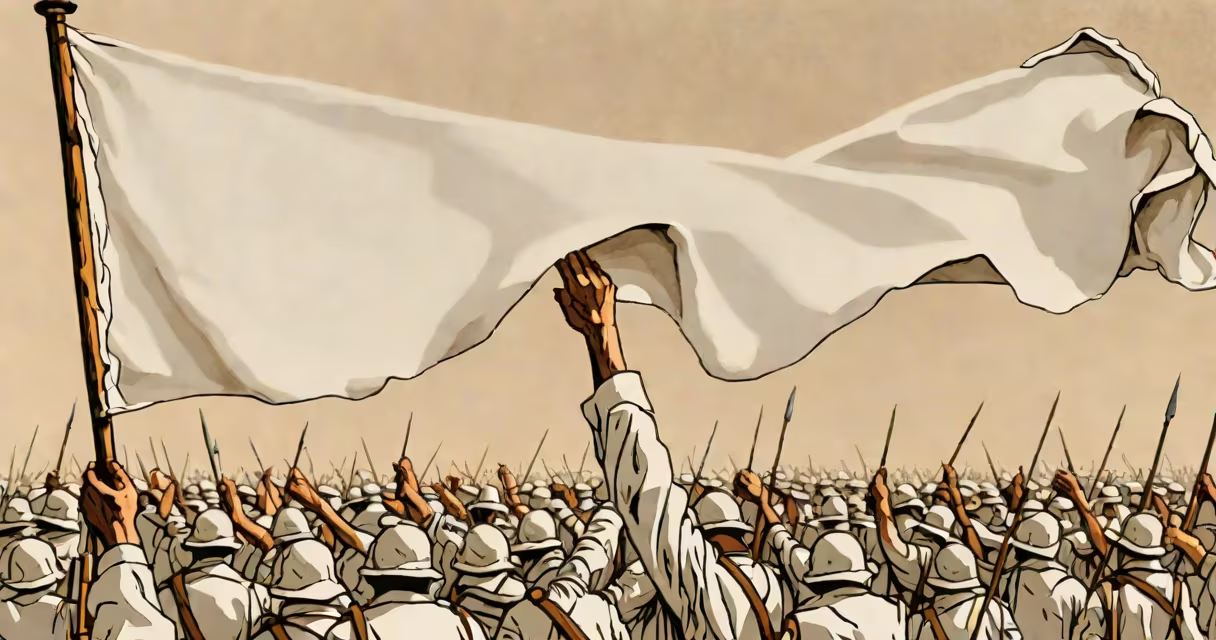
Waving the white flag is a universally recognized gesture indicating surrender in conflict, signaling a willingness to stop fighting and negotiate terms. It originated in military contexts but now applies broadly to personal, emotional, and social situations where someone acknowledges they can no longer continue.
The act stems from ancient warfare traditions. Historically, armies used white banners or cloths to signal peaceful intent during battles. According to the International Committee of the Red Cross (ICRC), white flags have long been associated with truces and ceasefire negotiations, dating back to at least the 16th century. By the 19th century, their use was codified under the Hague Conventions, which formally recognized white flags as signals of surrender or a request for negotiation.
In modern usage, waving the white flag extends beyond war zones. It describes moments when someone admits they're overwhelmed, emotionally exhausted, or unable to keep engaging-whether in an argument, a relationship, or a work project. For example, saying "I'm done" during a heated conversation may be interpreted as waving the white flag, not as weakness, but as a boundary-setting move.
When someone waves the white flag, they are not necessarily admitting failure. Instead, they are initiating a pause. This pause allows space for dialogue, reconciliation, or rest. The gesture functions as a psychological reset button, signaling that continued resistance is unsustainable.
A 2021 study published in *Journal of Social and Personal Relationships* found that individuals who used symbolic surrender-like saying "I give up" in a fight-were more likely to reach resolution in relationships than those who persisted in conflict. The researchers noted that such expressions often reduced emotional escalation and opened room for compromise.
For instance, in a team meeting where two departments clash over budget allocation, one leader might say, "I'm stepping back for now." That statement, though not literal, functions as waving the white flag-acknowledging the current path isn't working and inviting a different approach.
The white flag itself is a physical object-a piece of fabric, usually white, sometimes with a border or emblem. But its power lies entirely in context. A white flag in a warzone means surrender. In a therapy session, it might mean "I can't process this anymore." In a romantic argument, it could signal exhaustion rather than defeat.
There are three core elements that define the gesture:
Without these, the gesture fails. A person who says "I quit" in anger may not be waving the white flag-they're expressing frustration. True surrender requires clarity of intent and mutual understanding.
Waving the white flag appears most frequently in high-stress environments: combat zones, family disputes, workplace conflicts, and online debates. In each setting, it serves as a tool to avoid further harm.
For example, during the 2020 U.S. presidential election, many voters reported feeling emotionally drained by political discourse. Psychologists at the American Psychological Association (APA) noted a rise in "digital burnout," where people began using symbolic surrender-like posting "I'm out" on social media-to protect mental health. These posts functioned as modern-day white flags, signaling disengagement from toxic cycles.
Another example: a parent dealing with a child's defiance. After multiple failed attempts to enforce bedtime rules, the parent might say, "I'm done trying tonight." That moment isn't failure-it's a strategic retreat. It allows both parties to cool down and return later with clearer heads.
Many assume waving the white flag means losing. That's incorrect. Surrender is not the opposite of victory-it's a tactical choice. In military history, white flags were used to initiate negotiations. The 1918 Armistice, which ended World War I, was signed after German forces waved white flags to signal readiness to discuss peace terms.
Another misconception is that the gesture is passive. It's not. Waving the white flag is an active decision to stop fighting and seek a new path. It requires courage to admit you can't carry on alone.
One non-obvious fact: white flags are not always accepted. In some conflicts, enemies have attacked soldiers who raised white flags, claiming it was a trick. The ICRC warns that misuse of the symbol can lead to serious consequences, including loss of life. This reinforces that the gesture only works when trust exists between parties.
Not all surrender gestures are the same. Here's how they differ:
| Type | Context | Signal | Outcome |
|---|---|---|---|
| Military surrender | Battlefield | White flag raised | Immediate cease-fire, prisoner exchange |
| Emotional withdrawal | Relationship conflict | Saying "I need space" | Time to reflect, reduced tension |
| Workplace resignation | Project deadline stress | "I can't meet this timeline" | Re-allocation of tasks, adjusted goals |
| Online disengagement | Social media debate | Posting "I'm logging off" | Removal of emotional heat, reduced toxicity |
Each type reflects a different level of formality and consequence. Military surrender has legal weight. Emotional withdrawal is personal and relational. Online disengagement is public but temporary.
I once observed a team meeting where two leads argued over resource allocation. The tension rose quickly. One manager stood up, took a white handkerchief from his pocket, and placed it on the table. No words. The room went silent. Within minutes, the other manager nodded. They paused, recalibrated, and returned to collaboration. The white flag wasn't a sign of defeat-it was a catalyst for repair.
Waving the white flag is not about giving up. It's about choosing a different kind of strength-one rooted in awareness, restraint, and the courage to step back. Whether in war, love, or daily life, it's a signal that continues to hold meaning across centuries and cultures.