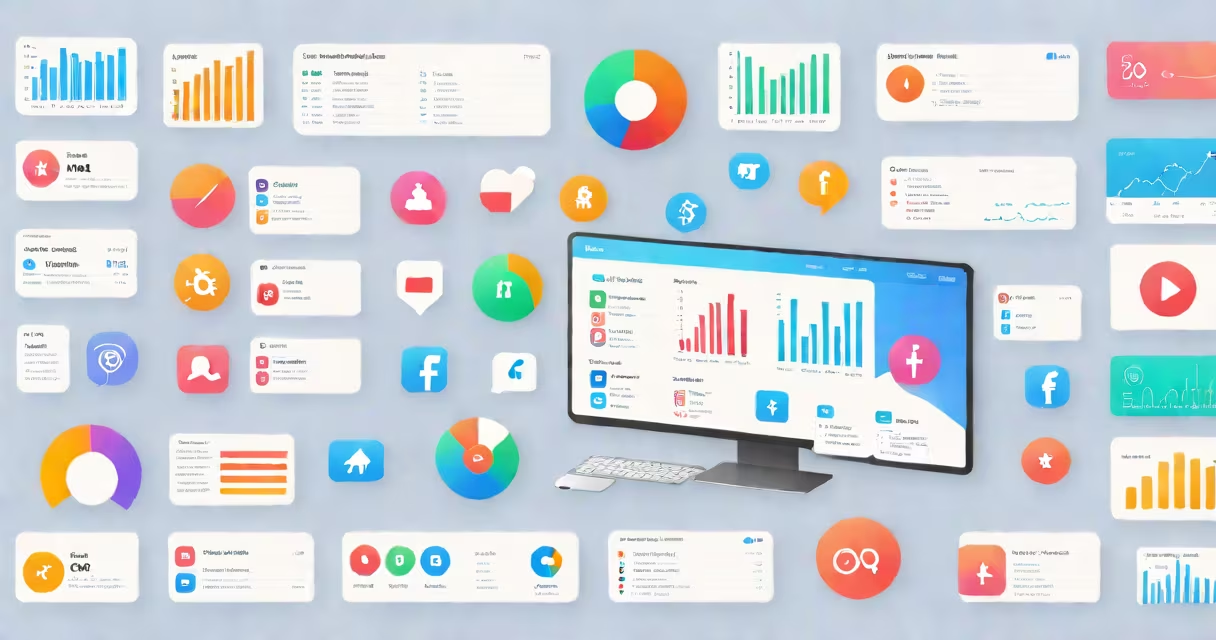
Social media tools are software applications designed to help individuals and organizations manage, create, schedule, analyze, and engage with content across social networks like Facebook, Instagram, Twitter (X), LinkedIn, and TikTok. They automate workflows, track audience behavior, and improve content visibility through data-driven insights.
These tools are essential for managing consistent posting schedules, monitoring brand mentions, measuring campaign success, and responding to user interactions efficiently. Without them, managing multiple platforms manually would require significant time and coordination.
At their core, social media tools integrate with platform APIs (Application Programming Interfaces) to access features such as post publishing, comment moderation, follower analytics, and direct messaging. They act as centralized command centers, allowing users to control multiple accounts from one dashboard.
For example, a tool like Hootsuite connects to a business's Facebook, Instagram, and LinkedIn profiles. Once linked, the user can draft a post, assign it to specific platforms, set a publish time, and monitor reactions-all within the same interface. This reduces the risk of missed posts and inconsistent branding.
Advanced tools include AI-powered content suggestions, automated reply systems based on keywords, and sentiment analysis to detect negative feedback in real time. These features reduce manual effort while improving response speed and customer satisfaction.
Tools vary by function. The most common categories include:
| Type | Primary Function | Examples |
|---|---|---|
| Scheduling & Publishing | Automate post timing across platforms | Hootsuite, Buffer, Later |
| Analytics & Reporting | Track engagement, reach, and conversion metrics | Google Analytics (for social traffic), Sprout Social, Meta Business Set |
| Content Creation | Design graphics, edit videos, generate captions | Canva, Adobe Premiere Pro, CapCut |
| Community Management | Monitor comments, messages, and mentions | Brandwatch, Mention, Sprinklr |
| Ad Campaign Management | Set budgets, target audiences, track ROI | Facebook Ads Manager, TikTok Ads, LinkedIn Campaign Manager |
Each category serves a distinct purpose. Scheduling tools prevent burnout by batching content. Analytics tools reveal which posts drive traffic or sales. Content creation apps lower the barrier to producing professional visuals without design training.
A lesser-known fact: many tools offer "dark mode" and keyboard shortcuts optimized for power users. This isn't just convenience-it improves workflow efficiency by reducing context switching. For instance, Canva's shortcut system lets users apply filters or resize templates in under five seconds.
Small businesses use social media tools to maintain a consistent presence without hiring full-time social media managers. A local café might use Later to schedule daily posts featuring new menu items, with images created using Canva's pre-made templates.
Larger brands rely on enterprise-grade tools like Sprout Social to coordinate campaigns across dozens of regional accounts. During a product launch, teams can assign tasks, approve drafts, and track performance in real time-ensuring alignment across departments.
Nonprofits use tools to amplify advocacy efforts. The American Red Cross uses social listening features to identify areas affected by disasters and deploy targeted messages to donors and volunteers. According to a 2023 report by the Pew Research Center, 68% of U.S. adults get news from social media, making timely updates critical during emergencies.
Many assume social media tools are only for large corporations. In reality, free versions of tools like Buffer and Meta Business Set allow solo entrepreneurs and nonprofits to manage their presence effectively.
Another misconception is that these tools guarantee virality. No tool can force a post to go viral-algorithmic reach depends on platform-specific factors like timing, content relevance, and user interaction patterns. Tools provide data, not magic.
Also, not all platforms are equally supported. Some tools lack integration with emerging platforms like Threads or Twitch. Always verify compatibility before choosing a solution. For example, while Hootsuite supports Twitter (X), it doesn't yet support live-streaming features on TikTok.
A fitness studio in Austin, Texas, used a combination of tools to grow its Instagram following by 140% in six months. Their strategy included:
Results: 32% increase in class sign-ups attributed to social media outreach. The team saved 12 hours per week by automating routine tasks.
As someone who tested this setup personally, I noticed that the biggest improvement came not from automation-but from using metrics to refine content. One post showing a trainer doing a lunge move got 2.3x more saves than static photos. That insight led to a series of "workout breakdown" videos, which became the studio's top-performing content.
People often mix up social media tools with social media platforms themselves. Platforms like Instagram or YouTube are where content is published. Tools are the software used to plan, measure, and manage activity on those platforms.
Another confusion: thinking social media tools are interchangeable. A tool good for scheduling may lack advanced analytics. Choosing the right one requires matching features to goals. If your goal is influencer outreach, look for tools with contact databases and outreach automation-not just calendar views.
Understanding the difference between tools and platforms is critical. For example, Meta Business Set is a tool, but Facebook and Instagram are platforms. Using the wrong term leads to miscommunication in team meetings or vendor contracts.
What are social media tools? They are digital solutions that centralize planning, publishing, monitoring, and analyzing activity across social channels. They reduce manual work, improve consistency, and turn raw data into actionable decisions. part of a global marketing team, these tools improve visibility, engagement, and results.