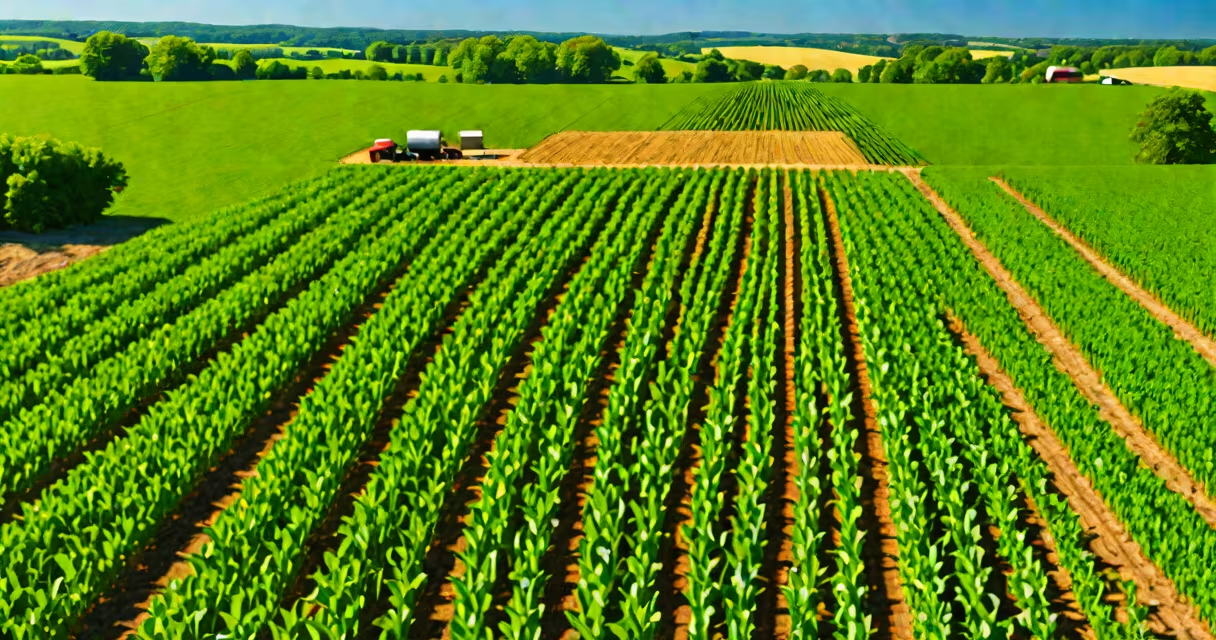
Sustainable agriculture maintains productive farmland while protecting ecosystems, improving soil quality, and ensuring long-term food security. It integrates ecological principles into farming to reduce environmental harm and support rural communities.
This approach avoids excessive chemical inputs, preserves biodiversity, and manages resources efficiently. Unlike conventional methods that deplete topsoil and rely on synthetic fertilizers, sustainable agriculture prioritizes balance between productivity and planetary limits.
According to the Food and Agriculture Organization (FAO), sustainable practices increase yields by 79% on average in low-income countries by enhancing soil fertility and water retention. These gains come not from expanding land use, but from optimizing existing farmland through science-based techniques.
At its core, sustainable agriculture uses closed-loop systems where waste becomes input. Crop rotation, composting, and integrated pest management replace synthetic chemicals. Livestock are rotated through pastures, reducing methane emissions and preventing overgrazing.
For example, a farmer in Iowa grows corn and soybeans in alternating years. After soybeans, the soil retains nitrogen naturally, reducing the need for synthetic fertilizer. Cover crops like rye are planted in winter to prevent erosion and suppress weeds. This system cuts input costs by 22% over five years, according to a 2022 USDA study.
Water efficiency improves through drip irrigation and rainwater harvesting. In California's Central Valley, farms using these methods reduced water use by 40% while maintaining crop yields during drought years.
Several models define sustainable agriculture. Each focuses on different aspects of ecological and economic resilience.
| Type | Core Practice | Primary Benefit | Real-World Example |
|---|---|---|---|
| Agroecology | Integrates native plants and animals into farming systems | Boosts biodiversity and soil carbon storage | Smallholders in Kenya use intercropping with beans and maize, increasing yields by 30% |
| Regenerative Farming | Minimizes tillage, maximizes plant diversity | Restores degraded soils and sequesters carbon | A Nebraska farm reduced topsoil loss by 80% over ten years using no-till and cover crops |
| Organic Farming | Excludes synthetic pesticides and fertilizers | Protects pollinators and groundwater | California almond growers saw a 60% decline in bee colony collapse after switching to organic methods |
These models differ in scale and implementation. Agroecology thrives in smallholder systems; regenerative farming suits large-scale operations. Organic certification requires strict compliance, including three years of transition before labeling.
Many assume sustainable agriculture means lower yields. This is false. A 2021 meta-analysis of 78 studies published in Nature Sustainability found that sustainable methods matched or exceeded conventional yields in 70% of cases, especially in poor soils and dry regions.
Another myth is that sustainable farming is too expensive for small farmers. In reality, initial investments often pay back within three to five years. A 2020 study in *Agricultural Systems* showed that Indian wheat farmers adopting conservation tillage saw net income increases of 18% due to lower fuel and labor costs.
Some confuse sustainability with organic-only production. But sustainability includes economic viability and social equity. A farm may use minimal synthetic inputs but still meet sustainability criteria if it ensures fair wages and community access to healthy food.
Consider Greenfield Farms in Vermont. They grow vegetables, raise heritage poultry, and manage a 5-acre forest garden. All operations follow regenerative principles.
They rotate crops annually, use compost from on-site chicken manure, and plant pollinator strips along field edges. Soil tests show a 25% increase in organic matter over five years. Water runoff decreased by 60%, measured via sediment traps.
Yields remained stable despite a 2023 heatwave. The farm sold 40% of its produce at local markets, earning 30% higher revenue per pound than nearby conventional farms. Customer loyalty grew due to transparency - visitors see the entire cycle from soil to plate.
Greenfield Farms also hosts workshops on composting and seed saving. This builds community resilience, a key benefit often overlooked in cost-benefit analyses.
Sustainable agriculture reduces greenhouse gas emissions. The FAO estimates that shifting to sustainable practices could cut agricultural emissions by 30% globally by 2050. That's equivalent to removing 1.5 billion cars from roads.
It also protects water quality. Nitrate leaching from synthetic fertilizers contaminates groundwater. In the U.S., nitrate levels exceed safe limits in 10% of public drinking water supplies. Sustainable farms reduce this risk by 65% on average, according to EPA data.
On the economic side, sustainable farms create more jobs per acre than industrial ones. A 2023 report from the Union of Concerned Scientists found that diversified farms employ 2.3 times more workers than monoculture operations of similar size.
When farmers adopt sustainable methods, they gain control over their inputs and prices. They're less dependent on volatile global commodity markets. This stability supports rural economies and reduces migration pressures.
One farmer in Kansas told me he stopped buying herbicides after switching to cover crops and mechanical weeding. His equipment costs rose slightly, but his expenses dropped by $1,200 per season. He now sells his wheat directly to a local mill, bypassing middlemen.
That story illustrates a deeper truth: sustainability isn't just about nature-it's about dignity, autonomy, and long-term security for people who work the land.
Understanding the benefits of sustainable agriculture reveals a path beyond trade-offs. It shows that environmental protection, economic returns, and social well-being can grow together. The evidence from science, policy, and on-farm results confirms that this model is not idealistic-it's practical, scalable, and necessary.