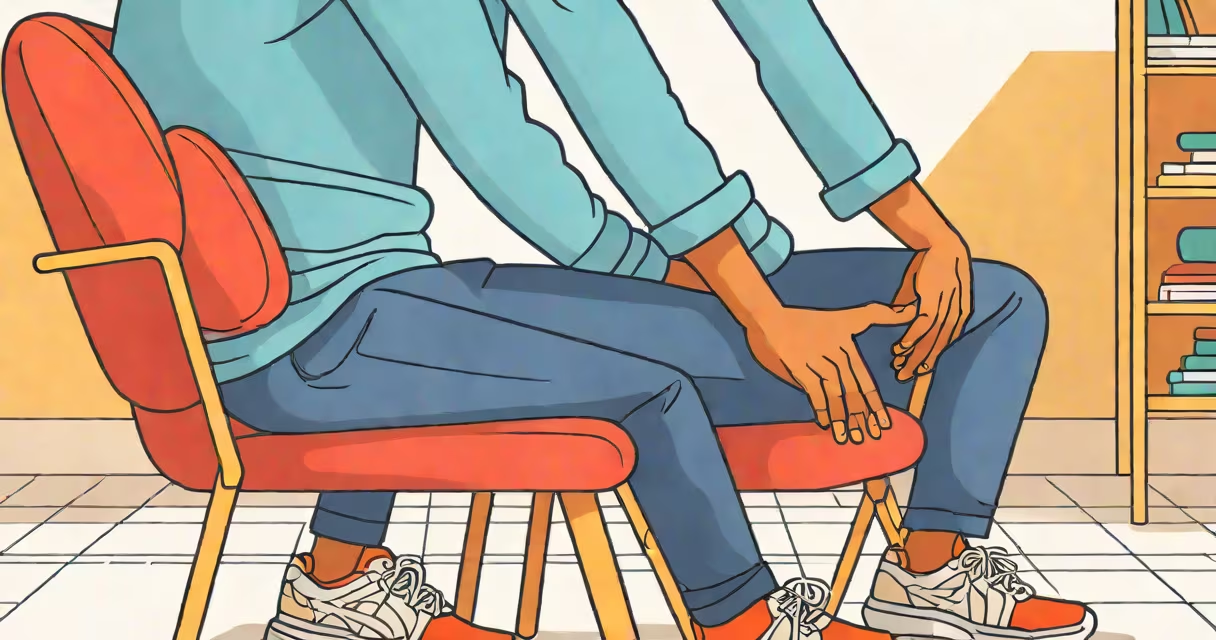
A back "going out" describes a sudden, sharp episode of lower back pain, typically triggered by movement or posture change. It results from mechanical stress on muscles, ligaments, or spinal discs, often leading to temporary loss of function. This condition is not a medical diagnosis but a common way people describe acute spinal distress.
The sensation usually begins during bending, lifting, twisting, or even standing up from a seated position. Pain may radiate to the hips, buttocks, or legs. It's not a fracture or dislocation in most cases, but a soft tissue or disc-related issue. The term "goes out" reflects the feeling of instability or sudden collapse, though the spine remains structurally intact.
When a back "goes out," the primary mechanism involves sudden overload on the lumbar spine. The lower back supports most of the body's weight, making it vulnerable during changing movements. A single misstep-like lifting a heavy box with poor form-can compress the intervertebral discs or strain the surrounding muscles and ligaments.
Discs act as shock absorbers between vertebrae. When pressure exceeds their tolerance, the outer layer (annulus fibrosus) can tear. This allows the inner gel-like material (nucleus pulposus) to bulge or leak, pressing on nearby nerves. This process is called a herniated or slipped disc. It often causes sharp, shooting pain down one leg-a condition known as sciatica.
Another common cause is muscle strain. The erector spinae and multifidus muscles stabilize the spine. Overuse, poor conditioning, or sudden motion can lead to micro-tears, triggering spasms and localized pain. These spasms restrict movement and create the sensation of the back "locking up."
Repetitive bending, twisting, or lifting heavier-than-usual loads increases risk. A 2021 study in Spine Journal found that manual laborers have a 3.2 times higher incidence of acute back pain episodes compared to office workers. Even minor actions-like sneezing or coughing-can trigger symptoms in someone with weakened spinal support.
Underlying conditions amplify vulnerability. Degenerative disc disease, where discs lose hydration and height over time, reduces cushioning. Spinal stenosis, narrowing of the spinal canal, can compress nerves during activity. Obesity adds mechanical load; weak core muscles fail to stabilize the spine during movement.
One overlooked factor is prolonged sitting. A 2020 study in Journal of Orthopaedic & Sports Physical Therapy showed that sitting for more than 6 hours daily correlates with a 40% increase in acute back pain episodes. The pelvis tilts forward, increasing lumbar curve and disc pressure-especially when combined with poor posture.
| Trigger | Typical Mechanism | Common Symptoms |
|---|---|---|
| Lifting with poor form | Disc compression or muscle strain | Sudden lower back pain, stiffness |
| Sudden twist while standing | Ligament sprain or disc displacement | Pain radiating to hip or leg |
| Prolonged sitting | Increased disc pressure and posture fatigue | Dull ache, reduced mobility |
| Twisting during sports | Muscle or facet joint strain | Sharp pain on one side, limited rotation |
"Back going out" is not synonymous with a fracture or dislocation. These require trauma-such as a fall from height or car accident-and are diagnosed via imaging. Most back "out" episodes occur without structural damage.
Some assume it's always a disc problem. While herniations are common, they're not the sole cause. A 2019 review in BMJ Open found that only 15% of acute low back pain cases involve disc herniation. Muscle strain and joint dysfunction account for the majority.
Another myth: bed rest is the best treatment. The American College of Physicians recommends staying active within pain limits. Prolonged immobility worsens recovery. A 2022 study in Physical Therapy showed patients who resumed light walking within 48 hours had faster return to normal function than those who rested.
I once witnessed a 52-year-old man lift a 40-pound bag of soil while gardening. He bent forward, twisted slightly to place it on a wheelbarrow, and felt a sharp pop in his lower back. Within seconds, he couldn't stand straight. His left leg tingled, and he could barely walk.
He was diagnosed with a mild lumbar disc herniation at L4-L5. MRI confirmed nerve root compression. He wasn't hospitalized. After two days of gentle movement and anti-inflammatory medication, he regained function. The episode lasted 10 days, but full recovery took 3 weeks.
This case illustrates how a single action-bending and twisting under load-can trigger a cascade of pain. It wasn't a fracture. It wasn't a chronic condition. It was an acute mechanical failure in a vulnerable structure.
If pain lasts longer than 7 days, worsens, or spreads below the knee, see a provider. Red flags include numbness, weakness, or loss of bladder control-signs of cauda equina syndrome, a rare but serious condition requiring immediate surgery.
For mild cases, start with heat or ice, gentle stretching, and over-the-counter NSAIDs. Avoid heavy lifting and prolonged sitting. If symptoms persist beyond 2 weeks, consider physical therapy. A trained therapist can identify whether the issue stems from muscle imbalance, joint restriction, or disc pathology.
Recognizing the true cause of a back "going out" prevents unnecessary worry and guides effective recovery. Most episodes resolve in days to weeks with conservative management. But knowing when to seek help ensures long-term spinal health.