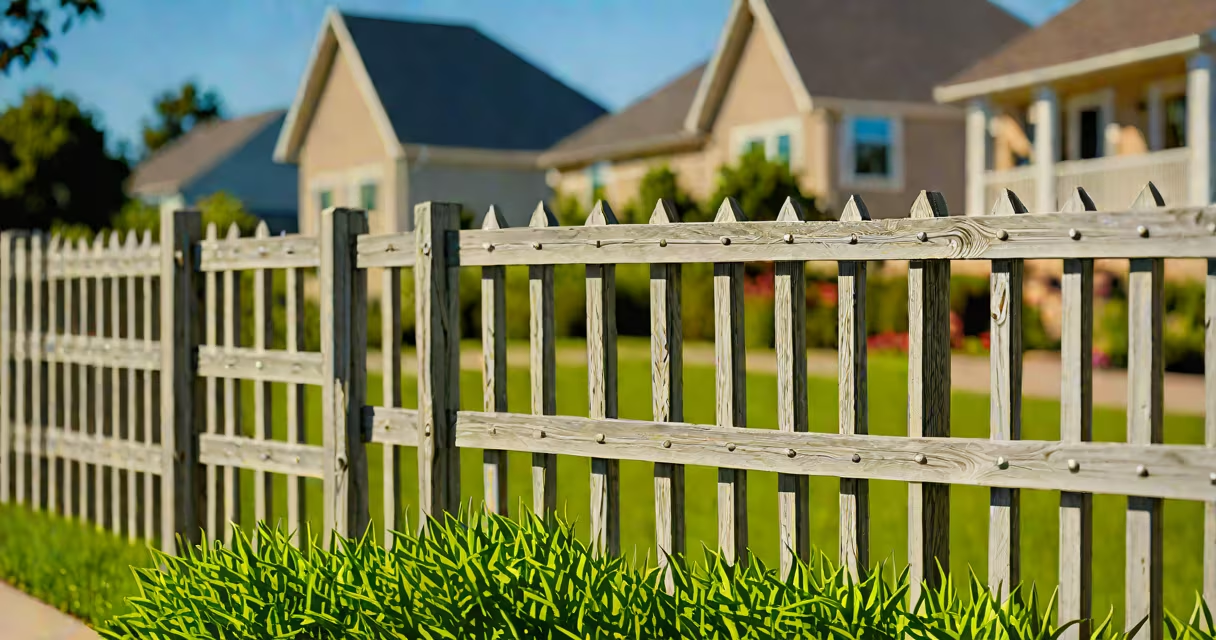
Encroachment in real estate occurs when a structure, fence, tree, or improvement physically extends beyond a property boundary onto a neighboring parcel without permission. This act violates the legal principle of exclusive ownership and can lead to disputes, diminished property value, or forced removal.
Encroachments are common in older neighborhoods where property lines were not precisely marked during construction. A garage extending 18 inches over a neighbor's land, a retaining wall built on adjacent soil, or a tree whose roots cross a boundary line all qualify as encroachments. These issues often go unnoticed until a sale, survey, or dispute arises.
According to the American Bar Association, encroachment claims are among the most frequently litigated property disputes in U.S. courts. The National Association of Realtors notes that unaddressed encroachments can delay or derail real estate transactions due to title insurance concerns.
Real estate ownership is defined by legal descriptions, typically based on metes and bounds or lot-and-block surveys. When a property owner builds something that intrudes on a neighbor's land, they create a legal encroachment-even if unintentional. The affected party may not realize the issue until a survey reveals the discrepancy.
For example, a homeowner installs a 6-foot privacy fence along their backyard. After five years, a new survey shows the fence sits 1.5 feet into the neighbor's property. Even though the fence was built in good faith, it constitutes an encroachment under state law. The neighbor can demand removal, seek compensation, or file a quiet title action to establish clear ownership.
Encroachments do not automatically grant easements or rights of way. Unlike a legal easement, which allows limited access or use of land with formal agreement, an encroachment is unauthorized. The burden of proof lies with the party claiming harm or seeking relief.
Encroachments fall into two categories: physical and constructive. Physical encroachments involve tangible structures or objects-fences, driveways, decks, or sheds. Constructive encroachments occur when improvements affect use or enjoyment, such as shading a neighbor's solar panels or blocking access to a shared driveway.
| Type | Examples | Legal Risk |
|---|---|---|
| Physical | Fence crossing boundary, shed on adjacent land, tree roots in neighbor's yard | High-can result in court-ordered removal or monetary damages |
| Constructive | Overhanging roof casting shade, noise from outdoor equipment, blocked view | Moderate-often resolved via negotiation or injunction |
A 2021 study by the Urban Land Institute found that 14% of surveyed properties in suburban areas had at least one unresolved encroachment. Most cases involved fences or landscaping features installed before property records were digitized.
Many homeowners assume that long-term possession grants ownership rights through adverse possession. While this is possible under specific conditions-such as continuous, open, and hostile use for 10 to 20 years depending on state law-it requires a court process. Simply living with an encroachment for decades does not automatically make it legal.
Another misconception is that a neighbor's silence implies consent. Silence does not constitute legal acceptance. The U.S. Supreme Court ruled in *United States v. 30.3 Acres of Land* (1988) that passive tolerance does not equate to implied permission. A party cannot claim rights based on inaction alone.
Encroachment differs from easement. An easement is a legally recognized right to use another's land for a specific purpose-like utility access or a shared driveway. Easements are recorded in public land records. Encroachments are not. A homeowner cannot convert an encroachment into an easement without a written agreement and recording.
In 2019, a couple in Portland discovered their 15-year-old fence was 1.2 feet into their neighbor's property. The neighbor had never complained. The original builder had used outdated survey data. When the homeowners tried to sell, the title company flagged the issue.
The buyer's attorney demanded resolution before closing. The homeowners hired a licensed surveyor who confirmed the encroachment. They offered to pay for a new fence and compensate the neighbor for loss of usable space. The neighbor agreed to a settlement but refused to sign a mutual release.
The parties reached a private agreement: the fence was rebuilt on the correct boundary, and both sides signed a written acknowledgment of the adjustment. The transaction closed without litigation. This case illustrates that encroachments rarely require court intervention if both parties negotiate early.
First, obtain a current survey from a licensed professional. Old surveys may be inaccurate due to shifting terrain or outdated benchmarks. A new survey establishes the precise boundary lines.
If an encroachment is confirmed, contact the neighbor directly. Offer a solution-relocation, compensation, or a formal agreement. Document all communication. Avoid making unilateral changes that could escalate tensions.
If negotiations fail, consult a real estate attorney. Some states allow quiet title actions to resolve boundary disputes. In others, a court may order removal or award damages. Title insurance policies often exclude coverage for encroachments unless corrected before closing.
I once observed a similar case while working as a property inspector in Austin, Texas. A homeowner built a deck that extended over a shared lot line. The neighbor filed a notice of claim. We mediated a compromise: the deck was modified to stay within the legal boundary, and the neighbor received a small payment for inconvenience. The process took six weeks and avoided litigation.
Always conduct a survey before building or installing permanent structures. Many local zoning departments require survey documentation for permits. Even minor projects-like planting trees or installing a mailbox-should respect boundary lines.
When buying a home, review the title report and survey. Ask your real estate agent about potential encroachments. If you're considering a property with known issues, factor in the cost of resolution.
Encroachment is not just a technicality-it's a legal reality that affects property rights, marketability, and neighbor relations. Recognizing it early prevents costly conflicts and preserves trust between neighbors.