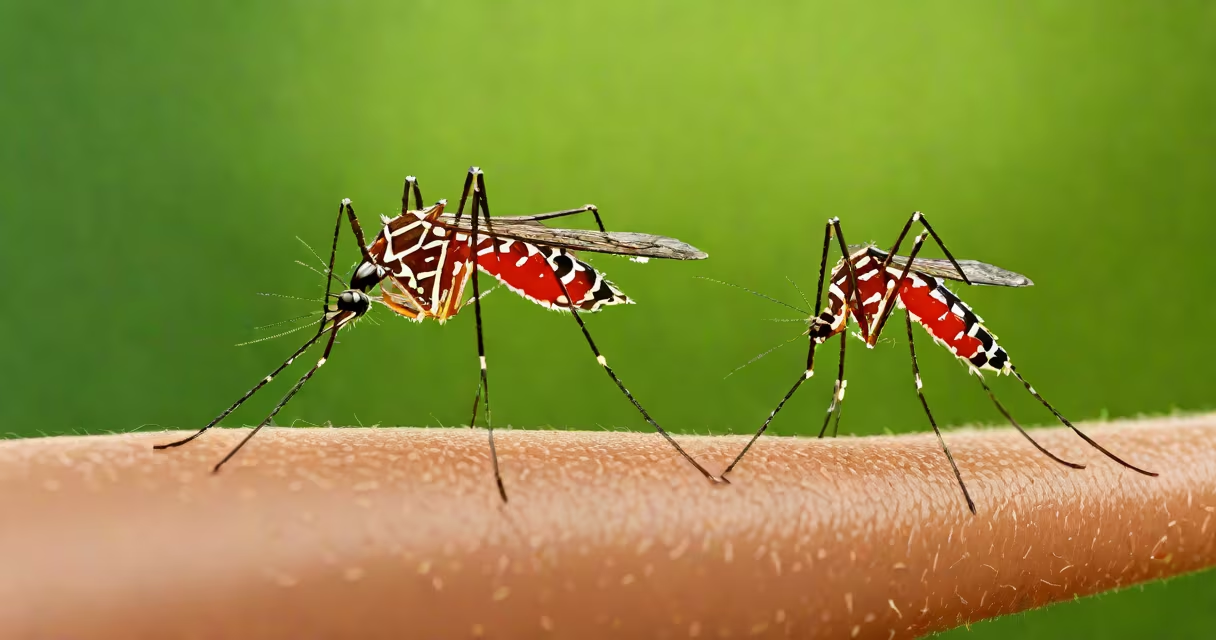
Dengue fever results from infection with the dengue virus, transmitted primarily by the bite of an infected Aedes aegypti mosquito. This virus belongs to the Flavivirus genus and has four distinct serotypes (DENV-1 to DENV-4), each capable of causing illness. The disease is endemic in over 100 countries, particularly in tropical and subtropical regions.
The cycle begins when a female Aedes mosquito feeds on a person already carrying the dengue virus. After an incubation period of 8 to 11 days within the mosquito, the virus reaches the salivary glands. During subsequent blood meals, the mosquito injects saliva containing the virus into a new host, initiating infection. Humans are the primary reservoir for the virus, with no known animal hosts involved in transmission.
Transmission occurs most efficiently in urban and semi-urban environments where standing water accumulates in containers such as flower pots, discarded tires, and water storage tanks-ideal breeding sites for Aedes mosquitoes. These mosquitoes are aggressive daytime biters, typically biting between dawn and dusk. They thrive in warm climates, with optimal temperatures between 25°C and 30°C (77°F-86°F).
Once introduced via a mosquito bite, the dengue virus targets immune cells, especially dendritic cells and macrophages, in the skin and lymph nodes. Within 4 to 7 days, viral replication spreads throughout the bloodstream. The body's immune response triggers inflammation, leading to the characteristic symptoms of dengue fever.
Viral load peaks around day 5 of illness. At this stage, patients may develop high fever (up to 40°C or 104°F), severe headache, retro-orbital pain (behind the eyes), joint and muscle pain, and rash. The severity of symptoms depends on prior exposure-individuals previously infected with one serotype face higher risk of severe disease upon secondary infection with a different serotype due to antibody-dependent enhancement (ADE).
ADE occurs when non-neutralizing antibodies from a previous infection bind to the new virus but fail to prevent entry into cells. Instead, they help viral uptake, increasing viral replication and worsening disease outcomes. This mechanism explains why severe dengue cases are more common in people who have had dengue before.
Dengue is not contagious from person to person. Unlike influenza or COVID-19, it cannot spread through coughing, touching, or sexual contact. Transmission requires an intermediate vector-the mosquito. This distinction is critical for public health messaging and patient education.
Another widespread error is believing that dengue only occurs in rural areas. In reality, urban centers with poor sanitation and inadequate waste management systems are hotspots. For example, in Manila, Philippines, over 100,000 dengue cases were reported in 2023, mostly in densely populated neighborhoods with stagnant water sources.
Dengue is often mistaken for malaria or typhoid due to overlapping symptoms. However, dengue lacks the cyclic fevers seen in malaria and does not cause jaundice or hepatosplenomegaly typical of typhoid. Laboratory testing-such as NS1 antigen detection, IgM ELISA, or RT-PCR-is required for definitive diagnosis.
Dengue presents in three clinical forms: classic dengue fever, dengue hemorrhagic fever (DHF), and dengue shock syndrome (DSS). The World Health Organization classifies these based on warning signs and organ impairment.
| Type | Key Features | Incidence Rate |
|---|---|---|
| Classic Dengue Fever | Fever ≥38°C, rash, headache, myalgia, thrombocytopenia | ~80% of cases |
| Dengue Hemorrhagic Fever | Hemorrhage, positive tourniquet test, elevated hematocrit, low platelets | ~5-10% |
| Dengue Shock Syndrome | Hypotension, cold extremities, altered mental status | <1% |
Severe dengue develops in approximately 5% of cases and accounts for nearly all dengue-related deaths. According to the WHO, around 25,000 deaths occur annually worldwide, with children under 15 making up a significant portion of fatalities in Southeast Asia.
Preventing dengue hinges on interrupting the mosquito life cycle and reducing human-mosquito contact. Effective strategies include eliminating breeding sites, using insect repellent, wearing long sleeves, and installing window screens.
Community-based programs have shown success. In Singapore, a nationwide vector control initiative reduced dengue incidence by 70% between 2016 and 2021 through regular inspections, fogging, and public education campaigns. The city-state also uses Wolbachia-infected mosquitoes-genetically modified strains that suppress dengue transmission-to reduce local outbreaks.
For travelers visiting endemic zones, prophylactic measures are essential. The CDC recommends avoiding outdoor activity during peak mosquito hours (6 AM-10 AM and 4 PM-8 PM), using DEET-based repellents (20-30% concentration), and sleeping under insecticide-treated bed nets if necessary.
In 2022, Puerto Rico experienced a dengue outbreak with over 10,000 confirmed cases and 18 deaths. Epidemiological investigation traced the outbreak to a surge in Aedes aegypti populations following heavy rains and flooding. Many homes lacked proper drainage, creating ideal breeding grounds.
Public health officials responded by deploying teams to remove standing water from rooftops, gutters, and abandoned vehicles. They distributed larvicides and conducted door-to-door education on preventing mosquito breeding. Despite these efforts, the outbreak highlighted the challenge of controlling dengue in island communities with limited infrastructure.
During this event, a 32-year-old woman presented with fever, severe abdominal pain, and persistent vomiting. Laboratory tests revealed a positive NS1 antigen and low platelet count. She was admitted to the hospital and managed with intravenous fluids and close monitoring. Her condition stabilized on day 5, illustrating the importance of early recognition and timely intervention.
Warning signs of severe dengue include persistent vomiting, severe abdominal pain, bleeding gums or nosebleeds, rapid breathing, and lethargy. These indicate progression toward DHF or DSS and require immediate medical attention.
There is no specific antiviral treatment for dengue. Management focuses on hydration, pain relief with acetaminophen (avoid NSAIDs like ibuprofen due to bleeding risk), and monitoring for warning signs. Hospitalization is required for severe cases.
Two vaccines are available: Dengvaxia (approved in 2015) and Qdenga (approved in 2022). Dengvaxia is recommended only for individuals with prior dengue infection, as it increases the risk of severe disease in seronegative recipients. Qdenga is approved for use in people aged 4 years and older, regardless of prior exposure, and has shown 80% efficacy in clinical trials.
Understanding what causes dengue fever enables better prevention, earlier diagnosis, and improved outcomes. By targeting the Aedes mosquito and raising awareness of transmission risks, communities can reduce the burden of this serious tropical disease.