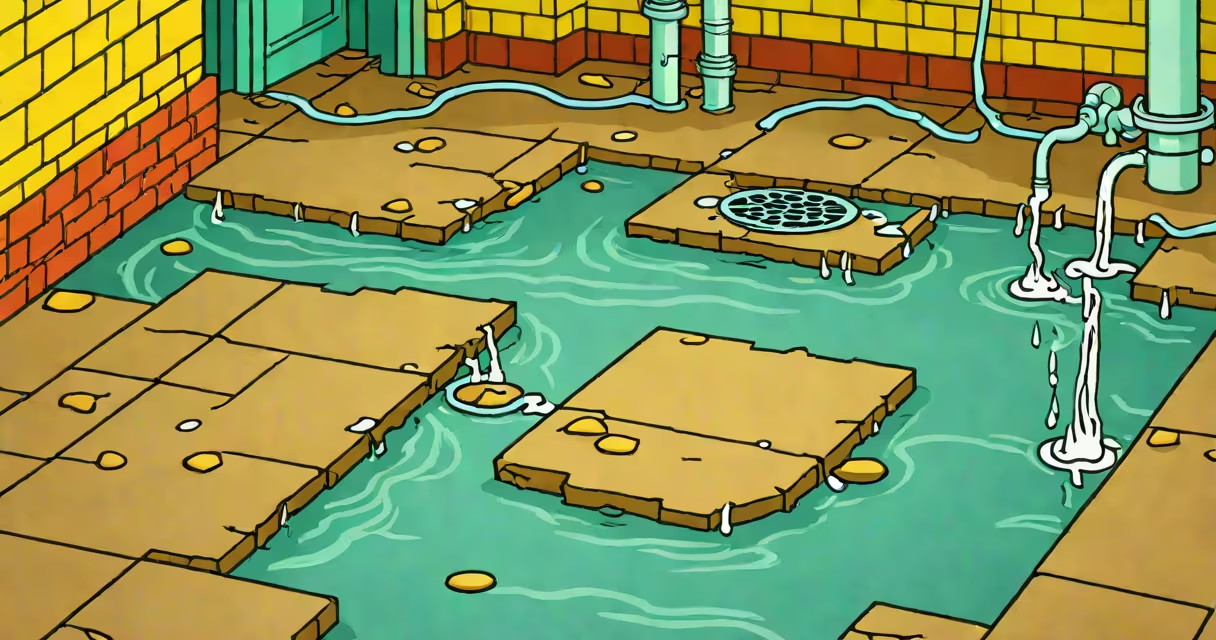
A sewer backup happens when wastewater reverses direction and enters a home through drains, toilets, or floor drains due to blockages, system overload, or structural failure in the sewer line. This occurs when pressure builds in the municipal or private sewer system beyond its capacity to move waste downstream.
Sewer backups typically result from obstructions in the main drain line, especially those caused by tree root intrusion, grease accumulation, or foreign objects. They can also stem from overwhelmed municipal systems during heavy rain or snowmelt. The U.S. Environmental Protection Agency notes that combined sewer overflows-common in older cities-contribute to residential backups during storm events.
When a sewer line becomes partially or fully blocked, wastewater cannot flow freely. Pressure increases until it forces waste back into the lowest points of a home's plumbing, such as basements, bathrooms, or laundry rooms. This reversal often begins with slow-draining sinks or toilets that eventually stop working entirely.
Most sewer backups begin with a restriction in the main drain pipe. As solids and liquids move through the system, they accumulate over time. Grease from kitchen sinks solidifies in pipes, forming thick layers that restrict flow. Tree roots grow into small cracks in aging sewer lines, expanding and breaking the pipe over years. These root masses trap debris and create complete blockages.
When the flow slows, pressure builds behind the obstruction. In gravity-fed systems, this pressure can force wastewater upward through floor drains or toilets. In areas with steep terrain or outdated infrastructure, even minor blockages can trigger reverse flow. The National Association of Sewer Service Companies (NASSCO) reports that 60% of sewer backups in urban areas originate from root infiltration or grease buildup.
Heavy rainfall overwhelms municipal systems designed for normal flow. Combined sewers carry both stormwater and sewage. During storms, excess runoff exceeds treatment capacity, causing raw sewage to back up into homes. Cities like New York and Chicago see hundreds of backup incidents annually during peak storm seasons.
The following table outlines the most frequent causes of sewer backup, their typical triggers, and real-world impact.
| Cause | Trigger | Typical Location | Prevention Tip |
|---|---|---|---|
| Tree root intrusion | Roots seek moisture in cracked or jointed pipes | Private lateral lines (home-to-main connection) | Plant trees at least 10 feet from sewer lines |
| Grease buildup | Fats, oils, and grease (FOG) solidify in cold pipes | Kitchen sink drains, main sewer line | Never pour grease down the drain; use a container |
| Foreign object blockage | Flushable wipes, diapers, or hygiene products | Toilets, main line | Only flush human waste and toilet paper |
| Municipal system overload | Stormwater exceeding sewer capacity | Entire neighborhoods during heavy rain | Install backflow prevention devices |
| Pipe collapse or joint failure | Age-related deterioration, soil shifting | Older homes (pre-1970s), high-risk zones | Regular inspection via camera scanning |
One non-obvious factor is the role of pipe material. Older homes often have clay or cast iron pipes that degrade over time. Clay pipes crack under soil pressure, allowing roots to enter. Cast iron develops internal rust that reduces diameter. A 2021 study by the American Society of Civil Engineers found that 45% of sewer backups in homes built before 1960 were linked to pipe material failure.
Another overlooked issue is improper plumbing design. Some homes install floor drains without proper traps or venting. Without a sealed trap, air pressure changes can pull wastewater back into the home. A single failed seal can allow sewer gas and liquid to return during system pressure shifts.
Sewer backup is often mistaken for a backed-up toilet or sink. A clogged toilet usually results from a blockage in the fixture itself, not the main line. A toilet that won't flush may need plunging or snaking-but if multiple drains fail simultaneously, especially in the basement, the problem likely extends beyond individual fixtures.
Another confusion arises between sewer backup and septic system failure. Homes with septic tanks rely on underground leach fields to disperse waste. When a tank overflows or the field fails, effluent surfaces in the yard-not inside the house. However, if a septic system backs up into a home, it indicates a serious plumbing error or pipe rupture.
For example, in 2022, a homeowner in Portland reported a basement flood after a rainstorm. Initial diagnosis pointed to a clogged sump pump. After investigation, a plumber discovered tree roots had severed the lateral line connecting the home to the city sewer. Wastewater reversed into the basement through a floor drain. The issue wasn't the sump pump-it was a failed sewer connection.
In June 2023, Chicago experienced a 24-hour storm with 4.2 inches of rain. The city's combined sewer system exceeded capacity. Over 1,200 homes reported sewer backups, primarily in low-lying neighborhoods. The Chicago Department of Water Management confirmed that 87% of affected homes had no backflow prevention devices installed.
One resident, Maria Lopez, described finding sewage rising from her basement floor drain at 3 a.m. "I thought it was a toilet overflow," she said. "But then the kitchen sink stopped draining too. I called the city, and they said it was a system-wide failure." Her home required professional remediation, including mold removal and disinfection. Insurance covered cleanup, but not the cost of replacing damaged flooring.
This incident highlights a critical gap: many homeowners assume city systems handle all risks. But local infrastructure failures still place burden on residents. Installing a backwater valve-a mechanical device that closes when reverse flow occurs-can prevent 95% of backups, according to the EPA.
Preventing sewer backup starts with regular maintenance. Homeowners should avoid pouring fats, oils, or grease down drains. Use strainers in sinks to catch food scraps. Limit flushing to toilet paper and human waste. Schedule annual inspections of lateral lines using a video camera to detect cracks or root growth.
If a backup occurs, act quickly. Shut off power to electrical outlets in the affected area to avoid shock hazards. Do not attempt to pump out sewage without protective gear. Contact a licensed plumber or emergency restoration service. Document damage for insurance claims.
Backwater valves are a proven solution. Installed at the point where the sewer line enters the home, they automatically close when reverse flow is detected. The Federal Emergency Management Agency (FEMA) recommends them for homes in flood-prone or high-backup-risk zones. Installation costs $300-$600, but they prevent thousands in potential repair bills.