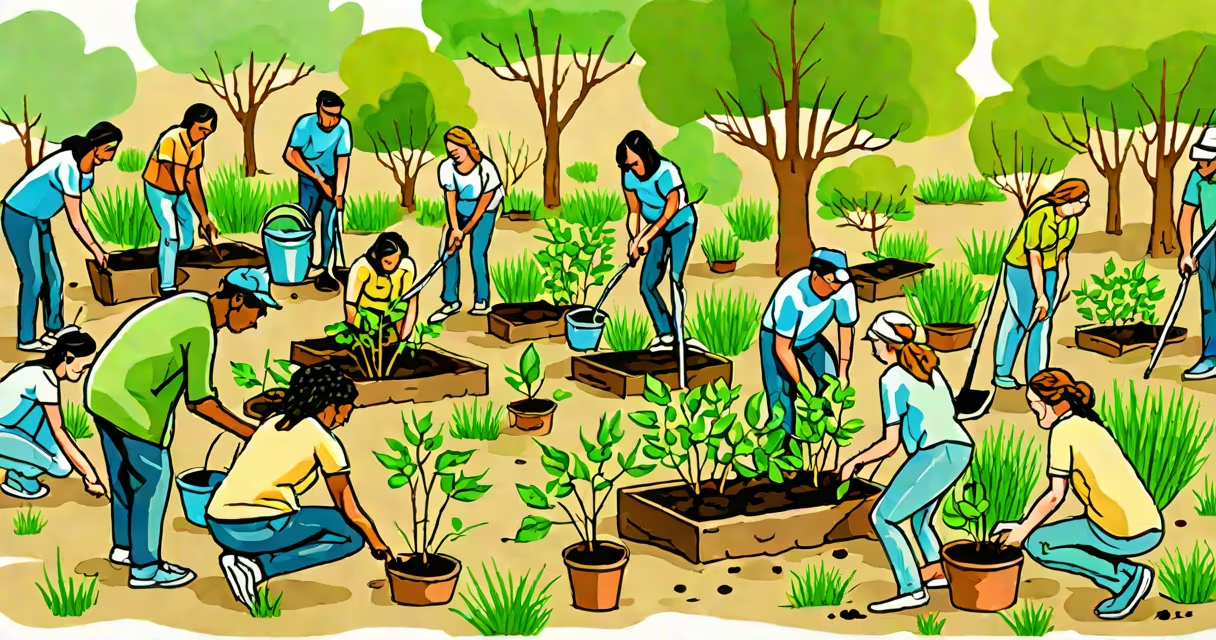
On Earth Day, individuals and groups take action to protect the planet through conservation efforts, education campaigns, and advocacy for environmental policy. Celebrated annually on April 22, it is a global day of awareness and engagement focused on climate change, pollution reduction, and sustainable living.
Earth Day began in 1970 as a response to growing public concern over industrial pollution and environmental degradation. It was founded by U.S. Senator Gaylord Nelson, who sought to mobilize citizens around environmental issues. Since then, it has evolved into a coordinated international effort involving over 190 countries, with millions participating each year.
The core purpose of Earth Day is to inspire sustained environmental stewardship. Activities range from local cleanups to large-scale policy discussions. The day serves as both a reminder of ecological fragility and a call to action for long-term planetary health.
Earth Day operates through decentralized coordination. National organizers in each country plan events, while local groups-schools, nonprofits, businesses-host their own initiatives. These are often linked via a central website that tracks participation and provides toolkits.
Organizations like the Earth Day Network (EDN) provide resources such as lesson plans, volunteer sign-up forms, and social media templates. They also promote global themes each year-such as "Restore Our Earth" in 2021 or "Invest in Our Planet" in 2023-to unify messaging and focus attention on specific environmental challenges.
Participation is not limited to formal events. Individuals can contribute by reducing single-use plastics, conserving water, or supporting eco-friendly brands. The cumulative effect of small actions aligns with Earth Day's mission: turning awareness into measurable impact.
Popular Earth Day actions include tree planting, river cleanups, recycling drives, and educational workshops. For example, in 2022, over 1.5 million trees were planted globally through Earth Day Network partnerships. In New York City, volunteers removed nearly 6 tons of trash from parks and waterways during a single weekend cleanup.
These efforts produce tangible results. A study published in *Nature Sustainability* (2021) found that urban tree planting programs reduced local temperatures by up to 2°C in high-density areas. Similarly, community-led beach cleanups have prevented an estimated 1.2 million pounds of plastic from entering oceans annually since 2015.
Another underappreciated activity is citizen science. People record bird migrations, monitor air quality, or track invasive species using apps like iNaturalist. Data collected during Earth Day events contributes to long-term research databases used by scientists and policymakers.
Engagement on Earth Day falls into four main categories: direct action, education, advocacy, and lifestyle change. Each serves a different role in building environmental literacy and driving systemic change.
| Type | Examples | Impact Scale |
|---|---|---|
| Direct Action | Tree planting, trash collection, habitat restoration | Local to regional |
| Education | School presentations, documentary screenings, interactive exhibits | Community-wide |
| Advocacy | Signing petitions, attending city council meetings, contacting legislators | National to global |
| Lifestyle Change | Switching to reusable products, reducing meat consumption, composting | Individual to household |
While direct action delivers visible results, advocacy often leads to lasting policy shifts. For instance, the 2019 Earth Day campaign in California helped pass legislation banning single-use plastic bags statewide-a move that reduced plastic waste by 30% within two years.
Many assume Earth Day is solely about symbolic gestures like wearing green or posting on social media. While those are common, they are not the goal. The day aims to spark behavior change, not performative activism.
A frequent error is conflating Earth Day with Earth Month. Earth Day occurs on April 22 every year. The Earth Month initiative, which runs throughout April, expands on the day's momentum with extended programming. Confusing the two can lead to missed opportunities for deeper involvement.
Another misconception is that only large organizations can make a difference. In reality, grassroots efforts often improve. For example, a high school student in Portland, Oregon, launched a campus-wide composting program during Earth Day week. Within a year, the school diverted 800 pounds of food waste from landfills-proof that small-scale projects scale effectively.
In April 2023, residents of Austin, Texas, organized a cleanup along Shoal Creek. Over 200 volunteers participated, removing 1.3 tons of debris-including tires, discarded furniture, and microplastics. The team documented findings using a standardized form provided by the Earth Day Network.
Afterward, the data was submitted to a national database tracking waterway pollution. Local officials used the report to justify funding for improved storm drain filtration systems. This single event led to a citywide policy review and a $500,000 allocation for creek restoration.
What made this successful wasn't just the number of participants-it was the integration of data collection, follow-up advocacy, and collaboration with city departments. It demonstrates how Earth Day activities can evolve beyond cleanup into policy influence.
I once coordinated an Earth Day event at a middle school in Denver. We partnered with a local nonprofit to host a "zero-waste fair." Students created art from recycled materials, presented on renewable energy, and ran a swap shop for gently used books and clothing.
We tracked waste diversion: 78% of lunchtime trash was reused or composted during the event. More, students reported increased interest in environmental clubs afterward. One girl started a school garden that now supplies vegetables to the cafeteria.
This experience confirmed that Earth Day is most effective when it connects learning to action. Events that combine education, hands-on work, and community ownership create lasting habits.
Earth Day is observed in over 190 countries. In India, schools teach children about native pollinators. In Kenya, farmers adopt agroforestry practices promoted during Earth Day outreach. In Japan, cities host "eco-fairs" that showcase sustainable tech.
Why it matters: Climate change impacts are uneven. Low-income regions face higher risks from flooding, drought, and food insecurity. Earth Day helps bridge awareness gaps and supports equitable solutions. According to the United Nations Environment Programme (UNEP), community-led environmental projects reduce carbon emissions by up to 15% in vulnerable areas.
Participation also strengthens civic engagement. When people act together, they build trust and shared responsibility-key ingredients for long-term resilience.
Earth Day is not a one-day performance. It's a foundation for continuous environmental action. By choosing meaningful activities and staying involved, you turn awareness into lasting change.